
Last updated November 17, 2026
 Driveway & pavers
 Kitchen remodeling
 Bathroom remodeling
 Home additions & ADU
 Roofing
 Windows & doors
 Fence
Free written scope consultation - allowances, timeline, and change-order rules on paper before a single trade is scheduled
The Complete Driveway & Pavers Guide for Las Vegas Homeowners
On a July afternoon, the surface of an unshaded Las Vegas driveway can hit 160°F. That’s hot enough to soften the sand bed underneath a paver if the base was built for a milder climate. Most paver guides you’ll find online were written for Portland, Columbus, or Charlotte, and they treat heat as a footnote. In Las Vegas, heat is the whole story. Then there’s the caliche hardpan that sits under half the valley and won’t yield to a shovel. This guide covers what actually matters here: base prep, material ratings, Clark County permits, joints that survive the summer, and getting an HOA to sign off.
Quick Answer
A Las Vegas driveway paver project runs roughly $12 to $22 per square foot installed, with most valley driveways landing between $8,000 and $18,000 depending on square footage, caliche removal, and material choice. The two things that decide whether your pavers stay flat for years or start heaving by the second summer: whether the caliche was mechanically broken and removed before compaction, and whether the base and joint sand were spec’d for Mojave heat cycles. Everything else is a detail on top of those two.
Styles & brands we work with
- Kitchen remodeling
- Bathroom remodeling
- Home additions & ADU
- Roofing
- Windows & doors
- Driveway & pavers
- Fence
Table of Contents
- Why Caliche Hardpan Is the First Battle on Every Las Vegas Driveway
- Choosing Paver Materials for Mojave Heat Cycles
- Clark County Permits, Setbacks, and Impervious Surface Limits
- Why Polymeric Sand Fails in Las Vegas Heat – and What Holds
- The Base Prep Steps That Decide Whether Your Pavers Stay Flat
- Matching Your Paver Color to Your HOA Palette Without Breaking Drainage
- Drainage in a Desert: Where the Monsoon Rain Actually Goes
- What Driveway Pavers Cost in Las Vegas
Why Caliche Hardpan Is the First Battle on Every Las Vegas Driveway
Caliche is a natural cement of calcium carbonate that forms in desert soil when water percolates down and deposits minerals over thousands of years. In parts of the northwest valley, it’s a layer so hard that a pickaxe bounces off it. A skid steer bucket scrapes the top and stops. This is why a paver crew using a Portland playbook, where you strip six inches of soil and compact, runs into a wall in Las Vegas.
When a crew skips caliche removal, three things happen. First, the base course sits on top of an uneven, impermeable shelf instead of compacted, drainable subgrade. Second, water trapped under the caliche-paver interface has nowhere to go and pushes upward during the summer monsoon. Third, the pavers start shifting within 12 to 18 months, and no amount of re-sanding fixes it.
Proper caliche handling looks like this:
- Test pit the driveway footprint. A 3-foot test hole dug before the estimate tells you how deep and how thick the caliche runs. Every honest bid in Las Vegas should account for this. If a contractor won’t dig one, that’s a warning sign.
- Mechanical breaking. Pneumatic breakers or a hydraulic hammer mounted on a mini-excavator break the caliche surface. Hand chisels only work on thin deposits.
- Full removal or fracture-and-cap. Deep caliche gets hauled out. Shallow ledges can sometimes be fractured and capped with a thicker base, but that’s a judgment call made after the test pit.
- Geotextile fabric. A woven fabric layer between subgrade and base stops fine desert dust from migrating up and destabilizing the base.
- Compacted base. Four to six inches of crushed aggregate compacted in 2-inch lifts to 95% density. Southern Nevada soils rarely compact the way wetter climates do without careful moisture control.
In neighborhoods like Summerlin’s older phases and parts of Green Valley, we’ve seen caliche layers 8 to 14 inches thick. That’s a hard number to underestimate in a bid, and it’s why two contractors can quote the same driveway at $9,000 and $16,000 and both be telling the truth about what they plan to do.
Choosing Paver Materials for Mojave Heat Cycles
Las Vegas swings from the mid-30s in winter to 110°F-plus in summer. That’s a thermal expansion range most paver product literature wasn’t written around. A paver that works beautifully in coastal California may crack or spall in the valley after three summers. The right material choice is the second-biggest line item after base prep.
Here’s what holds up in the desert, in plain terms:
- Light-colored pavers. A high Solar Reflectance Index (SRI) does two jobs: it keeps the driveway surface cooler underfoot and it lowers the heat load on the base layer. A cream or light gray pavers can run 30°F to 40°F cooler than charcoal at midday in July.
- ≥ 8,000 psi compressive strength. Most quality concrete pavers on the market clear this bar. Ask for the spec sheet, not the marketing sheet.
- Water absorption under 5%. Low absorption matters because the freeze-thaw you get on the edges of the valley in January, though brief, is aggressive on saturated pavers.
- Clay or porcelain pavers (with care). Premium options that handle UV beautifully but demand a base designed to accommodate a different expansion coefficient. Worth the conversation, not worth a shortcut install.
- Techo-Bloc and Belgard lines. These are the two brands we install most in Las Vegas. Both publish desert-rated specs you can look up yourself before you buy.
Color fading is real in this climate. A dark charcoal paver exposed to daily UV will lighten noticeably within five years. That’s not a defect, but if the color was the reason you picked it, ask us for a sunset-after-five-summers sample box before the driveway gets ordered.
Clark County Permits, Setbacks, and Impervious Surface Limits
A paver driveway is a construction project, not a landscape refresh. Clark County and the City of Las Vegas both require permits for new driveway construction, widening, or material change when the work touches the public right-of-way or alters the impervious surface of the lot. Whether yours needs a permit depends on scope, but a contractor who tells you permits are optional on a full driveway replacement hasn’t read the code or won’t tell you what it says.
What typically comes up in a Las Vegas driveway project:
- Right-of-way encroachment permit. Any work within the county or city right-of-way (the apron between the sidewalk and street) usually needs an encroachment permit and approval from the transportation department. Approval timelines in unincorporated Clark County can run two to four weeks.
- Impervious surface limits. Many Las Vegas Valley zoning districts cap the percentage of a lot that can be covered by impervious surfaces. A paver driveway often counts as impervious unless it’s a permeable installation with an engineered base. Older lots sometimes already sit near the cap.
- Setbacks and sight triangles. Corner lots have extra rules about clear sight distance at the corner. Pavers installed into a sight triangle during a remodel can trigger a stop-work order.
- HOA approval. Not a county permit, but functionally required. Every Las Vegas HOA has an architectural review process, and many impose material, color, and pattern restrictions that should be checked before the county paperwork is filed.
Permits pulled and inspections signed aren’t a formality in a desert climate. The inspection is the one time an independent set of eyes looks at base depth and subgrade before the pavers go down. The permit inspector works for you, not for us. That’s exactly why we don’t cut that corner on any job.
Why Polymeric Sand Fails in Las Vegas Heat – and What Holds
Polymeric sand was a big improvement over plain masonry sand when it hit the market, but in Las Vegas it has a real failure pattern: the polymeric binder cures hard, then repeated thermal cycling cracks the joint surface within two to four summers. The crack channels water into the joint, the sand below washes out, and the paver edges start rocking.
What works better in the desert:
- Higher-temp-rated polymeric sand. Products rated for 140°F-plus surface temps exist. They don’t eliminate the problem, but they stretch the joint life by years.
- Applied joint stabilizers over sand. A liquid stabilizer on top of clean, dry sand gives you the drainage of sand with a binding layer that moves with thermal expansion instead of shattering.
- Respiratory-safe alternatives. Some newer polymer products use neutral-cure chemistry rather than the older acrylic formulas. Worth asking about, especially if you have pets using the driveway.
- Proper joint width. Narrow joints (1/16 to 1/8 inch) hold sand better under thermal movement than wide joints. A skilled setter keeps joints tight and consistent across the field.
One more thing about joints in Las Vegas: dust. The valley’s fine airborne dust settles into joints and displaces sand if the joint isn’t stabilized. A driveway may look fine in year one and need a full re-sand by year three if the installer didn’t stabilize.
The Base Prep Steps That Decide Whether Your Pavers Stay Flat
If this guide has one line you remember, it’s this: a paver driveway is a base project with a decorative top, not the other way around. Ninety percent of paver failures we see in Las Vegas trace back to base prep, not the pavers themselves.
The order of operations a competent Las Vegas paver crew follows:
- Test pit and caliche assessment before the bid is written.
- Demolition and haul-off of the existing asphalt, concrete, or old pavers.
- Caliche breaking and removal to stable subgrade.
- Grading for drainage. A minimum 2% slope away from the garage. Two percent means about a quarter inch of fall per foot, which sounds small but is the difference between water leaving the driveway and water pooling against your garage door during a monsoon storm.
- Geotextile separation fabric.
- Aggregate base in 2-inch lifts, compacted to 95% density. Skipping the plate compactor between lifts is the single most common shortcut. It looks fine the day the pavers go on top.
- Setting bed. One inch of coarse concrete sand, screeded flat and never compacted after the pavers are set on it.
- Edge restraints. A concrete curb or hidden edge-restraint spike on every open edge. This is what keeps the pavers from creeping outward under thermal expansion.
- Pavers set, cut, and compacted. Cut pieces at every border and angle.
- Joint sand and stabilizer. Swept, vibrated in, and sealed.
We’ve seen a lot of driveways in Las Vegas where six inches of base were poured on top of an unbroken caliche ledge and called “spec.” They look perfect on day one. By the second monsoon season, the pavers near the street creep and pull apart at the joints. It’s expensive to fix because everything comes out.
Matching Your Paver Color to Your HOA Palette Without Breaking Drainage
Las Vegas HOA architecture review boards are famously particular about color, and they’re usually running on decades-old palettes. Every summer, we get a call from a homeowner whose HOA rejected a paver color the board itself had suggested two years earlier. There’s an order to follow here that saves a lot of grief.
- Get the HOA palette in writing first, before the design meeting with your paver supplier. Not the general guidelines, the actual approved-color list for your specific association.
- Order sample pavers in daylight and look at them on your own property, not in a showroom. Las Vegas sun changes colors dramatically. A warm tan sample that looks great on the showroom floor can read as almost white at noon in your driveway.
- Confirm the drainage plan works with the approved color. Dark pavers hold more heat and can soften the sand bed under them. If the HOA only allows a dark palette, the base spec needs to compensate, and the joint stabilizer spec needs to be at the higher end.
- Submit to the HOA with the drainage plan and material spec attached. Boards approve faster when the submission shows engineering, not just a pretty picture.
- Keep the approval email. Five years from now, if a neighbor disputes your driveway, that email is your protection.
Belgard and Techo-Bloc both publish HOA-friendly palettes on their websites. If your board is one of the many in the valley that keeps a specific list, we can usually find a matching color in one of those two lines.
Drainage in a Desert: Where the Monsoon Rain Actually Goes
Las Vegas averages about 4.2 inches of rain a year. That number fools a lot of homeowners who assume drainage doesn’t matter. What that annual figure hides: a single July monsoon storm can drop an inch in twenty minutes. That’s what a driveway has to handle, and it’s why drainage design carries more weight here than the average installer accounts for.
If your driveway slopes toward your garage door, or toward your house on either side, a pavers installation without re-grading makes the problem worse, not better. A paver surface should slope away from every structure at 2%. Anything flat or negative is a delivery system for monsoon water into your garage or foundation.
Permeable paver installations are one real answer. A properly built permeable driveway drains stormwater through joints into an engineered aggregate reservoir under the base and back into the soil. That’s a legitimate approach in Las Vegas, but it’s a specific construction method with its own base depth, aggregate gradation, and fabric requirements, not just pavers with wide joints. If your HOA allows permeable, and your impervious surface cap is tight, it’s worth a serious look. If not, standard installation with good slope and a concrete edge restraint that directs water to the street or to a low point drains just as well for most valley lots.
Driveway work rarely lives alone. If you’re also planning a wall or gate in the same season, our Fence Installation in Las Vegas page covers how wall pilasters and gate posts tie into the paver edge, and our Home Additions & ADU in Las Vegas page covers the driveway approach changes that come with a new structure on the lot.
What Driveway Pavers Cost in Las Vegas
Below are the price ranges we see in the valley as of this writing. These are installed prices, meaning labor, materials, haul-off, and base prep are included. Caliche depth is the single biggest variable, and it swings the total more than material choice.
- Standard concrete paver driveway, base prep included: $12 to $18 per square foot
- Premium paver (Belgard or Techo-Bloc designer lines), base prep included: $16 to $22 per square foot
- Caliche breaking and haul-off: $3 to $6 per square foot, dependent on depth
- Old driveway demolition and haul-off: $2 to $4 per square foot
- Permeable paver system with engineered reservoir base: $18 to $26 per square foot
- Joint stabilizer upgrade over standard polymeric sand: $0.75 to $1.50 per square foot
- Clark County encroachment permit (when applicable): varies by scope, typically a few hundred dollars
A typical Las Vegas 20 x 40-foot driveway (800 square feet) lands between $10,000 and $14,000 depending on material and caliche. Add caliche removal in a thicker zone and you’re at the upper end of the range.
Free estimates are standard here. When we quote, every line is written down – base depth, caliche allowance, paver brand and model, joint spec, edge restraint detail. The allowance that isn’t on paper is a surprise waiting for a date. If you want a second opinion on a bid you already have, bring it to us. We’ll tell you what we see, and it’s free either way.
Common Mistakes to Avoid
- Skipping the test pit. Every paver driveway quote in Las Vegas should include a caliche assessment. Without it, both you and the contractor are guessing, and the guess always gets resolved in the contractor’s favor. Ask for the pit.
- Accepting “permits aren’t needed” on a full driveway replacement. In unincorporated Clark County, driveway changes that alter impervious surface or touch the right-of-way almost always do require a permit, and the inspector is your protection, not your obstacle.
- Choosing pavers by showroom color only. Las Vegas sun at noon will make your sample look almost nothing like the showroom did. Order samples and lay them on your property for a week before ordering.
- Using a general-purpose polymeric sand. A joint sand rated for 110°F surfaces fails faster here than anywhere. Spring for the higher-temp product or a stabilizer topcoat.
- Assuming drainage doesn’t matter because it’s a desert. A single monsoon storm drops more water in twenty minutes than the valley sees in an average month. Slope away from the garage at 2% is not optional.
- Forgetting the HOA approval before the deposit. A design review rejection after materials are ordered is a costly mistake, sometimes a 20% restocking charge on the paver delivery.
- Hiring a crew that won’t put the change order in writing. When the caliche turns out deeper than the bid, or the base needs an extra layer, the change order should be a written document reviewed and signed before the extra work starts. No verbal upsells.
See the difference
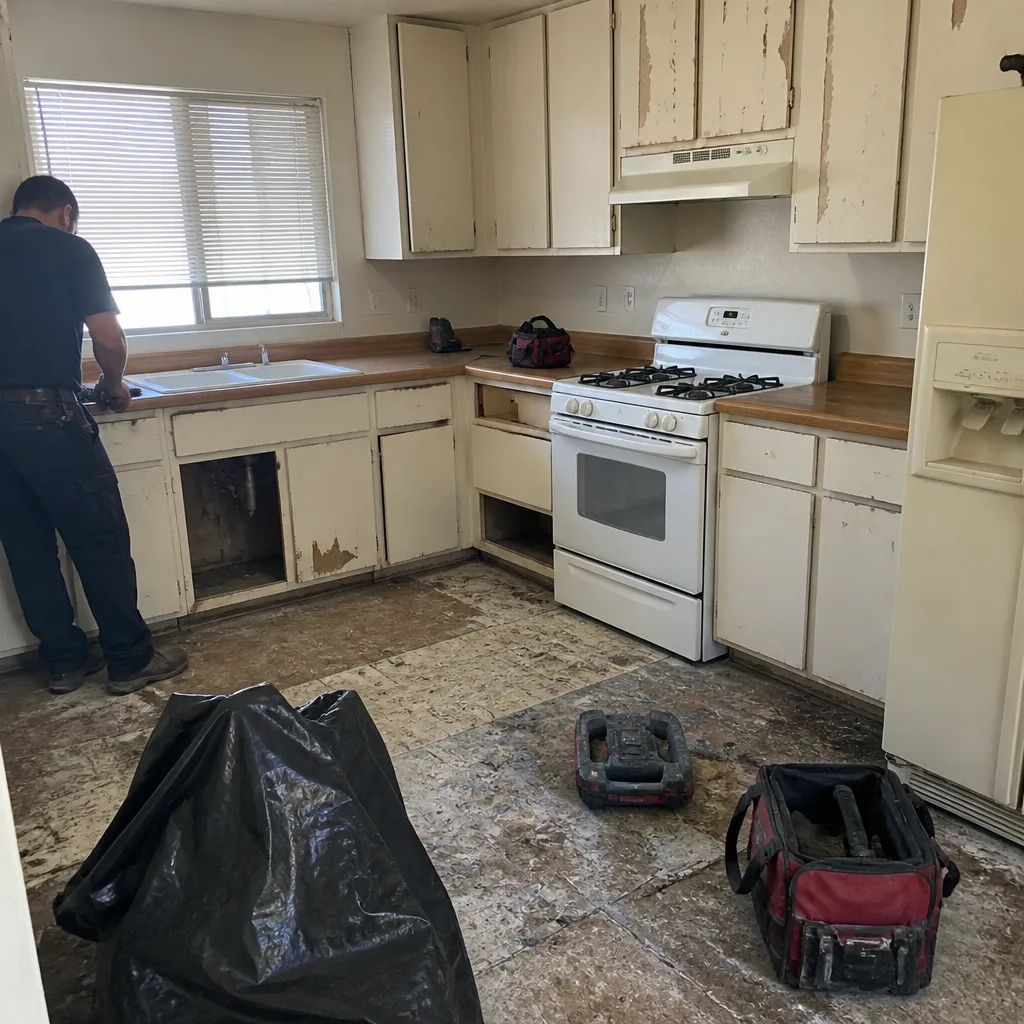 Before
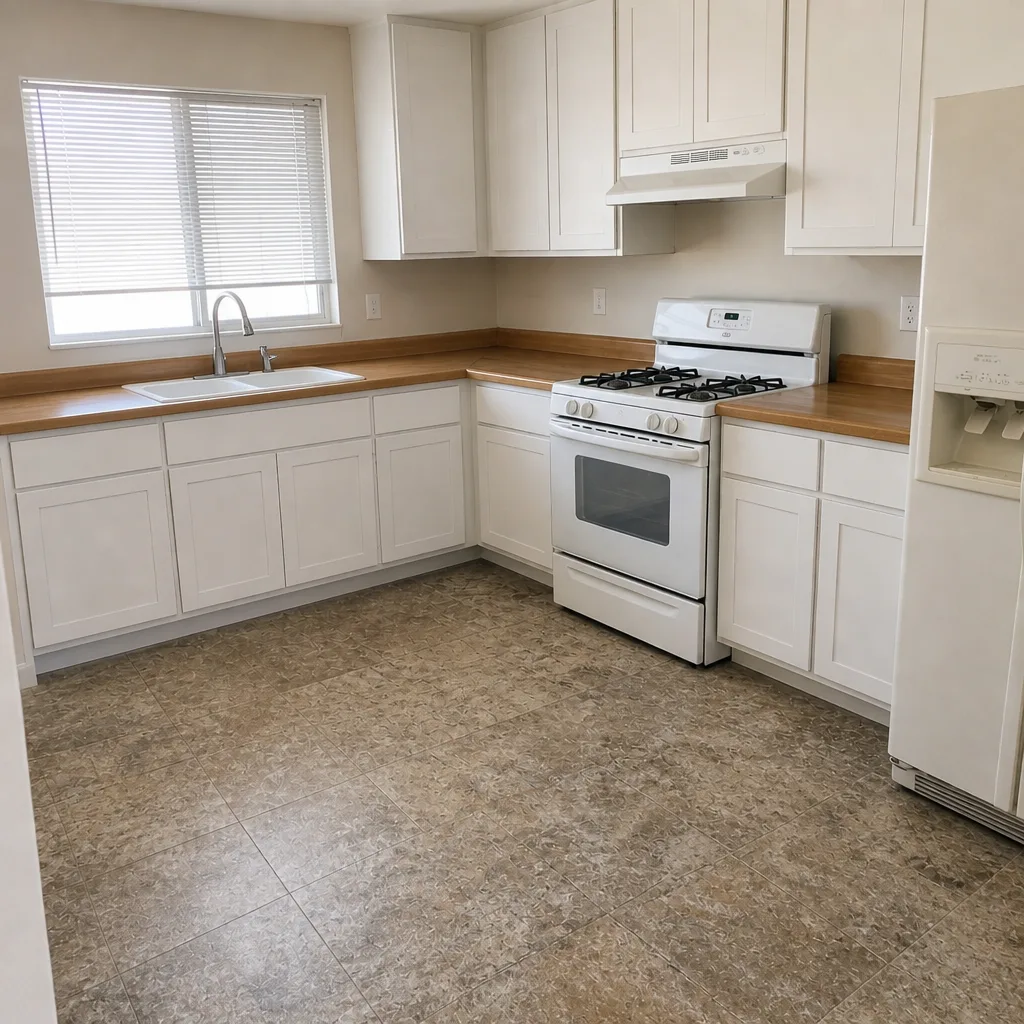 After
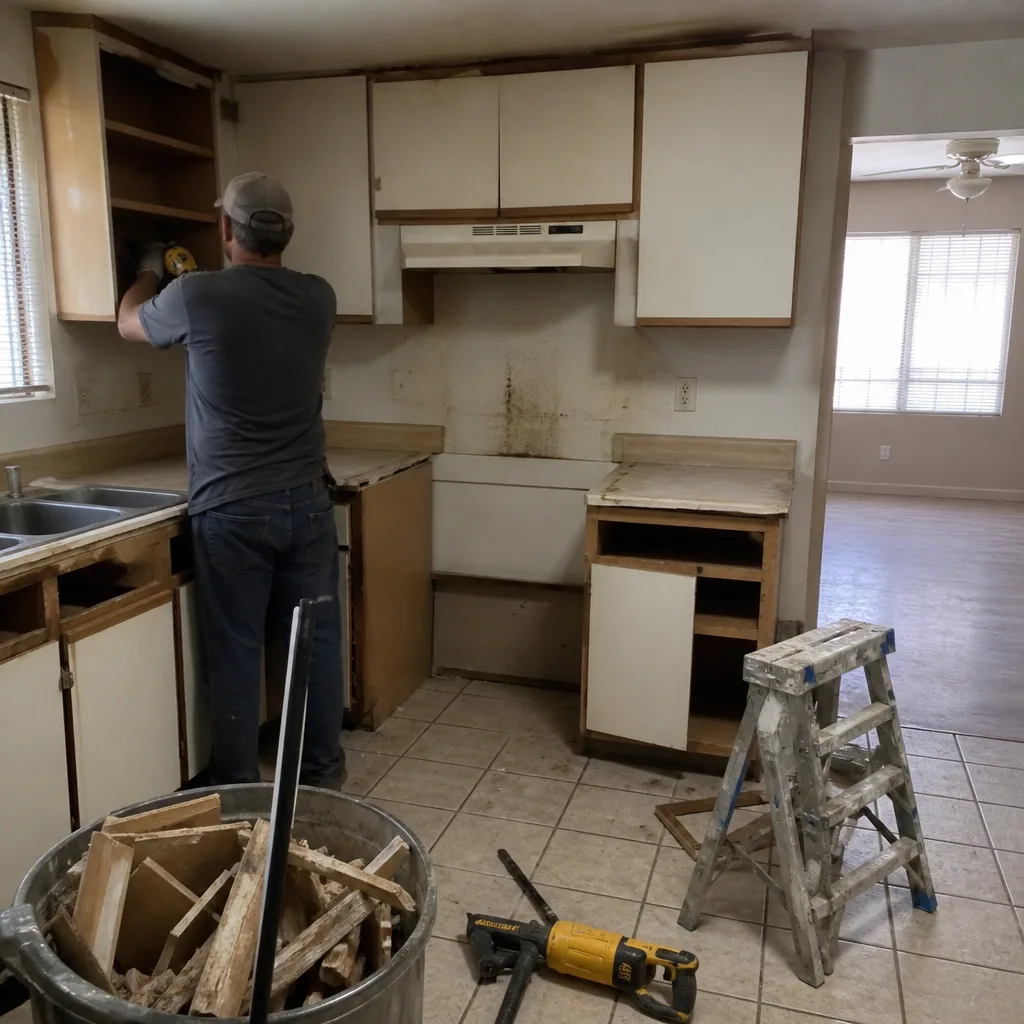 Before
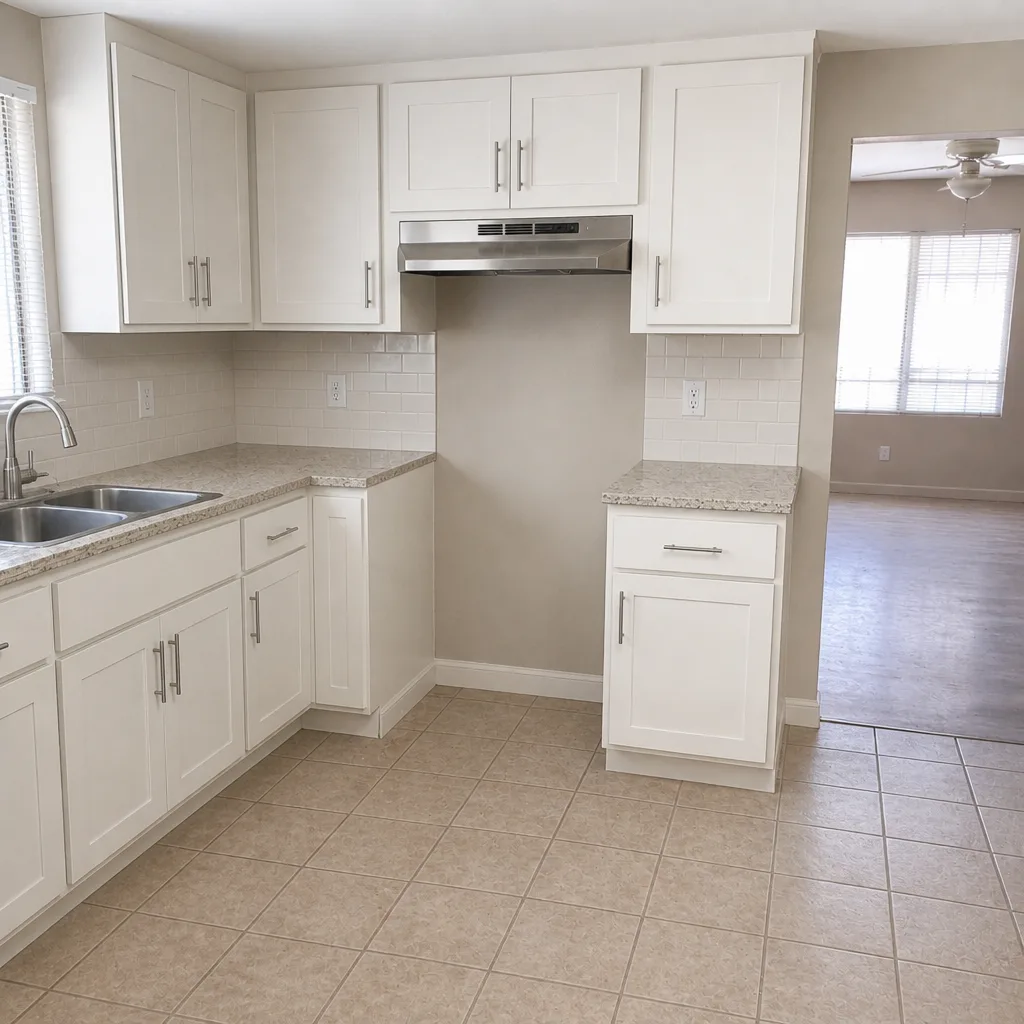 After
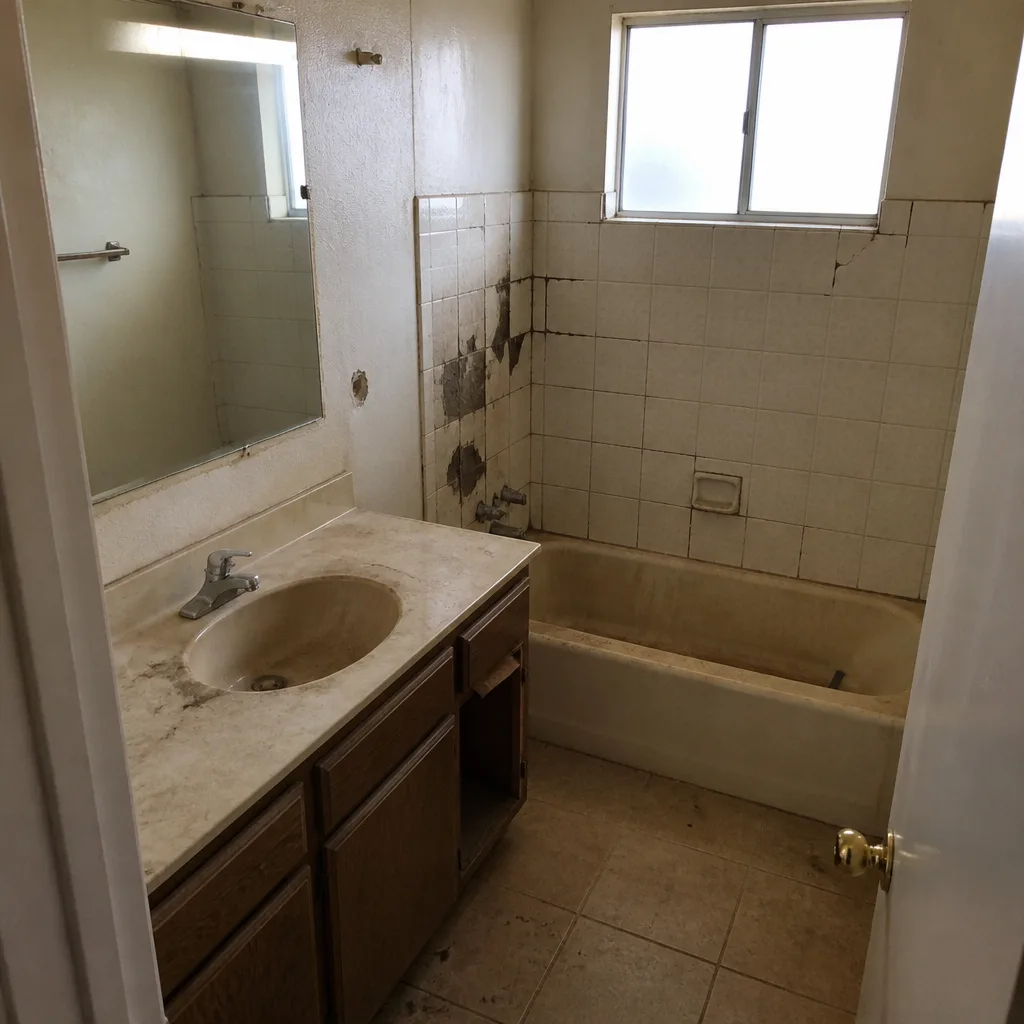 Before
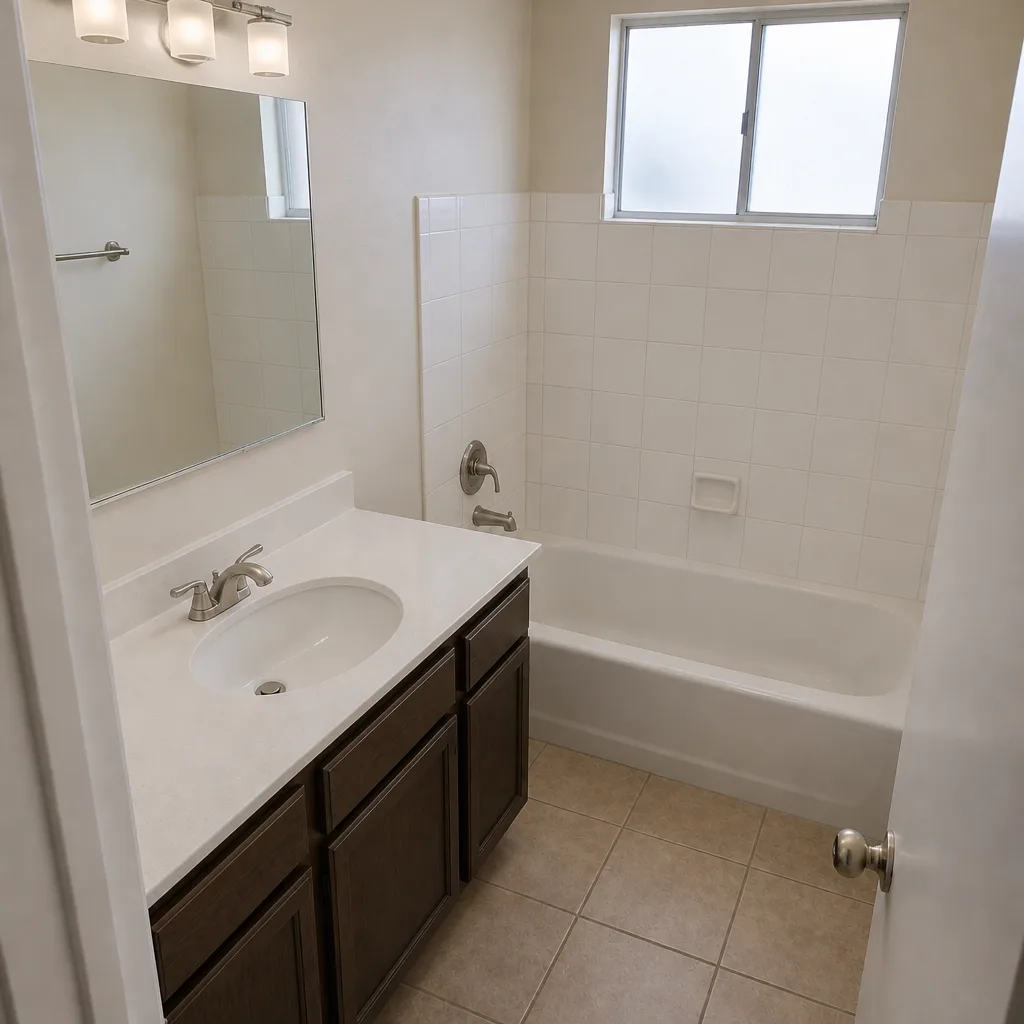 After
When to Call a Professional
Some driveway repairs are genuinely DIY: resetting a single paver, re-stabilizing a joint, pulling a weed out from a border. But there are specific scenarios where calling a professional saves money and, occasionally, keeps you safe:
When the caliche under the driveway needs breaking. A jackhammer, a mini-excavator, and haul-off equipment are not homeowner tools. When the driveway slope is negative toward the garage or foundation – water issues get expensive fast and grading is the fix. When a Clark County permit is involved. When the paver pattern has shifted more than half an inch at the borders. When a heavy truck (masonry delivery, concrete truck, moving van) has compressed the base under a section. Barrett & Sons Construction Las Vegas offers free estimates in Las Vegas – call (866) 814-4155. We’d rather come out, look at it honestly, and tell you it’s fine than have you spend a weekend struggling with a job that needs a machine.
Frequently Asked Questions
Most Las Vegas driveway paver projects run $12 to $22 per square foot installed, and a typical 800-square-foot driveway lands between $10,000 and $14,000 depending on material and caliche depth. Caliche removal is the biggest variable, adding $3 to $6 per square foot in thicker zones. Call (866) 814-4155 for an exact quote – estimates are free.
Usually yes, if the work touches the right-of-way or changes the impervious surface of the lot. Encroachment permits from Clark County or the City of Las Vegas are commonly required for any new driveway or driveway widening. We pull permits on every eligible job – that’s part of the bid, not an add-on.
A properly installed concrete paver driveway in Las Vegas lasts 25 to 30 years before needing major work, but the joint sand will need re-stabilization every 3 to 5 years in this climate. The pavers themselves outlast the joints by a wide margin. Base prep and caliche removal are what determine whether you get the full life out of them.
In Las Vegas, shifting pavers almost always mean the base was compromised – usually caliche that was paved over instead of broken and removed, or a base course not compacted to spec. Missing edge restraints are the second most common cause. Neither is fixed by re-sanding; both need the pavers lifted and the base corrected.
Not without your signature on a written change order. If caliche turns out deeper than the test pit showed, or the base needs an extra lift, we write the change order, review it with you, and get the signature before any of that work begins. No surprise invoices at the end.
Yes – Belgard and Techo-Bloc together offer enough desert-rated palettes to match nearly every Las Vegas HOA’s approved list. We’ll pull the HOA’s written palette first, order samples for your driveway, and submit the color and drainage plan together to the architectural review board. Call (866) 814-4155 to start with a free estimate.
The Bottom Line
Driveway paver work in Las Vegas is a different project than it is anywhere else in the country. The caliche has to be broken, the base has to be built for thermal expansion, the joint sand has to hold up to 160°F surface temps, the slope has to move monsoon water away from your house, and the color has to survive both the sun and your HOA review board. Get those five things right and a paver driveway in Las Vegas will look like new for decades. Get them wrong and you’ll be calling someone in year three. If you’re ready to price the project, we’re ready to walk the driveway and give you a written estimate. You can also start with our Driveway & Pavers in Las Vegas service page.
Barrett & Sons Construction is a name-on-the-truck, owner-operated company. Tom Barrett and his sons are on-site most days because we live here too, and the paver work we do in Las Vegas is the same work we’d want on our own driveway. Every eligible job gets permits pulled and inspections signed. Every completed project is backed by our 90-Day Done Right Promise. Call (866) 814-4155 for a free estimate, or start at the Barrett & Sons Construction Las Vegas home page to see what we do across every trade.
Written by the team at Barrett & Sons Construction Las Vegas.