
Last updated November 17, 2026
 Bathroom remodeling
 Kitchen remodeling
 Home additions & ADU
 Roofing
 Windows & doors
 Driveway & pavers
 Fence
Free written scope consultation - allowances, timeline, and change-order rules on paper before a single trade is scheduled
The Complete Bathroom Remodeling Guide for Las Vegas Homeowners
Las Vegas water hardness regularly measures above 300 mg/L, which puts it in the “very hard” range and near the top of the national scale. That single fact reshapes a bathroom remodel in ways most remodeling guides never mention. The brushed nickel faucet and cement grout that hold up fine in Portland can show chalky buildup and premature pitting in a Las Vegas bathroom within two to three years. This guide walks through how hard water should drive your fixture, tile, and grout choices, what the City of Las Vegas permit process actually requires, how to size ventilation for a desert shower zone, and what real remodel costs look like in this labor market rather than a national average. By the end you’ll know which decisions decide whether your remodel looks new in year five or tired by year three.
Quick Answer
A successful bathroom remodel in Las Vegas pairs a realistic scope with materials chosen for very hard water: PVD-coated brushed nickel over chrome, epoxy grout over cement grout in wet zones, ceramic-disc or brass valve bodies over plastic, and ventilation sized for a sealed desert house rather than a code minimum written for humid climates. Expect $9,000 to $16,000 for a cosmetic refresh and $28,000 to $65,000 for a full gut-and-rebuild, with a pulled permit on anything that moves plumbing, electrical, or walls. Materials age faster in Las Vegas water than in most U.S. cities, so buying for the water is the single highest-return decision you’ll make.
Styles & brands we work with
- Kitchen remodeling
- Bathroom remodeling
- Home additions & ADU
- Roofing
- Windows & doors
- Driveway & pavers
- Fence
Table of Contents
- Why Las Vegas Water Hardness Changes Every Remodel Decision
- Choosing Fixtures for Very Hard Water
- Tile and Grout Choices for Desert Bathrooms
- Ventilation Sizing for a Las Vegas Shower Zone
- Permits: What Triggers a Full Permit in Las Vegas
- Realistic Cost Ranges by Scope
- The Remodel Sequence, Start to Finish
- Common Mistakes to Avoid
Why Las Vegas Water Hardness Changes Every Remodel Decision
Hard water is water carrying dissolved calcium and magnesium. Las Vegas gets its supply largely from the Colorado River and local groundwater, and by the time it reaches a bathroom faucet it can carry more than 300 mg/L of those minerals. What that means inside your walls and on your fixtures is simple chemistry: when the water evaporates, the minerals stay behind as scale. Scale builds on shower glass, in the aerator, around the base of a faucet, and inside the cartridge of your valve body.
In our experience across Las Vegas bathrooms, the three places scale does quiet damage first are:
- Valve cartridges. Mineral grit works into the cartridge and abrades the seals. A cheap plastic cartridge that would last a decade on soft water can start sticking or leaking inside three years.
- Faucet finishes. Thin decorative plating on chrome and polished brass is the first surface to blister and pit where scale collects. The pitting begins in the ring of scale at the base of the spout.
- Grout lines. Calcium deposits bond to porous cement grout and stain shower floors and walls. Once scale locks into a cement grout, cleaning it back to original is close to impossible.
You can’t change the water, but you can decide how the bathroom in your Las Vegas home meets it. Everything that follows in this guide flows from that one fact.
Choosing Fixtures for Very Hard Water
The fixture choices that matter most in Las Vegas have less to do with style and more to do with what’s inside the wall and what the finish is made of. Buy for the water and the bathroom stays serviceable for years longer.
Valve bodies and cartridges
Spec ceramic-disc or all-brass valve bodies with replaceable cartridges. Brass bodies resist scale corrosion far better than zinc-alloy or plastic assemblies, and a known, name-brand cartridge means you can find a replacement in ten years instead of replacing the whole valve. Ask the supplier directly: is the cartridge replaceable, and who makes it? If the answer is vague, keep looking.
Finish: why brushed nickel beats chrome here
Chrome is a mirror finish, and every speck of scale on it shows. Chrome plating also tends to be thinner at the edges and pitting shows sooner where hard water sits. Brushed nickel and PVD-coated (physical vapor deposition) finishes hide mineral spotting, resist abrasion, and clean up without polishing compounds. For a Las Vegas bathroom, a brushed or PVD finish over a solid brass body is the practical combination, not the flashy one.
What to look for on the box
- Solid brass or ceramic-disc valve body, replaceable cartridge
- Brushed nickel or PVD finish, not a thin decorative plate over plastic
- Aerators you can unscrew and soak to clear scale
- A manufacturer with a published parts catalog you can look up
Brands matter here for the warranty and parts network, not the logo. Choose fixtures you can look up and service, not mystery hardware off a van. Need to solve other rooms while you’re at it? Our Barrett & Sons Construction Las Vegas home page lays out how we handle each trade.
Tile and Grout Choices for Desert Bathrooms
Two forces work on a Las Vegas bath: mineral-rich water on the surfaces, and real thermal movement on the structure. Both should shape your tile and grout picks.
Thermal expansion at the tub surround
A tub surround is where hot water spray, cooler wall assembly, and desert temperature swings meet. Tiles and the wall move at different rates. That’s why you use a flexible, modified thin-set and why a movement joint (a soft caulk joint where wall meets tub) should follow the tile, not hard grout. Skip it and you get hairline cracks and loose tiles within a couple of seasons. A good installer spends the extra hour on the tub seam and saves you a callback later.
Epoxy vs. cement grout in hard water
Cement grout is porous. In Las Vegas water it stains, scales, and needs resealing roughly once a year to hold up. Epoxy grout cures non-porous, resists mineral staining, and doesn’t need resealing on the same schedule. It costs more up front and demands a careful installer because it’s less forgiving to work, but in a hard-water shower zone it’s the durable choice.
- Shower walls and floor: epoxy grout, or a sealed cement grout you commit to resealing yearly
- Dry vanity wall and backsplash: cement grout is fine and easier to maintain
- Tub and floor seams: flexible silicone caulk, never grout
For grout and tile-setting materials, the major bagged brands (Quikrete and Sakrete among them) publish clear mix and cure specs. Use those specs and don’t let anyone mix by eye.
Ventilation Sizing for a Las Vegas Shower Zone
Here’s a counterintuitive one: Las Vegas has low ambient humidity, which means an undersized bath fan shows its damage later, not sooner. A house in a humid climate reveals a weak fan with fogged mirrors and peeling paint in a season. A desert house hides the same problem because the outside air is dry enough to pull moisture out the rest of the day. That delay is exactly why ventilation still deserves real attention in a Las Vegas remodel.
How to size it
- Measure the bathroom in cubic feet (length × width × height).
- Target about 1 air change per hour as a floor, but go higher for a heavily used shower. For a 5×8 bath with 8-foot ceilings, that’s roughly 320 cubic feet, and we spec fans well above the minimum for a full shower zone.
- Check the fan’s actual rated CFM at the static pressure of your duct run, not just the box claim.
- Duct it short and straight to the exterior. A long, kinked duct kills real airflow.
- Include a timer or humidistat switch so the fan runs well after the shower ends.
Code-minimum ventilation still applies, but treat it as the floor, not the goal. A fan that’s too small to clear shower moisture keeps the shower zone wet longer than it should. If your project grows into moving walls or adding space, our Home Additions & ADU in Las Vegas page covers when that crosses into a structural project.
Permits: What Triggers a Full Permit in Las Vegas
In Las Vegas, a simple fixture swap (replacing a faucet or an existing toilet) generally doesn’t require a permit. Anything that touches the plumbing rough-in, electrical circuits, wall structure, or the shower pan does. The line is whether you’re changing the system underneath, not whether you’re changing the look on top.
What triggers a full permit
- Relocating, adding, or re-piping supply or drain lines
- Adding or moving a new circuit, receptacle, or light in a wet zone (GFCI required)
- Removing or moving a wall, or adding a new shower or bath structure
- Replacing a shower pan or curb assembly
What City of Las Vegas inspectors look for
- Rough-in plumbing inspected before tile goes on: proper slope on the shower pan, correctly sealed drain connection, vented waste lines
- Electrical inspected before drywall: GFCI protection, correct box spacing, wet-zone fixture ratings
- Wall and framing inspection after any structural change
- Final walk-through after tile, fixtures, and the ventilation are set
One point we make to every homeowner: the permit inspector works for you, not for the contractor. The inspection is your second set of trained eyes. Every eligible job we take on gets permits pulled and inspections signed, because the last contractor most customers used told them permits were optional.
Realistic Cost Ranges by Scope
National remodeling averages are a poor fit for Las Vegas, where the local labor market, desert-specific waterproofing, and hard-water materials move the numbers. Here’s a working range broken out by scope, based on what we see on Las Vegas jobs. These are planning ranges, not quotes; the only real number comes from a written, line-item estimate.
| Scope | Typical Las Vegas range | What it covers |
|---|---|---|
| Cosmetic refresh | $9,000 – $16,000 | New fixture set, vanity top, paint, re-caulk, reseal, possibly re-grout; no permit typically |
| Mid-range refresh with plumbing/electrical | $18,000 – $30,000 | New valve bodies, GFCI, ventilation, waterproofed tub surround, epoxy grout; permit |
| Full gut-and-rebuild | $28,000 – $50,000 | Full tear-out, new shower pan, re-pipe, new circuits, tile, fixtures, ventilation; permit |
| Full gut with layout change | $45,000 – $65,000 | Relocated fixtures, new layout, structural adjustments, premium brands; permit and inspections |
Why Las Vegas numbers run where they do:
- Hard-water materials cost more up front. Epoxy grout and solid-brass valve bodies carry a premium, but they’re cheaper over ten years than replacements.
- Local labor rates. Las Vegas trade labor prices reflect a busy construction market, not a coastal one, so mid-range work stays reasonable while specialized waterproofing commands more.
- Desert waterproofing takes care. A sealed desert house and a shower zone demand proper membrane and slope work. Rushing it costs more later.
Every scope, allowance, and price change on a job we run arrives as a written change order before work happens. An allowance that isn’t on paper is a surprise waiting for a date. Call (866) 814-4155 for a free, written, line-item estimate.
The Remodel Sequence, Start to Finish
A bathroom remodel fails most often from sequencing, not materials. Here’s the order we hold to on a Las Vegas job:
- Written scope and permit. Lock the scope, allowances, and change-order process in writing, then pull the permit before demo.
- Demo. Tear out to the studs where plumbing or structure changes; protect the rest of the house from dust.
- Rough-in and inspection. Plumbing and electrical rough-in, vent duct, then the inspection before any tile or drywall.
- Waterproofing. Shower membrane, floor slope, and the tub-surround movement joint. This is where a desert bath earns its warranty.
- Tile and grout. Set with flexible thin-set, grout with epoxy in wet zones, caulk the seams.
- Fixtures and finishes. Valve trim, faucets, vanity, toilet, mirror, lighting. Finish with the ventilation tested and timed.
- Final inspection and walk-through. Sign-off, cleanup, and a written record of everything installed.
Expect two to four weeks for a cosmetic refresh and four to eight weeks for a full rebuild, with permit and inspection scheduling factored in.
Common Mistakes to Avoid
- Buying ceramic-style fixtures without checking the cartridge. A beautiful faucet with a hard-to-source cartridge becomes a replacement in three years in Las Vegas water. Ask who makes the cartridge before you commit.
- Using cement grout in the shower with no resealing plan. Cement grout in very hard water stains and scales. Either use epoxy or commit to yearly sealing.
- Skipping the tub-surround movement joint. Hard grouting the wall-to-tub seam cracks from thermal movement within a season. Use flexible caulk.
- Undersizing the fan because the desert air is dry. A weak fan hides its damage for a year, then the ceiling and paint show it. Size for the shower, not the code minimum.
- Starting demo before the permit. A bathroom with no permit on record can complicate resale and inspection in Las Vegas. Pull it before the first nail moves.
- Trusting a verbal scope and a phone price. The allowance that isn’t on paper becomes the surprise on the final invoice. Demand written allowances and written change orders.
See the difference
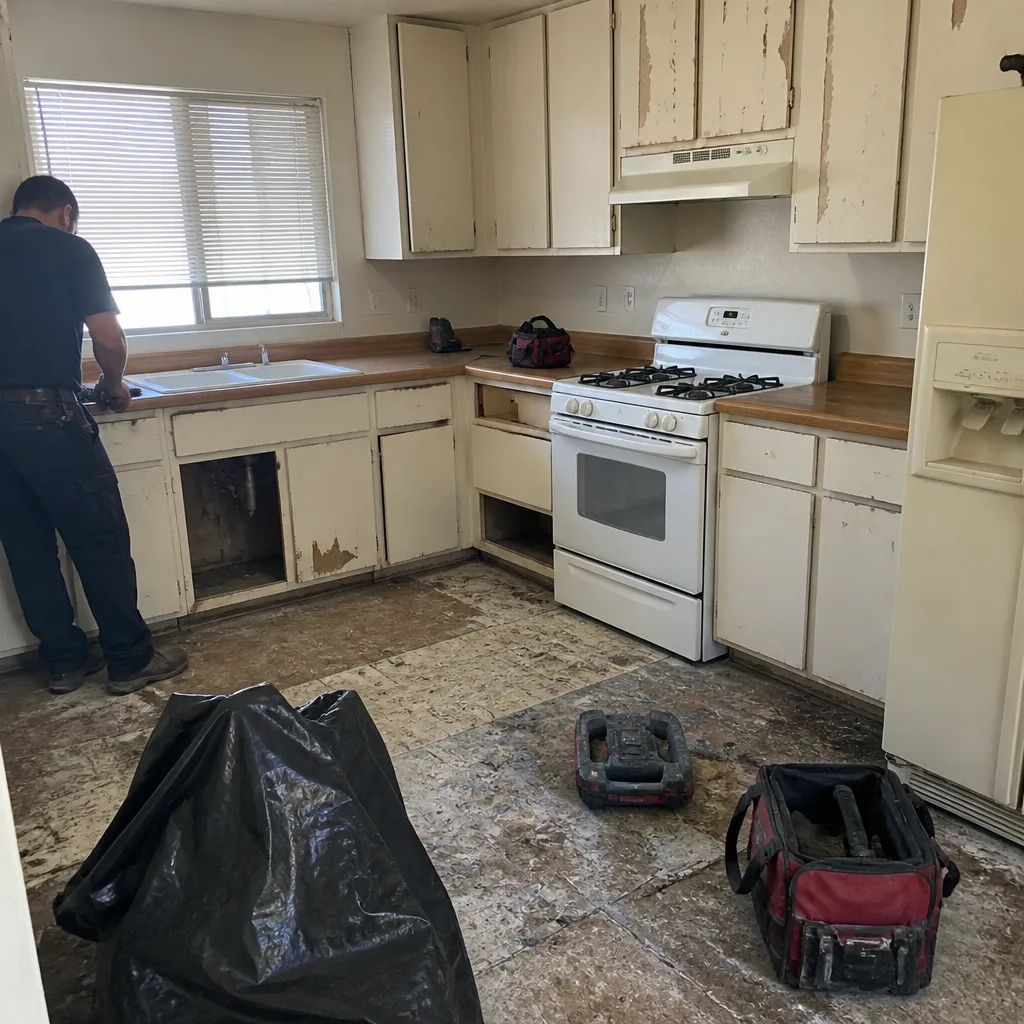 Before
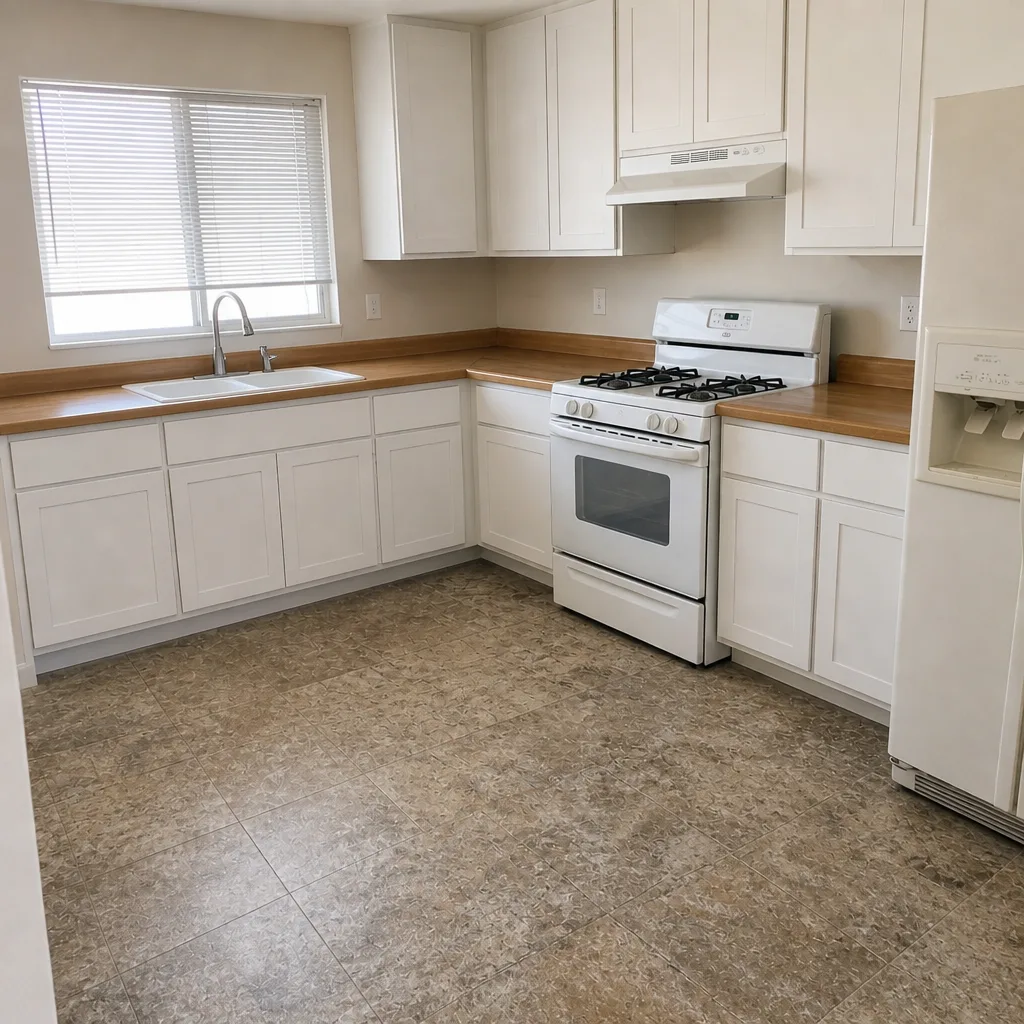 After
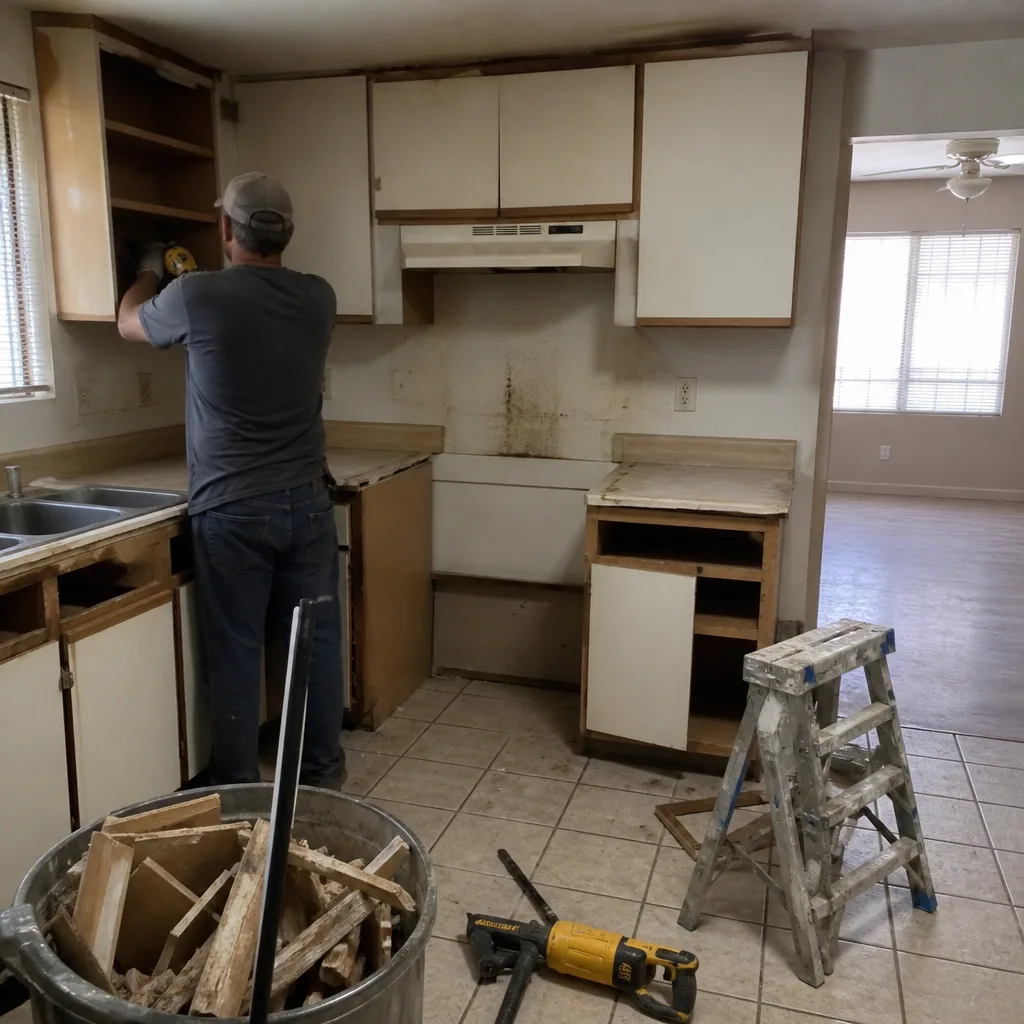 Before
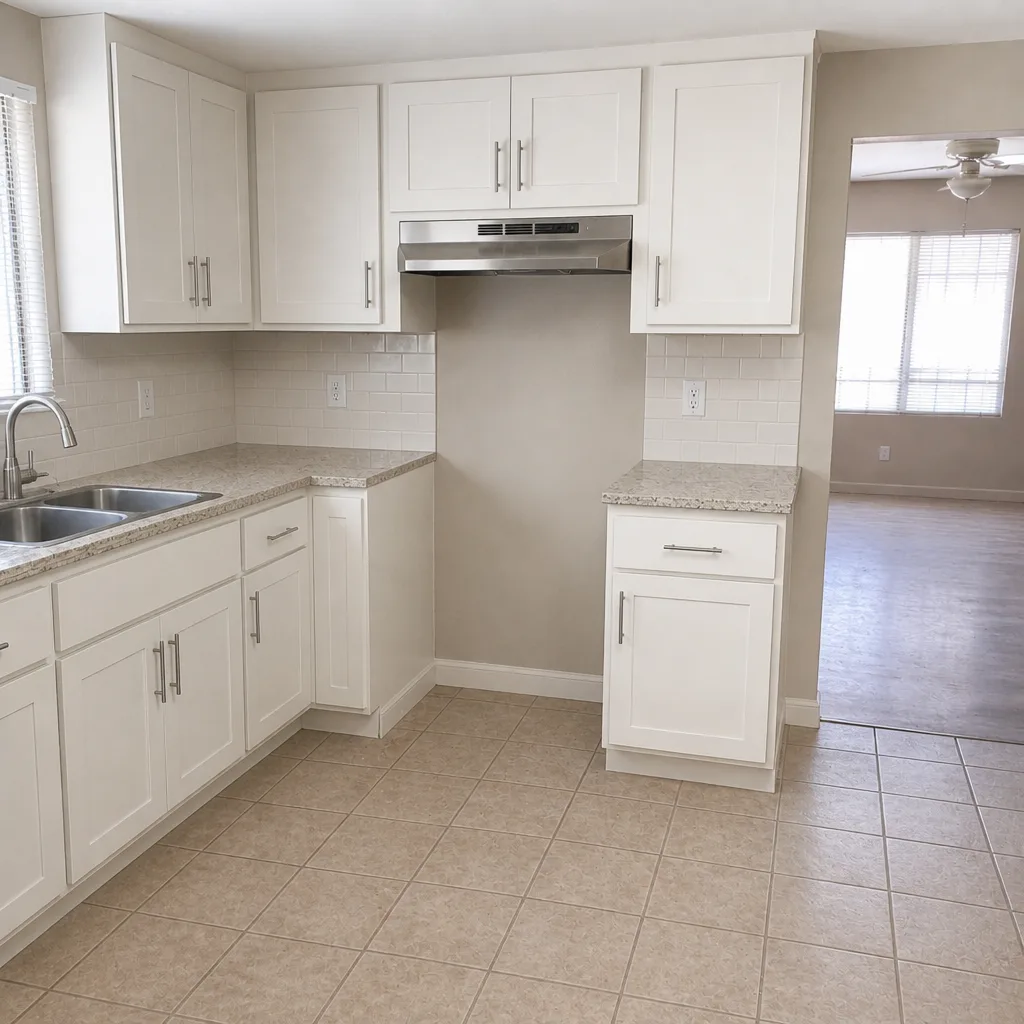 After
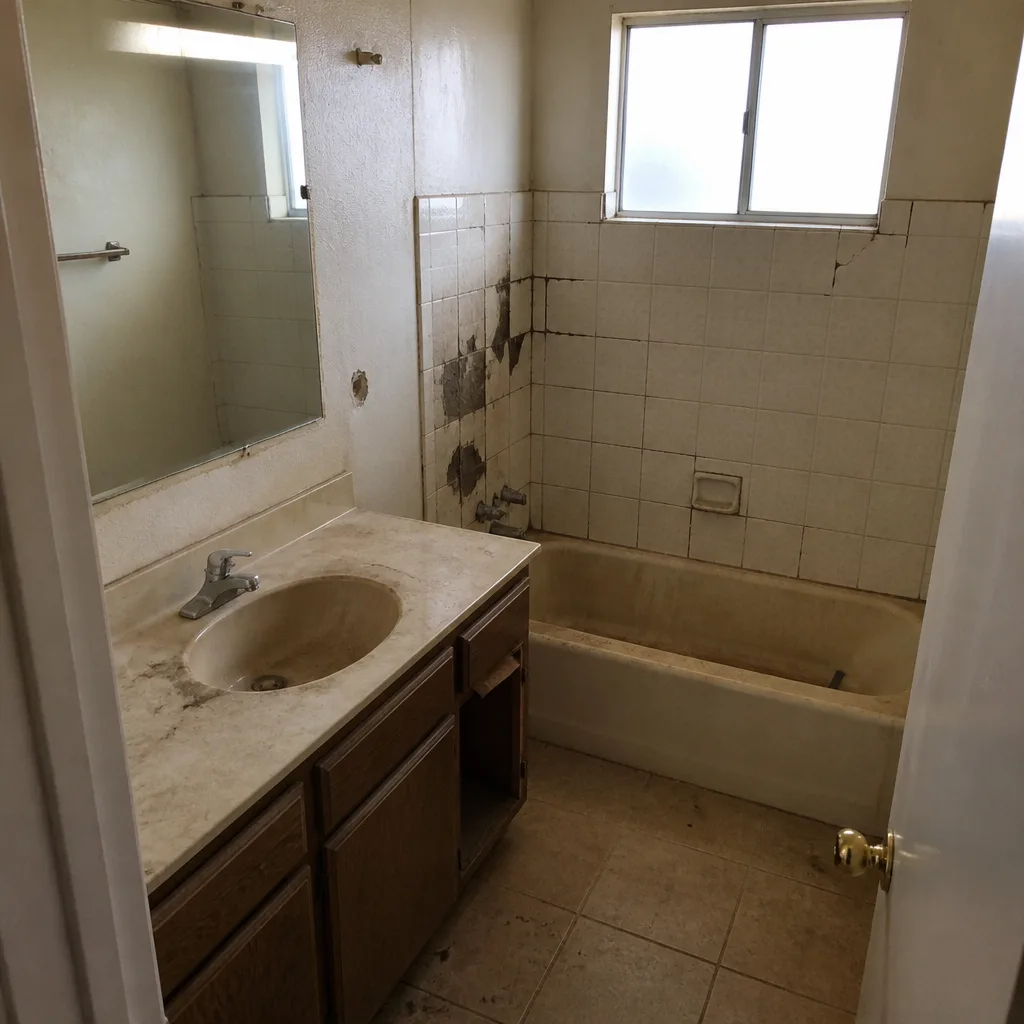 Before
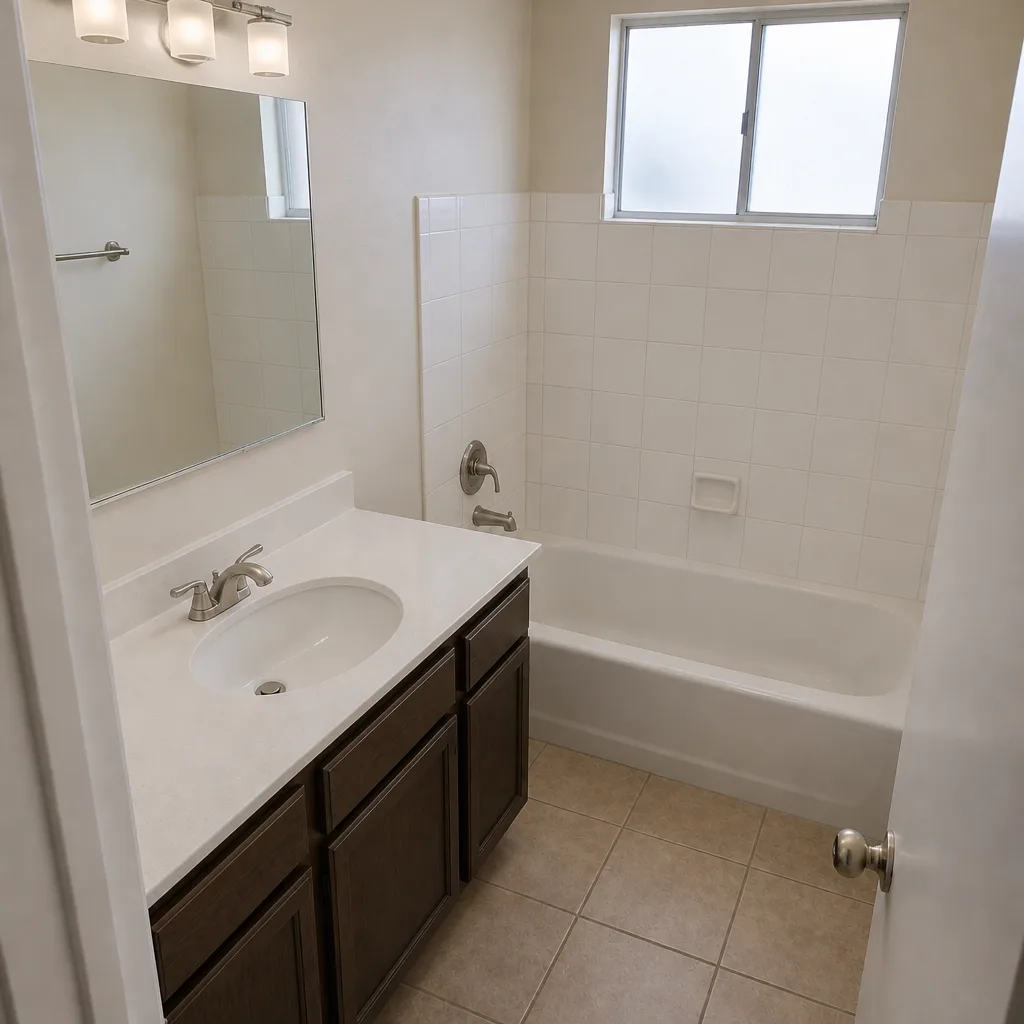 After
When to Call a Professional
Some bathroom work is genuinely fine to handle yourself: swapping a faucet, replacing a toilet, changing a vanity top, re-caulking seams. But certain jobs belong to a licensed, insured professional. Anything that touches the shower pan membrane, plumbing rough-in, electrical circuits in a wet zone, or the ventilation duct is work where a mistake stays hidden until it’s expensive. A shower pan that leaks for months can rot the floor and framing beneath it before you see a stain. Electrical in a wet zone without GFCI is a real hazard. And any job involving a wall removal or structural change carries a load-bearing risk no homeowner should take on. A trained professional, permits pulled, and inspections signed protect you from problems that show up years later. Barrett & Sons Construction Las Vegas offers free estimates in Las Vegas – call (866) 814-4155 to schedule yours.
Frequently Asked Questions
A cosmetic refresh in Las Vegas typically runs $9,000 to $16,000, a mid-range refresh with plumbing and electrical work runs $18,000 to $30,000, and a full gut-and-rebuild runs $28,000 to $65,000 depending on whether the layout changes. Hard-water materials like epoxy grout and solid-brass valve bodies add cost up front but cut replacement costs over time. Call (866) 814-4155 for an exact written quote – estimates are free.
A simple fixture swap like replacing a faucet or toilet usually doesn’t need a permit, but anything that moves plumbing, electrical, walls, or the shower pan does. City of Las Vegas inspectors check rough-in plumbing, GFCI electrical, and the shower pan slope before tile goes on. Pull the permit before demo; it’s your protection, and every eligible job we take on gets permits pulled and inspections signed.
Yes. Las Vegas water regularly measures above 300 mg/L, which is “very hard,” and the dissolved minerals scale onto fixtures and work into valve cartridges, causing sticking, leaks, and pitting within two to three years on lower-quality parts. Choosing solid-brass valve bodies, brushed nickel or PVD finishes, and epoxy grout in wet zones is how you build against it. Call (866) 814-4155 and we’ll spec fixtures for the water you actually have.
Use epoxy grout in shower walls and floors and in any hard-water zone. Epoxy cures non-porous, resists mineral staining, and doesn’t need yearly resealing; cement grout stains and scales in Las Vegas water and needs resealing about once a year. Cement grout is fine on a dry vanity wall. A careful installer matters either way. We’re happy to walk through grout options before you choose – call (866) 814-4155 for a free estimate.
A cosmetic refresh usually takes two to four weeks, and a full gut-and-rebuild runs four to eight weeks, with permit and inspection scheduling factored in. Hard-water material choices and desert waterproofing affect the timeline because they add careful steps. Call (866) 814-4155 to get a written timeline with your estimate – our technicians have up to 28 years of experience and we quote the schedule in writing up front.
Size for the shower, not the code minimum. Measure the bathroom in cubic feet, target at least one air change per hour as a floor, and go higher for a heavily used shower zone; for a typical 5×8 bath that’s roughly 320 cubic feet, and we spec fans well above the minimum. Because Las Vegas air is dry, an undersized fan shows its damage later, so buy real capacity and duct it short and straight.
The Bottom Line
Las Vegas water hardness above 300 mg/L is the variable that decides how long your bathroom looks new. Choose solid-brass valve bodies, brushed nickel or PVD finishes, and epoxy grout in wet zones. Use a flexible movement joint at the tub surround, size the fan for the shower rather than the code minimum, and pull a permit on anything that moves plumbing, electrical, walls, or the shower pan. Cosmetic refreshes land around $9,000 to $16,000 and full rebuilds around $28,000 to $65,000 in this labor market. Written scope, written allowances, written change orders. Call Barrett & Sons Construction Las Vegas at (866) 814-4155 for a free estimate and a line-item, written quote from a name you can look up.
Written by the team at Barrett & Sons Construction Las Vegas.