
Last updated November 17, 2026
 Bathroom remodeling
 Kitchen remodeling
 Home additions & ADU
 Roofing
 Windows & doors
 Driveway & pavers
 Fence
Free written scope consultation - allowances, timeline, and change-order rules on paper before a single trade is scheduled
DIY vs Professional Bathroom Remodeling: What’s Safe to Do Yourself
Nevada requires a licensed contractor for any single project over $1,000 in combined labor and materials. Most bathroom remodels cross that line before the tile is even ordered. That means a homeowner who frames, plumbs, or wires their own bathroom is, in the eyes of the state, doing unlicensed contracting work – even on their own house. This guide draws an honest line between the work that genuinely saves you money and the work that quietly hands you liability you can’t hand back. We’ll cover what’s safe in a Las Vegas bathroom, what isn’t, and where the real costs hide.
Quick Answer
In a Las Vegas bathroom remodel, painting, demolition of non-load-bearing finishes, accessory installation, and hanging a vanity cabinet are safe to do yourself. Plumbing rough-in, electrical work, waterproofing for a tiled shower, and any structural change are not – they’re permit-required in Clark County, they’re where leaks and fires start, and doing them without permits can complicate resale and insurance claims. The savings on the easy tasks are real. The savings on the hard ones usually cost more in the end.
Styles & brands we work with
- Kitchen remodeling
- Bathroom remodeling
- Home additions & ADU
- Roofing
- Windows & doors
- Driveway & pavers
- Fence
Table of Contents
- The $1,000 Threshold: What Nevada Law Actually Says
- What’s Permit-Required in a Clark County Bathroom
- The Bathroom Tasks That Are Genuinely Safe to DIY
- The Tasks to Leave to a Licensed Professional
- How Mixing DIY and Pro Work Can Void a Warranty
- Tile: DIY Savings vs. the Cost of Fixing Mistakes
- Resale and Insurance: What’s on the Record Matters
- Common Mistakes to Avoid
The $1,000 Threshold: What Nevada Law Actually Says
Nevada’s contractor licensing rule is simple on paper and misunderstood in practice. Any single construction project with combined labor and materials over $1,000 requires a licensed contractor. Under $1,000, a homeowner can work on their own property without a license. Over that line, the work isn’t just regulated – it’s a legal threshold that affects what happens if something goes wrong.
Here’s the part most people miss. The $1,000 limit applies to the whole project, not to individual tasks. If you’re doing a full bathroom gut and you handle the plumbing rough-in yourself while a licensed contractor does the tile, the overall project – labor plus materials – is well past $1,000. The contractor is licensed for their scope. Your portion is where the exposure lives.
Why does this matter in a Las Vegas home? Because the exposure shows up in two places:
- Resale disclosure. Nevada requires sellers to disclose known defects and unpermitted work. A bathroom with unpermitted plumbing rough-in is a disclosure item, and buyers’ agents treat it as a red flag that invites a price reduction or a walk.
- Insurance claims. If a supply line behind an unpermitted shower valve fails and damages the floor below, the adjuster will ask who did the work and whether it was inspected. A claim on unpermitted plumbing can be denied or only partially covered, and the burden lands on the homeowner.
We’ve seen this exact scenario play out on more Las Vegas jobs than we’d like. The homeowner saved $1,400 doing the rough-in, then spent $6,000 on water damage and another $2,800 replacing the flooring. The math was never in their favor.
What’s Permit-Required in a Clark County Bathroom
Clark County’s building department requires permits for plumbing and electrical work in a bathroom remodel, plus any structural change. That includes moving a drain, adding a circuit for a heated floor, changing the location of a vanity outlet, and any wall that carries load. It does not include cosmetic work – paint, tile over existing substrate, replacing a faucet, hanging a mirror.
The list you need to know as a Las Vegas homeowner:
- Plumbing rough-in – moving or adding supply and drain lines. Permit required.
- Electrical work – new outlets, GFCI changes, dedicated circuits for a jetted tub or heated floor. Permit required.
- Waterproofing for a tiled shower – not always permitted on its own, but inspected as part of the plumbing and framing package. Failures here are the single most common source of water damage we see in Las Vegas bathrooms.
- Wall removal or relocation – permit required, and a structural engineer may sign off depending on the load path.
- Window changes – including converting a tub surround window to glass block, which is common in older Las Vegas homes. Permit required.
- Cosmetic work – paint, tile replacement over existing substrate, vanity swap with existing plumbing, hardware, accessories. No permit needed.
A permit inspector works for you, not for the contractor. That’s the part most homeowners don’t hear often enough. When an inspector signs off on your shower pan and the drain rough-in, you have a record that the work met code. If you ever sell the home or file a claim, that record is worth more than the permit fee.
The Bathroom Tasks That Are Genuinely Safe to DIY
This is the list where the savings are real and the downside is close to zero. If you’re handy and you have a weekend, these are the tasks that make sense to keep.
- Demo of finishes and non-load-bearing walls. Pulling tile, removing a vanity, taking out a tub surround, and demoing non-load-bearing partition walls (after confirming with a professional that nothing structural runs through them) are safe. Rent a dumpster. Wear eye protection and a respirator when cutting tile or drywall.
- Painting. Bathroom paint needs a mold-resistant formula rated for high humidity. Two coats. This is the highest-value, lowest-risk DIY task on the list.
- Accessory installation. Towel bars, TP holders, mirrors, floating shelves, robe hooks. Use proper anchors for tile vs. drywall. Stud finder, level, done.
- Vanity assembly and cabinet install. Set a prefab or semi-custom vanity cabinet against an existing plumbing location. Hooking up the sink and faucet to existing supply lines is a reasonable DIY task. Moving those lines is not.
- Fixture swaps. Replacing a showerhead, a faucet with matching rough-in, or a toilet with the same drain location. Turn the water off first. Use fresh supply lines.
- Caulking and grout touch-ups. Replacing failing caulk lines in Las Vegas is an ongoing maintenance task – the dry climate cycles the grout lines, and caulk around showers dries out faster here than most homeowners expect. Doing it yourself twice a year saves money.
Notice what’s missing from that list: anything behind a wall. The rule of thumb that works in a Las Vegas bathroom is simple – if the work is visible when you’re done, it’s fair game. If it’s hidden and it can leak, burn, or fail silently, that’s where the line sits.
The Tasks to Leave to a Licensed Professional
The work on this list carries real risk to life, property, or the resale value of your Las Vegas home. Don’t do it yourself.
- Plumbing rough-in. Moving a drain, adding a shower valve, re-routing supply lines. A slow leak behind a tiled wall can run for months before it shows, and by then the subfloor and the joists underneath are compromised. We’ve opened up Las Vegas bathrooms where the subfloor had been slowly failing for two years behind a beautiful tile job. The tile was fine. The framing wasn’t.
- Electrical work in a wet room. Bathroom electrical is regulated tightly for good reason – GFCI protection, dedicated circuits, bonding for a jetted tub, exhaust fan sizing. Amateur electrical in a bathroom is the leading cause of code failures we see at inspection.
- Shower pan and waterproofing. The waterproofing layer under tile is the entire game. Get it wrong and you’re back to demo in 18 months. It’s also where the permit inspection catches errors before they cost you a floor.
- Any structural change. Load-bearing wall removal, floor joist repair, framing changes. An engineer signs off and the permit protects you. This isn’t a judgment call.
- Gas line work. If you’re adding a gas fireplace or a gas fixture as part of the bathroom, that’s licensed plumber territory, full stop.
The one gray area we get asked about most: tile setting. Some homeowners can lay a solid tile floor. Fewer can do a properly sloped shower floor with a correct waterproofing bond. If you’re going to DIY tile, do it on the floor or the wall – leave the shower pan to someone with a permit and a warranty.
How Mixing DIY and Pro Work Can Void a Warranty
This is the part of the guide that catches homeowners off guard. If a licensed contractor installs your new shower and you did the plumbing rough-in, and the shower fails a year later, the contractor’s workmanship warranty covers their work – the tile, the waterproofing, the setting method – not yours. The moment their investigation finds your rough-in as the cause, the claim is denied and you’re paying for the repair.
We’ve seen this play out on Las Vegas jobs where the homeowner swore the leak was the tile. The tile was perfect. The drain connection – installed by the homeowner – had been weeping since day one. The repair meant tearing out a $4,000 tile job the homeowner had paid a pro to install, all to fix a $180 connection under it.
Two honest questions worth answering before you split a job:
- Who touched it last? If the failure traces back to your work, the warranty doesn’t apply to theirs. Period.
- Are the scopes clearly separated in writing? A licensed contractor should spell out, in the contract, exactly what they’re installing and what they’re not responsible for. That written scope is what protects both of you when something goes wrong.
Every project we take on carries a written 90-Day Done Right Promise, and every price change arrives as a written change order before any work starts. If the rough-in isn’t part of our scope, that’s written down clearly – not buried in the fine print at the end. The allowance that isn’t on paper is a surprise waiting for a date. So is the handoff between trades.
Tile: DIY Savings vs. the Cost of Fixing Mistakes
Tile is the most common DIY task we see on Las Vegas bathroom jobs, and it’s where the math gets interesting. A standard bathroom floor is 35 to 50 square feet. Tile and thinset for that area runs roughly $8 to $15 per square foot for mid-grade porcelain at Las Vegas retailers, so $400 to $750 in materials. A licensed tile setter charges $12 to $25 per square foot for labor in Las Vegas depending on the layout and the substrate prep, so $650 to $1,250 for installation labor. Done once, correctly, the total is $1,050 to $2,000.
The DIY savings look like $650 to $1,250. Here’s what happens when it goes wrong:
- Improperly prepped substrate – thinset bonded directly to OSB or a poorly prepped slab. The tile loosens within 12 to 24 months. Cost to fix: full demo of the floor ($350 to $600 in labor) plus re-materials plus the correct install. Homeowner ends up $1,800 to $2,400 past the “savings.”
- Failed slope on a shower floor – water pools against the curb, grout cracks, the shower pan fails. Cost to fix: floor demo, waterproofing replacement, and re-tile. $3,000 to $5,500 on the low end.
- Layout errors – narrow slivers at the wall, visible lippage between tiles, mismatched grout lines. Not a failure, but it’s a permanent reminder every time you walk in. Resale buyers notice.
The Las Vegas climate adds a wrinkle most guides don’t mention. Our extremely dry air and 100-plus-degree summers mean tile adhesive and grout dry faster than the manufacturer’s directions assume. A DIY setter who doesn’t account for flash-set time ends up with a weak bond on about a third of the floor. A pro who works in Las Vegas for a living mixes small batches and works faster. That experience is real and it’s worth the labor number.
If you’re going to do one thing yourself on a bathroom tile job, prep the substrate. Removing the old flooring and getting to clean concrete or new backer is the labor-heavy part, and it’s the part you can safely hand off to a crew without taking on liability. Then pay a pro to set the tile.
Resale and Insurance: What’s on the Record Matters
The paper trail matters more than most Las Vegas homeowners realize until they’re on the wrong side of it. Permitted, inspected work creates a record. Unpermitted work creates an absence of one, and that absence shows up in places you don’t want it.
On resale, the standard Nevada Residential Disclosure form asks sellers to disclose any known work done without required permits. That disclosure becomes part of the buyer’s offer negotiation. A home inspector who sees a newer shower with no permit record on file will flag it. The buyer asks for a credit, a repair, or walks – and the seller is in a weaker position because the work is already done.
On insurance, a claim that traces back to unpermitted plumbing or electrical can be denied entirely. Some carriers will cover the immediate damage but deny the underlying repair. Some will cover both but raise the premium. The specific outcome depends on the carrier, the adjuster, and the cause – but all three outcomes are worse than a permit and an inspection that cost $250 to $450 and took a week.
This is where a licensed contractor earns their fee without visible effort. Every eligible job we take on includes permits pulled and inspections signed. The permit inspector works for the homeowner, not for us. That’s why we like them. The record they leave behind is what protects you at resale and at claim time, years after the tile has been grouted and forgotten.
Common Mistakes to Avoid
- Starting demo before you’ve confirmed what’s behind the wall. Las Vegas homes from the 1980s and 1990s sometimes have surprises – asbestos wrap on old plumbing, non-standard framing, plumbing that’s been patched by a prior homeowner. Open the wall and understand what’s there before you commit to a plan and a budget.
- Believing permits are optional. The last contractor most homeowners used told them permits were optional. They weren’t. Unpermitted work is the single biggest resale problem we see on bathroom jobs in Las Vegas.
- Ordering tile before the plumbing is roughed in. Tile layout depends on where the drain sits, where the valve comes out, and how deep the niche goes. Pick tile after rough-in, not before.
- Skipping the exhaust fan. Las Vegas bathrooms without proper ventilation grow mold on the ceiling in two summers. Size the fan to the room and vent it out the roof, not into the attic.
- Painting over failing drywall. A coat of paint hides a slow leak for a while. It doesn’t fix the leak. Check behind the paint first.
- Doing the plumbing rough-in yourself and assuming the contractor will “just work around it.” If your rough-in fails, the warranty on the tile they set over it does not apply. We’ve seen this exact denial more than once.
- Choosing a contractor by phone quote alone. If you can’t verify the license, the address, and the name on the contract, the quote doesn’t matter. Tom Barrett publishes his name, his address, and his license number – look it up before you sign anything with anyone.
Building out the rest of the property in the same timeframe? Our guide to Home Additions & ADU in Las Vegas walks through the permit sequence on bigger structural jobs, and the same logic applies to any bathroom that touches a load-bearing wall.
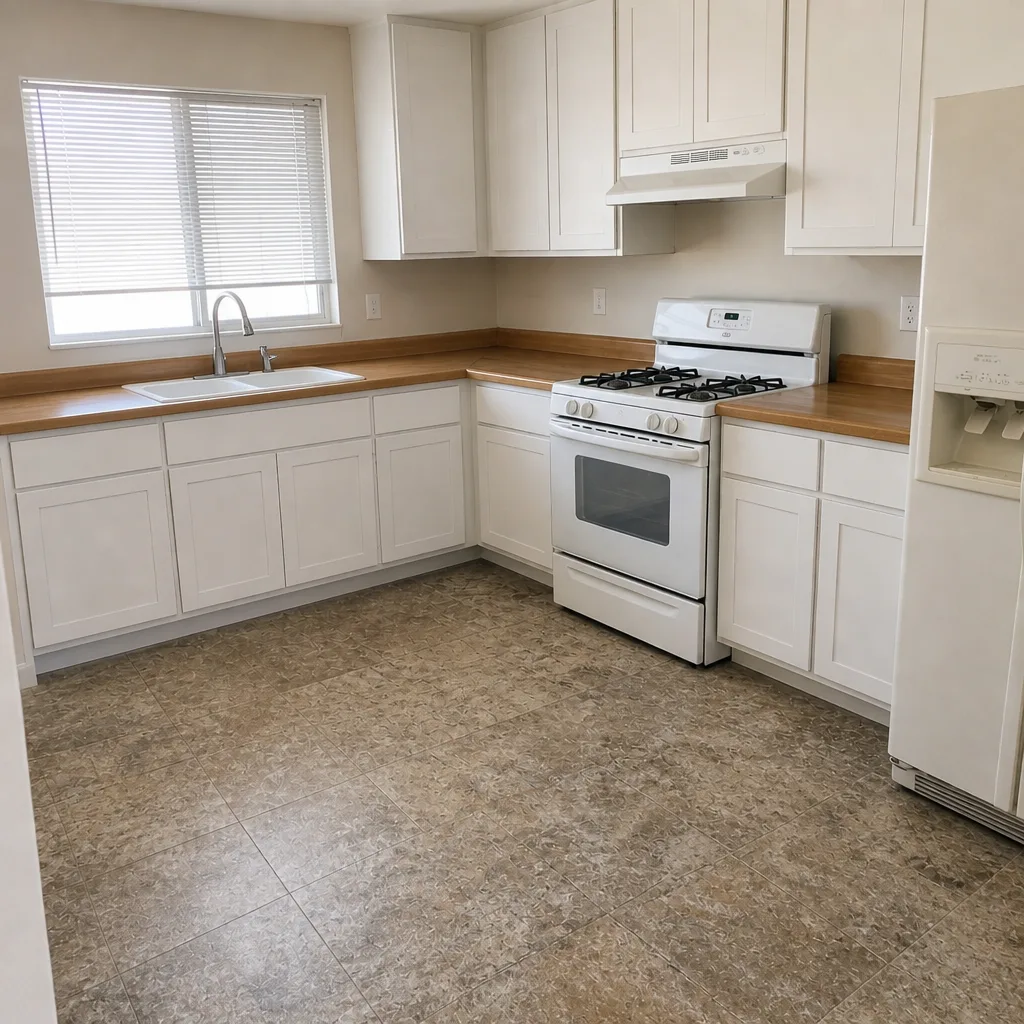
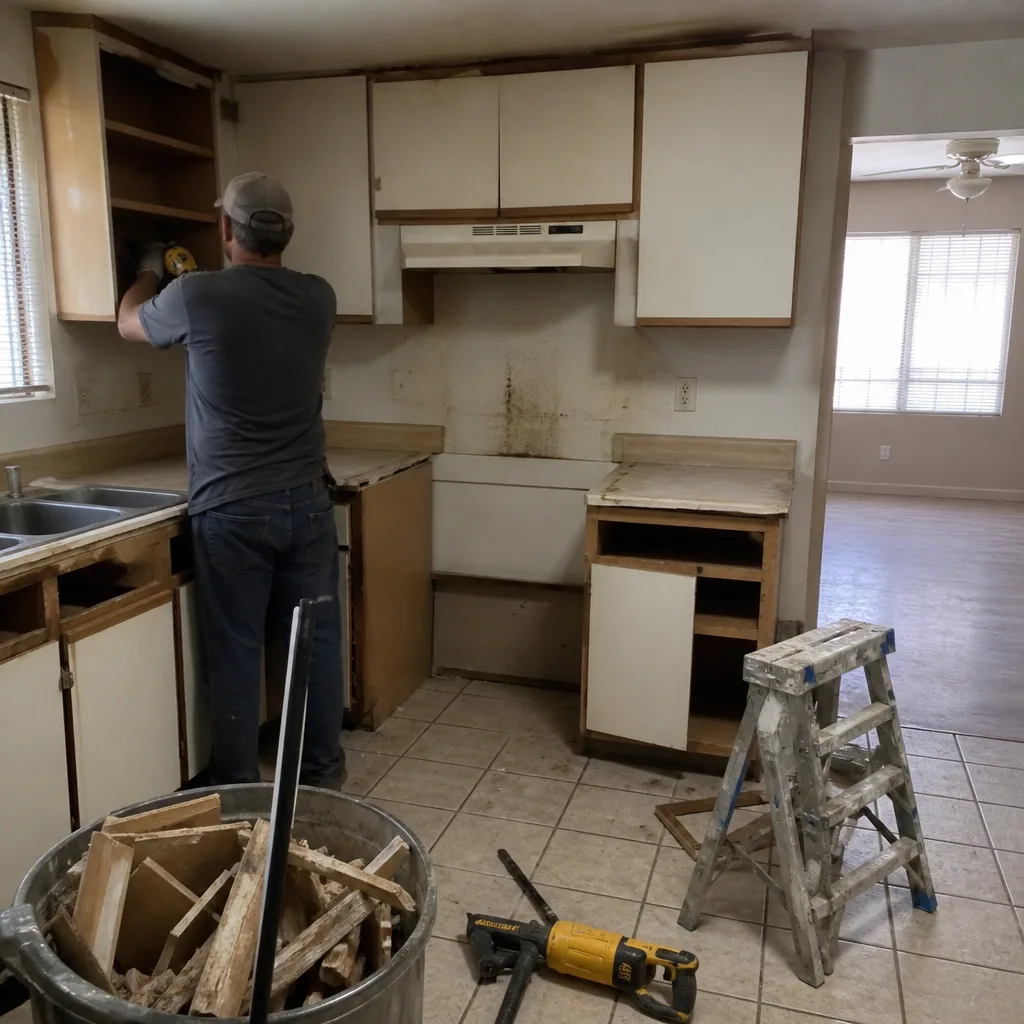
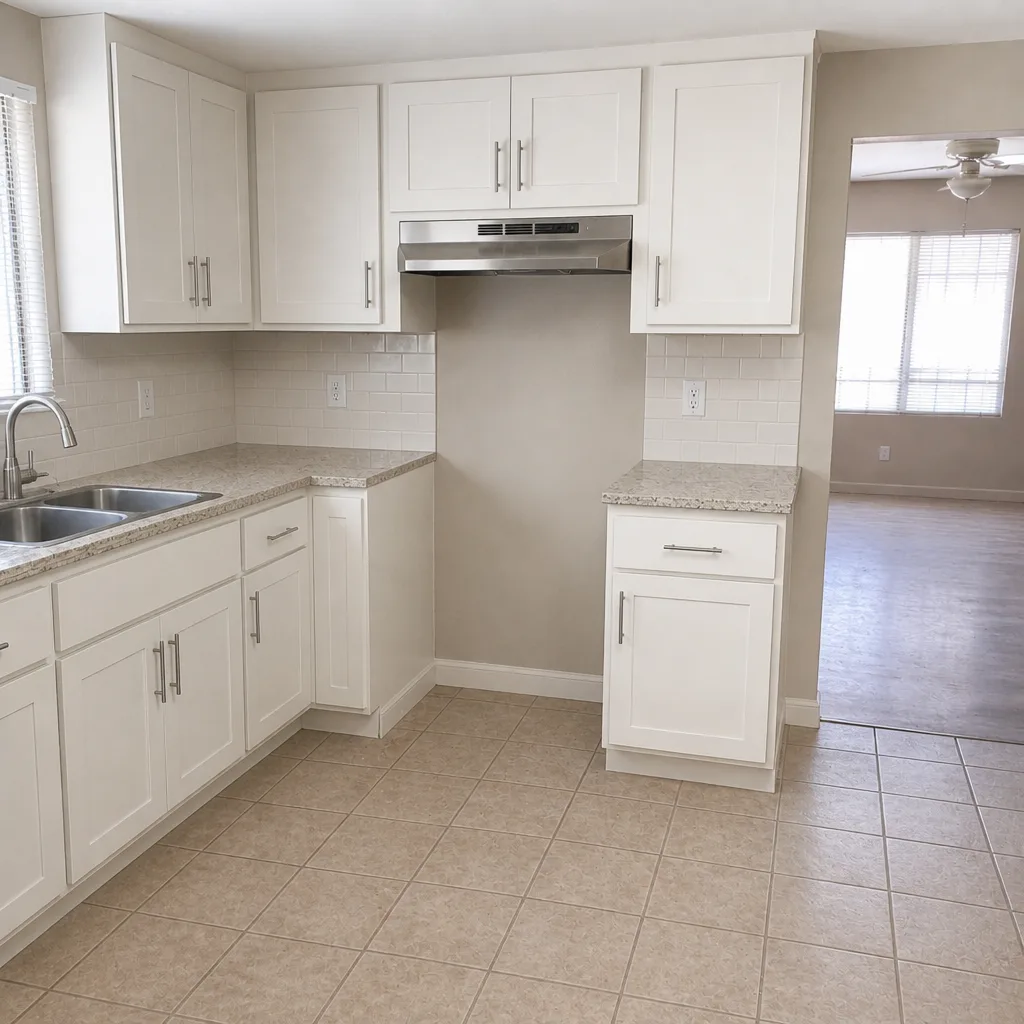
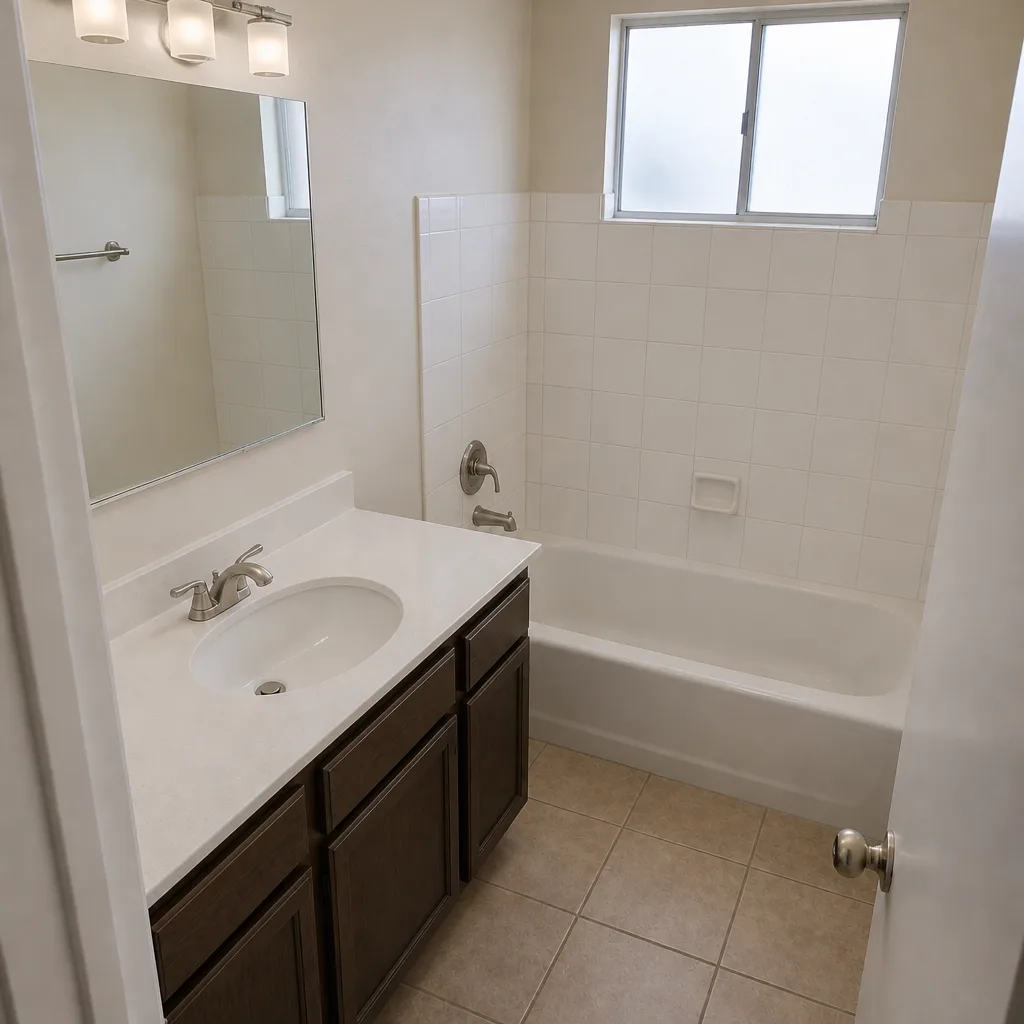
See the difference
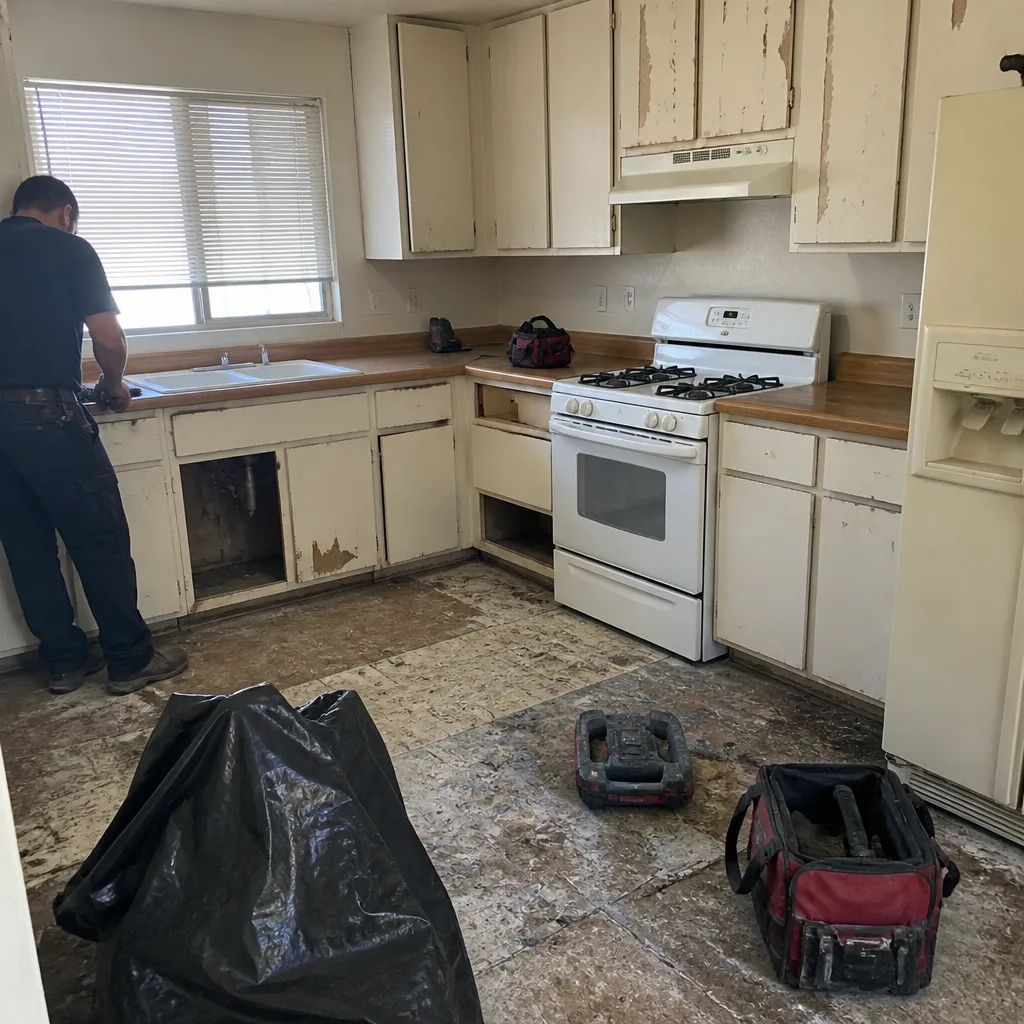 Before
 After
 Before
 After
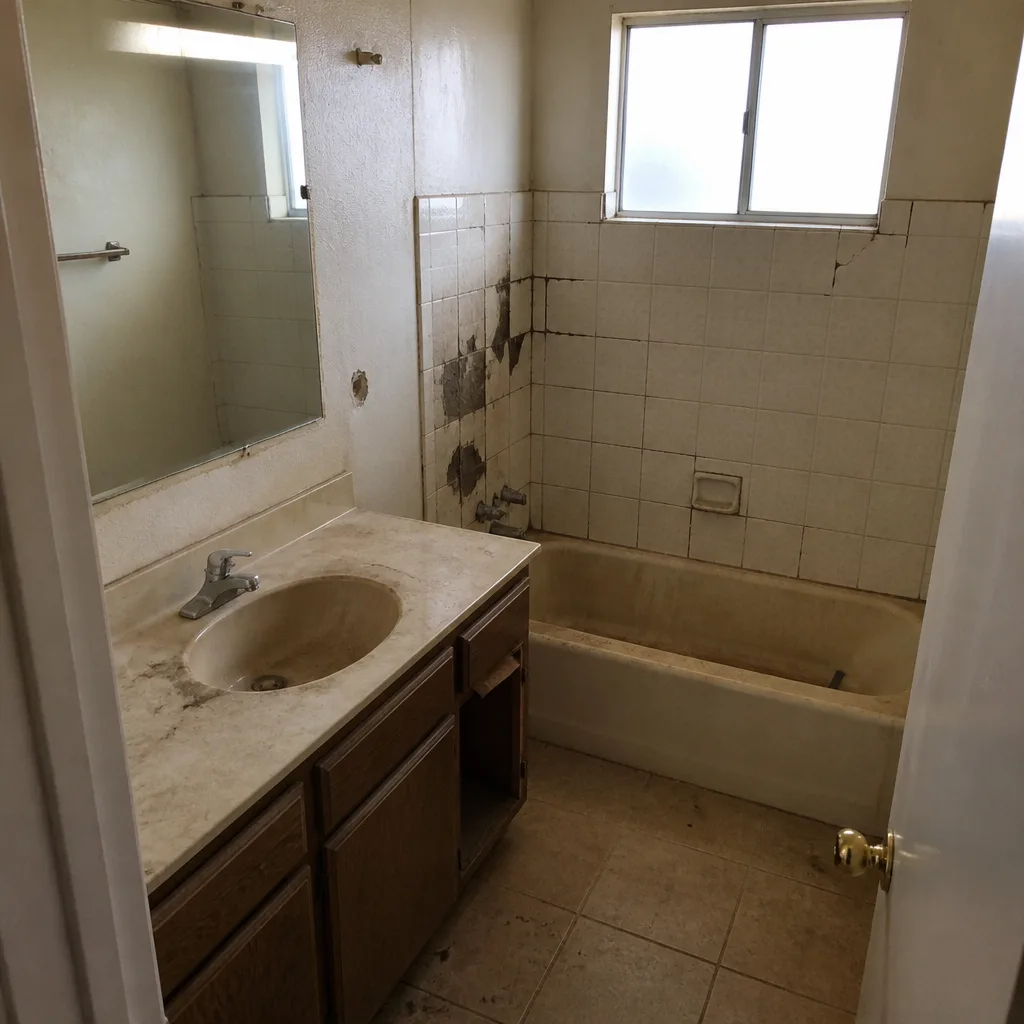 Before
 After
When to Call a Professional
Some jobs carry liability that a homeowner can’t reasonably absorb. Call a licensed contractor when the work involves:
- Moving or adding plumbing supply or drain lines.
- Any electrical work beyond a fixture swap.
- Any wall removal or structural change.
- Building a new shower pan or re-waterproofing a tiled shower.
- Any project where the total labor and materials exceed $1,000 and you want a permit and an inspection to protect you at resale.
- Any situation where the last contractor didn’t pull a permit and you don’t know what the walls actually contain.
Barrett & Sons Construction Las Vegas offers free estimates in Las Vegas. A live person answers the phone 24 hours a day, 7 days a week, and every project runs on written scope, written allowances, and written change orders before anything moves. Call (866) 814-4155 to schedule yours.
We’re Barrett & Sons Construction, and we’ve been a Las Vegas fixture since 1998 – owner-operated, name-on-the-truck, with Tom and his sons on-site most days. Our crew members are background-checked and carry the Barrett & Sons name on every visit. When you’re ready to scope the whole property or just the bath, the same Barrett & Sons Construction Las Vegas home page has the full picture.
Frequently Asked Questions
Yes, as long as the total labor and materials for the single project stay under $1,000. Above that threshold, Nevada requires a licensed contractor, and work in that range is considered unlicensed contracting under state law – even on your own home. Painting, demo of finishes, accessory installation, and cosmetic tile replacement don’t require a contractor or a permit; plumbing and electrical work do. Call (866) 814-4155 if you want a free second opinion on where your project sits.
Painting, demo of finishes, accessory installation, vanity assembly, fixture swaps on existing plumbing, and caulking touch-ups are safe and save real money. Plumbing rough-in, electrical work, shower pan waterproofing, and structural changes are the four areas where the risk outweighs the savings every time. The general rule: if it’s hidden behind a wall and it can leak or burn, leave it to a licensed professional.
Yes for plumbing, electrical, structural, and window changes – and no for cosmetic work like paint, accessory installation, and floor tile over an existing substrate. A permit costs roughly $250 to $450 and takes about a week to pull in Las Vegas. The inspection record it creates is what protects you at resale and at insurance claim time. Pull the permit.
It can, depending on what fails and how the scopes were separated in writing. If you do the rough-in and a contractor sets tile over it, their workmanship warranty covers the tile and the setting method – not your rough-in. If the failure traces back to your work, the claim is denied and the repair is on you. Get every scope and every handoff written into the contract before work starts.
A full bathroom remodel in Las Vegas runs roughly $14,000 to $28,000 for a standard-size bathroom, with tile, plumbing, electrical, and fixtures as the biggest line items. A smaller refresh – vanity, fixtures, paint, and tile – runs $6,000 to $11,000. The exact number depends on layout changes and the material tier. Call (866) 814-4155 for an exact quote – estimates are free.
The work becomes a required disclosure on the Nevada residential disclosure form, and most Las Vegas buyers treat it as a red flag that invites a price reduction or a repair credit. A home inspector who spots a newer shower or electrical fixture with no permit record will flag it. The buyer’s leverage goes up, your leverage goes down, and the repair cost comes out of the sale price. Call (866) 814-4155 for a free estimate if you want to get the paperwork right before you list.
The Bottom Line
The real question in a Las Vegas bathroom remodel isn’t whether you’re handy – it’s whether the task carries liability you can absorb. Paint, demo, accessories, and fixture swaps are safe and save money. Plumbing rough-in, electrical, shower waterproofing, and structure are not, and no savings on those tasks survives the first failure. The $1,000 threshold in Nevada is real, the resale disclosure is real, and the warranty line through a mixed DIY/pro job is real. Keep the savings where they’re genuine. Leave the risk where a permit and a license absorb it.
If you want a second opinion on what’s safe to keep, Fence Installation in Las Vegas and Driveway & Pavers in Las Vegas follow the same permit-and-inspection logic, and our crew will walk through either during a free estimate. Materials from Tremron, Techo-Bloc, and Cambridge Pavers come with paper trails; so does every bathroom we touch. Call (866) 814-4155 for a free estimate on your Las Vegas bathroom remodel today.
Written by the team at Barrett & Sons Construction Las Vegas.