
Last updated November 17, 2026
 Bathroom remodeling
 Kitchen remodeling
 Home additions & ADU
 Roofing
 Windows & doors
 Driveway & pavers
 Fence
Free written scope consultation - allowances, timeline, and change-order rules on paper before a single trade is scheduled
Bathroom Remodeling Troubleshooting: Common Problems and How to Fix Them
Tiles that pop off a shower wall 8 – 14 months after installation almost always trace back to one of two things: uncured mortar that was tiled over too fast, or a wall substrate that wasn’t waterproofed before the tile went on. In Las Vegas, that second one shows up more than you’d expect, because plenty of crews learned the trade in lower-humidity markets where tile could get away with shortcuts it can’t get away with here. Our dry heat pulls moisture out of thin-set faster than a humid climate does, and it also shrinks the wood framing inside your walls by a hair, over and over, all year. That movement is patient. It waits a few seasons, then it shows up as a hairline grout crack or a hollow-sounding tile.
Most of the problems homeowners call us about after a remodel aren’t random bad luck. Each symptom traces back to a specific installation shortcut. Read this guide and you’ll know which shortcut likely caused which problem, and whether you’re looking at a Saturday job or a callback conversation with whoever did the work.
Quick Answer
Most bathroom remodel problems fall into five predictable buckets: cracked grout from movement or a failed mortar bed, drain odor from a dry P-trap or failed wax ring, water stains below the bathroom from a supply drip, drain leak, or shower pan failure, sudden shower pressure loss from a new valve cartridge or a volume-versus-pressure issue, and an exhaust fan that runs but won’t clear steam because it’s undersized, ducted too far, or has a stuck damper. Diagnosing which one you’ve got takes a flashlight, a bucket, and about twenty minutes of patience.
Styles & brands we work with
- Kitchen remodeling
- Bathroom remodeling
- Home additions & ADU
- Roofing
- Windows & doors
- Driveway & pavers
- Fence
Table of Contents
- Why is my grout cracking after a bathroom remodel?
- Why does my bathroom still smell like a drain after remodeling?
- What does a water stain below the bathroom mean?
- Why did my shower pressure drop after the remodel?
- Why doesn’t my exhaust fan clear the steam?
- Which of these problems can I fix myself?
- Why do these problems show up more in Las Vegas homes?
- Common mistakes to avoid
Why Is My Grout Cracking After a Bathroom Remodel?
The first thing to figure out is whether the crack is at a joint or through a field. They mean two very different things.
Movement cracks at the tub-to-floor joint are normal. A tub full of water and a person sitting in it flexes. The floor it sits on doesn’t flex the same way. That seam moves every time someone bathes, so grout gets hairline cracks there no matter who installed it. The correct fix is flexible caulk, not grout, and re-caulking that seam every few years is routine maintenance, not a sign of a bad job.
Grout cracking in a field of tiles, or grout lines that look fine but the tiles sound hollow, is not normal. That points at the mortar bed underneath. Two things cause it most often:
- Tiling over uncured mortar. Thin-set needs its full cure window before weight gets loaded on it. Tile set too early compresses the bed unevenly, and grout lines crack months later as the whole assembly settles.
- A missing or failed waterproofing layer behind the tile. In Las Vegas, this shows up on shower walls where the installer used greenboard or cement board without a membrane. The board gets wet, expands, and slowly pushes tiles off the wall.
- Press a screwdriver handle lightly against a few suspect tiles and tap. A dull thud means the tile has separated from the bed. A sharp click means it’s still bonded.
- Check whether the crack runs through grout only or through the tile itself. Tile body cracks are almost always impact or a structural issue.
- Look for efflorescence, that white chalky film along the grout. On a shower wall it’s a strong sign of water getting behind the tile.
Hollow-sounding tiles that are walking off a shower wall in a house built before 2010 are a rebuild, not a re-grout. We see this in a lot of older Las Vegas and North Las Vegas homes where a previous remodel left the original drywall in place behind new tile.
Why Does My Bathroom Still Smell Like a Drain After Remodeling?
A persistent drain smell after a remodel has three usual causes. Test them in this order, cheapest to most involved.
1. A dry P-trap. Every fixture below the floor drains into a curved pipe that holds a couple of inches of water. That water is a seal against sewer gas. If a fixture in that bathroom (a rarely used tub, a second sink, or an adjacent shower you’re not using) hasn’t been run in a few weeks, the trap dries out, and the smell wafts in. Do this: run water in every fixture in the bathroom for 30 seconds. Wait a day. If the smell is gone, you found it. If you’re in a house that sits empty part of the year (a common situation in Las Vegas vacation or retirement properties), set an automatic reminder to run the water once a month.
2. A failed wax ring on the toilet. The wax ring is the seal between the toilet and the floor flange. If it’s loose or it dried out during the remodel when the toilet was pulled and reset, sewer gas can escape quietly. Do this: stand beside the toilet, put a foot on each side of the bowl, and rock it gently. Any movement means the bolts are loose or the ring is bad. Smell the base of the toilet directly. A strong smell right at the floor means replace the wax ring. That’s a two-hour job for a crew, not a homeowner one if the flange is damaged.
3. A venting issue. If the first two tests come up negative, you likely have a vent stack that’s blocked or improperly tied in. This is a job for a licensed plumber with a camera. In our experience in Las Vegas, this one is more common in older homes in the Historic District and downtown where plumbing was added to over the years.
What Does a Water Stain Below the Bathroom Mean?
A water stain on the ceiling below a bathroom means one of three things: a supply line drip, a drain leak, or a shower pan failure. You can usually narrow it down without opening the ceiling.
The supply drip test. Supply lines are pressurized all the time. A drip there is constant and steady. Watch the stain for a few hours without running any water. If the stain spreads or the drip continues while the bathroom is completely idle, the leak is on the supply side.
The drain test. Drains only leak when water runs through them. Do a controlled test: take a bucket of water, pour it slowly down the tub or sink drain, and watch the stain. If the stain grows a few minutes after the water goes down, the leak is at that drain or its trap. Repeat for each fixture, one at a time, to isolate which one.
The shower pan test. A failed shower pan is the hardest to spot and the most expensive to fix. Look at the ceiling directly under the shower. If the stain pattern is broad and darkens every time someone showers, or if the ceiling is soft when you press on it, the pan has failed. In Las Vegas, this is more common in homes where a previous remodel used a hot-mop pan that dried and cracked, or where the shower was tiled onto a simple pre-formed base that wasn’t properly sealed at the drain collar.
Don’t wait on any of these. A small stain is a small repair. Once the drywall is sagging, you’re looking at framing and mold, not just a patch.
Why Did My Shower Pressure Drop After the Remodel?
If your shower pressure fell right after a remodel, the first suspect is the new valve cartridge, not your home’s water pressure. A lot of modern pressure-balancing and thermostatic valves are built to restrict flow to about 2.0 to 2.5 gallons per minute, some lower. If the cartridge is installed upside down, clocked wrong, or if the installer left the temporary flush plug in place inside the valve body (this happens), flow drops hard.
Figure out which of the two problems you have: pressure or volume.
- Low pressure throughout the house: If the kitchen faucet is also weak, the issue is your home’s incoming pressure or a clogged aerator or older galvanized supply line. In Las Vegas, hard water scale builds fast in fixtures, and a cartridge strainer can clog in a year.
- Low volume only at the showerhead: If other fixtures are fine but the new shower only trickles, the restriction is at the valve, the cartridge, or the showerhead’s flow restrictor. Take the showerhead off and see if the flow changes. If it does, the showerhead is the culprit. If it doesn’t, it’s the valve cartridge.
- Shut off the water at the fixture stops before you touch anything.
- Remove the trim plate and pull the cartridge. Look for debris or the removed flush plug.
- Check the stops themselves. A half-closed shutoff valve from the remodel will cut flow to a fraction of what it should be.
The cartridge, the stops, and the showerhead are the three usual suspects. Anything past that is a licensed plumber’s job.
Why Doesn’t My Exhaust Fan Clear the Steam?
A fan that spins but won’t clear steam has three usual causes. Test in this order.
1. The fan is undersized for the room. Exhaust fans are rated in CFM (cubic feet per minute). The rough guideline is that a bathroom under 100 square feet needs at least 50 CFM, and one over 100 square feet needs roughly 1 CFM per square foot. Most builder-grade fans put in during a cheap remodel clock in around 50 to 70 CFM, which is fine for a small hall bath and hopeless for a large master bath. In the big master suites common in Summerlin and Henderson, we’ve pulled out 60 CFM fans from 130-square-foot rooms more than once.
2. The duct is too long or too restrictive. A fan pushing 100 CFM through a 30-foot run of flexible duct with two elbows really only moves 50. Flexible duct (the foil-looking stuff) loses even more. A straight, smooth metal or rigid duct run of 10 to 15 feet is close to the fan’s label rating. Anything past 20 feet should step up to a bigger fan.
3. The damper is stuck closed. Most fans have a flap at the exit that opens when the fan runs. If it’s stuck from lint or from a rough install, the fan blows its own air in a circle. Turn the fan on and go outside to look at the vent hood. If the flap doesn’t move, the damper is the problem.
Which one requires a licensed fix? The damper is a screwdriver job. An undersized fan or a duct that runs wrong are a licensed, permitted job in most cases, because they involve cutting into the ceiling and sometimes the roof.
Which of These Problems Can I Fix Myself?
A fair question, and one we wish more people asked before they started. Here’s the plain line in the sand for a Las Vegas homeowner:
- DIY-friendly: Re-caulking the tub-to-floor joint, replacing a showerhead, testing the exhaust fan damper, adjusting supply line stops, re-sealing a toilet base, running water in unused fixtures.
- Not DIY: Replacing a wax ring on a damaged flange, opening drywall to trace a water leak, replacing a shower valve cartridge (stop up, mixing hot and cold, tools you probably don’t own), any duct work in the attic, any tile work that means pulling tile off the wall.
For the shower valve cartridge specifically, be honest with yourself. If the cartridge is seized, you can twist off a pipe worth hundreds to fix. Call a plumber or a licensed remodeler.
Why Do These Problems Show Up More in Las Vegas Homes?
Three things about Las Vegas make bathroom problems more predictable here than in coastal or humid cities.
Our humidity swings are brutal. Las Vegas sits around 10 – 20% relative humidity most of the year, but the summer monsoon months can spike it and then dry it out again within a week. That contraction and expansion works on any grout joint and any wooden substrate. In our experience, a shower that would have lasted ten years in Seattle might show grout cracks in three in Las Vegas if it wasn’t waterproofed right.
Hard water accelerates wear. Las Vegas water runs hard enough that shower valves, cartridges, and showerheads scale up in a couple of years. A new cartridge that seemed fine at install can narrow its flow path faster than anyone would expect. Annual descaling is a real habit worth keeping.
Our climate makes a bad exhaust fan worse. A bathroom with a marginal fan in a humid city dries slowly. Here it dries fast and then re-wets when someone showers again. That wet-dry cycling is what kills paint on the ceiling and molds the back of a shower wall.
We pull a permit on every bathroom remodel we touch, and the inspector who comes to look at the waterproofing, the plumbing, and the electrical is one of the reasons our work holds up. If you’re comparing contractors in Las Vegas right now, look for the one who offers permits and never asks you to skip them. Our Barrett & Sons Construction Las Vegas home page spells out the rest.
Common Mistakes to Avoid
- Hiring the low bid who “doesn’t need a permit.” If a contractor tells you a bathroom remodel doesn’t need a permit in Clark County, that’s the first sign to walk. A permit protects you on resale and gives you an inspector who works for you, not for the contractor.
- Tiling over greenboard in a shower. Drywall with a moisture-resistant face is not a waterproof substrate. In a Las Vegas shower, it’s a slow failure that shows up as tile popping off two years down the road. Ask what the waterproofing layer is, and be unsatisfied if the answer is vague.
- Skipping the wax ring on a toilet reset. Any toilet that comes out during a remodel should get a new wax ring and new closet bolts. Reusing a compressed old ring is a sewer gas problem waiting to happen.
- Rushing the thin-set cure. Setting tile before the mortar bed cures is the classic cause of hollow-sounding, cracking tile. Give the mortar its full open time, every time.
- Venting the bathroom fan into the attic. We open up ceilings in Las Vegas and find exhaust fans ducted straight into the attic air, dumping warm, moist air. That does more damage than no fan at all. Duct to the outside or don’t bother.
- Choosing a shower valve on price instead of rebuildability. A cheap pressure-balance cartridge that you can’t buy a replacement for in three years is a valve you’ll rip out. Ask about the cartridge brand before you commit.
- Assuming a leak means opening the ceiling. Run the tests above first. A bucket of water down one drain at a time tells you which fixture to focus on and may save you a drywall repair.
If you’re planning a larger project alongside the bathroom – adding a room, a casita, or an ADU – the water and drain lines are usually the place things get complicated. Our Home Additions & ADU in Las Vegas page covers how plumbing tie-ins work.
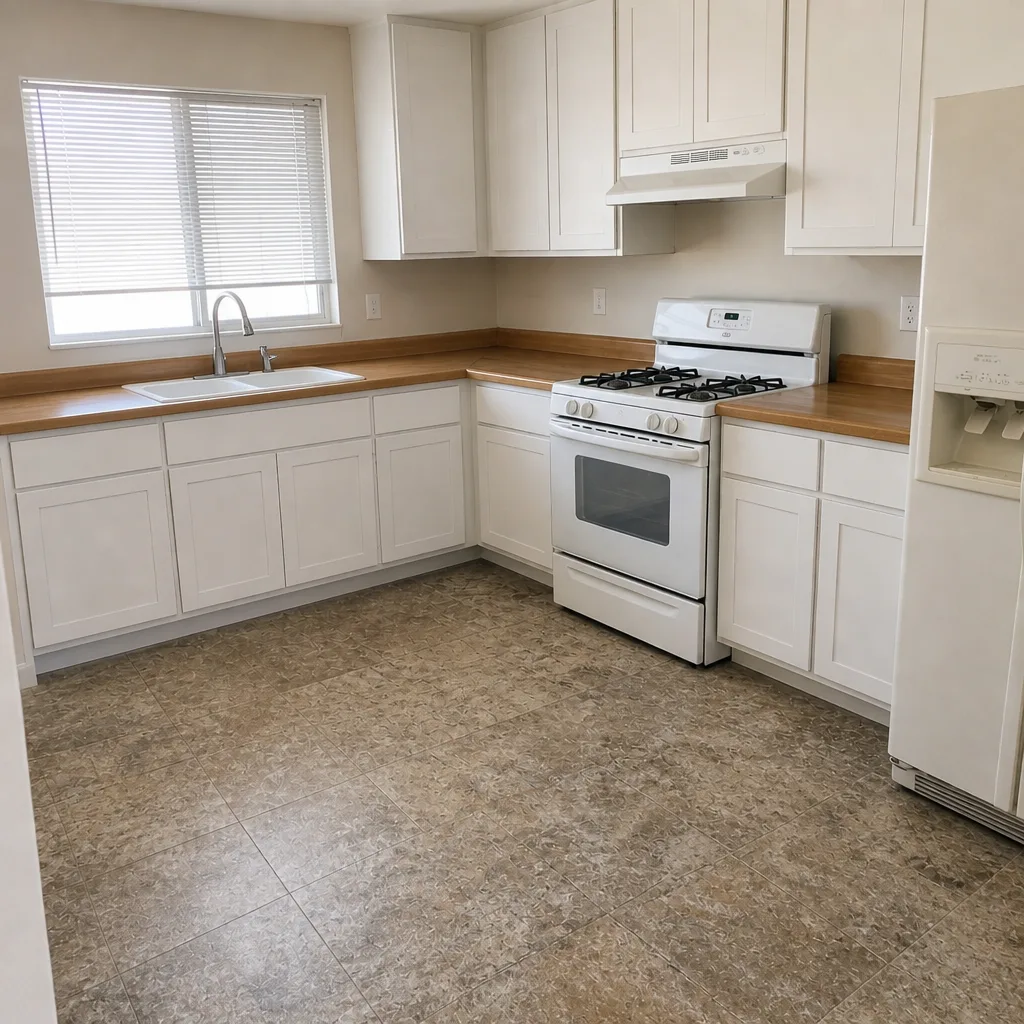
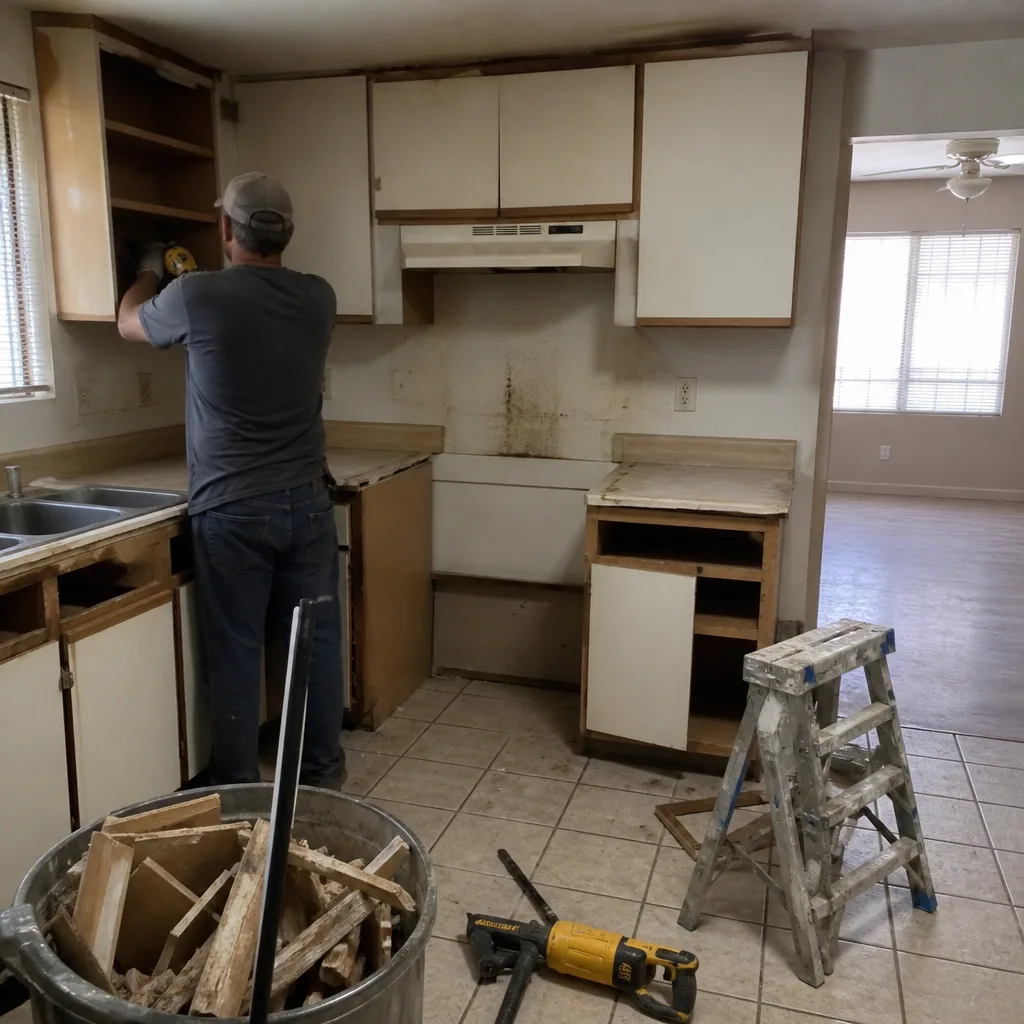
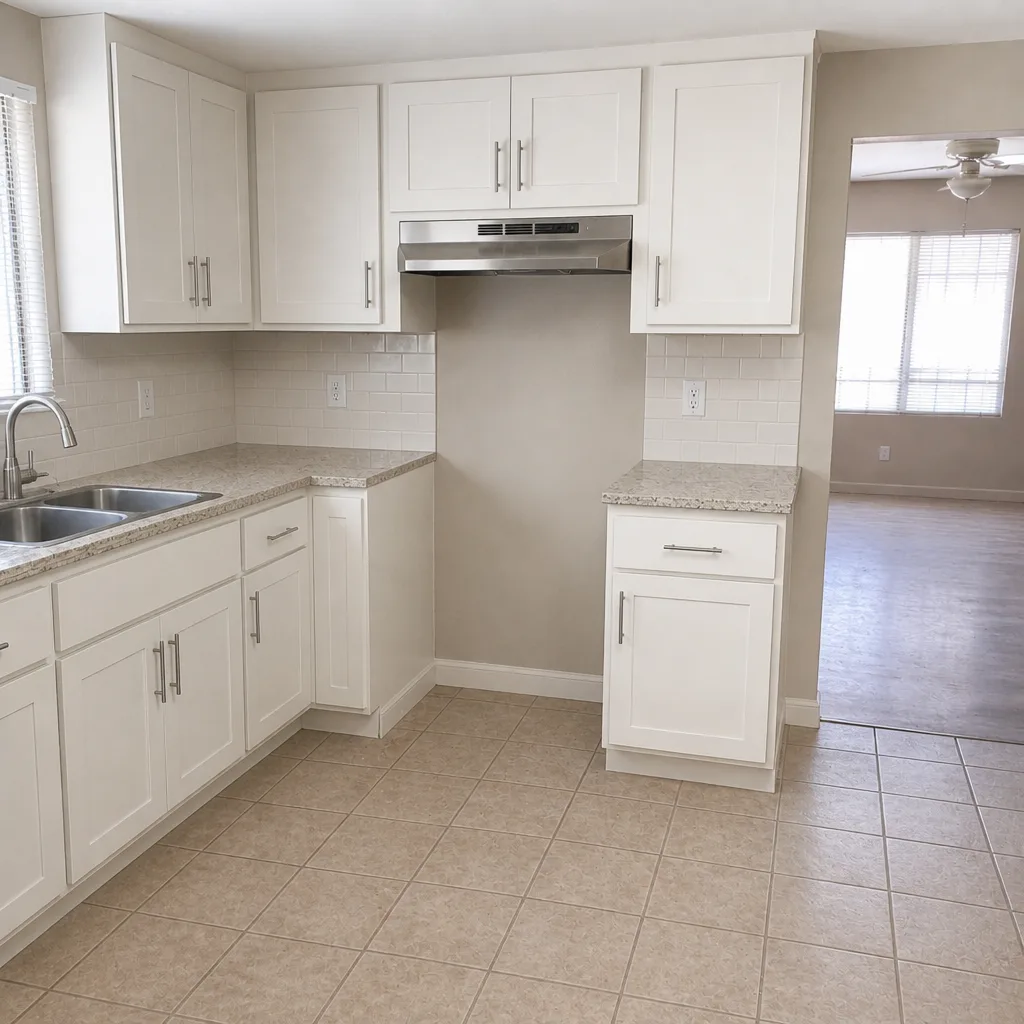
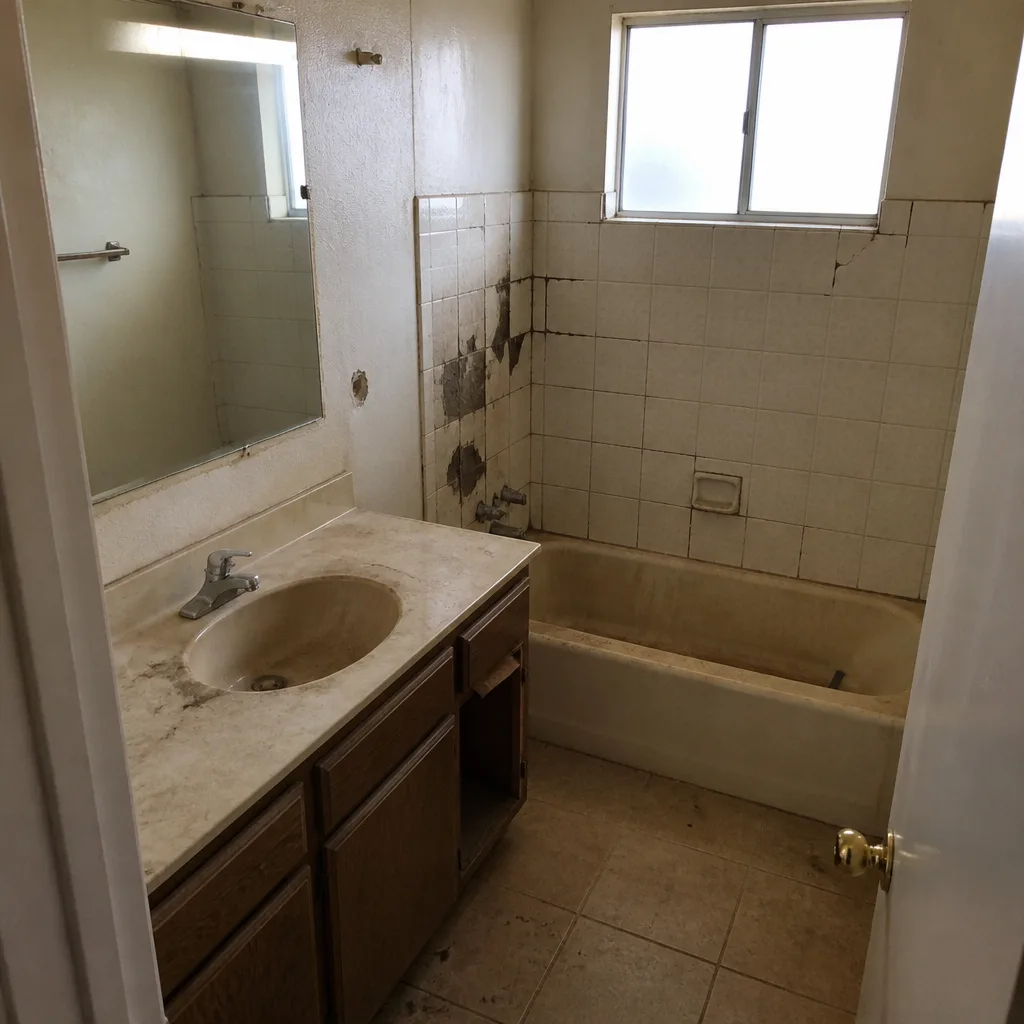
See the difference
 Before
 After
 Before
 After
 Before
 After
When to Call a Professional
Call us when the problem involves opening a wall, pulling tile, touching a cartridge, or going into the attic. Set that line confidently. The homeowner-friendly tests in this guide narrow things down, but eleven out of twelve of the fixes we walk into need a permit and a licensed hand. Water staining on drywall, a shower that’s leaking below the pan, tile walking off a shower wall, a fan that needs moved or re-ducted, and any problem that could involve a gas line or an electrical junction – all of these are professional jobs, and doing them yourself can turn a small repair into a large bill.
Barrett & Sons Construction Las Vegas offers free estimates in Las Vegas. We pull permits, sign off on the inspections, and put every scope change in writing before the work starts. Call (866) 814-4155 and we’ll get out, take a look, and tell you exactly what caused the problem and what it takes to fix it. No trip charge inside the county, and our permanent $40 Off Any Repair Over $200 applies if a repair can solve it without a full remodel.
Frequently Asked Questions
Fix pricing depends entirely on the failure. Re-caulking a tub joint is a small repair, often under $200, while a failed shower pan with a rebuild usually runs between $2,500 and $6,500 in the Las Vegas market because it means pulling tile, replacing the waterproofing, and re-tiling. A drain leak at a specific fitting is usually in the hundreds. Call (866) 814-4155 for an exact quote after we’ve seen the problem. Estimates are free, and the $40 off any repair over $200 applies.
Not without a written change order signed before any scope change happens. That’s the promise we write on every contract. If we open a ceiling to trace a leak and find the problem is bigger than expected, you get a written change order with the new scope and price before a single nail goes in. No surprise invoices at the end.
Yes, in most cases. A bathroom remodel that moves plumbing, electrical, or a shower pan requires a permit from Clark County or the applicable city building department – Henderson, North Las Vegas, and Las Vegas each have their own. Tile replacement only on the floor is usually exempt. Any problem in this guide that involves opening a wall or pulling tile gets a permit on our jobs, because the inspector who signs off is the person who protects your resale.
A simple repair like a wax ring, cartridge, or re-caulk is usually one day. A full shower pan rebuild with tile runs seven to ten working days. A full bathroom remodel takes three to five weeks depending on the tile and fixture lead times. We give you a written schedule before we start, and we update you when the schedule changes.
Nine times in ten it’s an undersized fan for the room’s square footage, an overly long flexible duct run, or a damper stuck closed outside. Run the three tests in the section above before you buy a bigger fan. If the answer is “the duct runs 35 feet through the attic,” a licensed hand is the right call, and a permit may be needed to cut a new roof or wall vent. Call (866) 814-4155 and we’ll diagnose it in one visit.
You can, but we usually advise against it. The cartridge sits inside a valve body, and when the cartridge is seized from hard-water scale, twisting it out can break the valve body – and that means tearing into the wall. A plumber or licensed remodeler will have the right puller tool and the shutoff procedure. It’s a call, not a Home Depot run. Call (866) 814-4155 for a free estimate.
Which Subcontractors Does Barrett & Sons Recommend for Related Work?
Bathroom work often overlaps with other parts of the house, and a bad tie-in from one trade can undo good work from another. When a bathroom remodel in Las Vegas includes moving a fence line, adding a paver walkway to an exterior door, or resurfacing a driveway the new drain line crosses, we handle it under the same scope in writing. If you need it as a standalone job, see our Fence Installation in Las Vegas and Driveway & Pavers in Las Vegas pages for how those scopes get priced and permitted. For roofing above a bathroom vent that needs moved, we use GAF and CertainTeed systems so the roof penetrations meet the same warranty as the rest of the roof. Every client walks away with the same thing: written scope, written allowances, written change orders, and the 90-Day Done Right Promise on every construction and remodeling job.
The Bottom Line
Bathroom remodel problems are rarely mysterious. Grout cracks, drain smells, water stains, pressure drops, and exhaust fans that don’t clear steam all trace back to specific, knowable causes. Diagnose them in the right order, rule out the cheap and easy explanations first, and call a professional when the answer involves opening a wall, pulling tile, or touching a valve cartridge. The shortcut that caused the symptom tells you whether you’re looking at a weekend job or a callback. In Las Vegas, our dry climate and hard water make every one of these problems more likely and more visible – which means it’s worth addressing a small one before it becomes a shower rebuild. Every eligible job gets permits pulled and inspections signed, and every price change arrives in writing.
Call Barrett & Sons Construction Las Vegas at (866) 814-4155 for a free estimate on any bathroom problem in this guide. A live person answers the phone 24 hours a day, and there’s no trip charge inside the county.
Written by the team at Barrett & Sons Construction Las Vegas.