
Last updated November 17, 2026
 Bathroom remodeling
 Kitchen remodeling
 Home additions & ADU
 Roofing
 Windows & doors
 Driveway & pavers
 Fence
Free written scope consultation - allowances, timeline, and change-order rules on paper before a single trade is scheduled
Bathroom Remodeling Warning Signs Every Homeowner Should Know
The most predictive warning sign of a bathroom remodel gone wrong isn’t a bad review. It’s a contractor who gives you a firm price over the phone before he’s seen the wall behind your shower. We’ve sat at enough kitchen tables in Las Vegas, hearing the same story, to know the pattern by heart: the number on the phone sounded great, the bill at the end looked nothing like it, and somewhere in the middle a wall got opened and nobody put anything in writing. This guide teaches you to read the early signals, back when walking away still costs you nothing. No design advice, no tile talk. Just the business-practice red flags that show up in the first fifteen minutes.
Quick Answer
The biggest warning signs of a bad bathroom remodel are all behavioral and they all appear before work starts: a firm price quoted over the phone before anyone inspects the wall, changes discussed verbally instead of in a written change order, a license or insurance you can’t verify in three minutes, and pressure to skip permits. If a contractor won’t put scope, allowances, and price changes on paper, the bathroom isn’t the risk. The handshake is.
Styles & brands we work with
- Kitchen remodeling
- Bathroom remodeling
- Home additions & ADU
- Roofing
- Windows & doors
- Driveway & pavers
- Fence
Table of Contents
- Why a Firm Quote Before the Wall Comes Down Is a Promise Nobody Can Keep
- The Change-Order Conversation: Written Versus “We’ll Work It Out”
- How to Verify a Nevada Contractor’s License and Insurance in Under Three Minutes
- Warning Signs Inside the Bathroom That Signal Hidden Water Damage
- What a Suspiciously Low Bid Actually Means
- Permits: Why “You Don’t Need One” Should End the Conversation
- How to Run the First Phone Call Like a Screener
Why a Firm Quote Before the Wall Comes Down Is a Promise Nobody Can Keep
Bathrooms hide their worst secrets behind drywall and tile. Nobody knows what’s back there until demo starts: rotted framing, a thirty-year-old drain, a shower pan that was never sloped right. An honest contractor will tell you this plainly. A contractor who hands you a guaranteed total before opening a single wall is either guessing, or planning to change the number later once you’re too far in to walk away.
What a legitimate contractor says instead sounds less satisfying at first, and it’s the sound you’re listening for:
- A base price for the labor and materials they can see, in writing.
- An explicit allowance for the unknowns, spelled out by name and dollar range.
- A sentence like “if we open the wall and find something unexpected, you’ll get a written change order before we touch it.”
- A walk-through of the space before pricing, not a phone call.
The allowance matters more than the total. In our experience, the allowance that isn’t on paper is a surprise waiting for a date. Good contractors give you a range for the hidden work and commit to showing you the evidence before charging you for it.
Las Vegas adds a wrinkle here. The desert’s hard water and dry air are rough on caulk, grout, and shower valves, and a 1970s-era home in a neighborhood like Sunrise Manor can hide plumbing that was repaired three times and rigged twice. Anyone who quotes a bathroom remodel in Las Vegas without mentioning the possibility of hidden plumbing hasn’t done many of them.
The Change-Order Conversation: Written Versus “We’ll Work It Out”
Most bathroom disputes we hear about didn’t begin with a bad tile guy. They began with a sentence like “don’t worry about it, we’ll work it out.” That sentence is the seed of every surprise invoice. The correct version of the conversation is a piece of paper: a written change order, signed before the work it describes gets done.
A real change order names the scope, the price delta, and the reason. It’s issued before the change, not after. Here’s how the conversation should actually go when demo reveals something wrong:
- The contractor stops work and shows you the problem, with photos or by pointing it out in person.
- He explains the fix in plain language and gives you the price to do it.
- He writes the change on a change order and you both sign before anyone resumes.
- You keep a copy. He keeps a copy. The invoice at the end matches what you signed.
Compare that to the verbal version: “it’s not much, we’ll add a little at the end.” By the time “the end” arrives, you’re staring at a bill for four figures and trying to remember what you agreed to. When we write a contract, we build in that every price change arrives in writing before work proceeds. It protects both sides, and it claws back the trust that gets broken when a number moves without a signature.
How to Verify a Nevada Contractor’s License and Insurance in Under Three Minutes
Nevada makes this easy if you know where to look. You can check a contractor’s license through the Nevada State Contractors Board website in about the time it takes to brew a cup of coffee. You’ll want to see an active license, a classification that matches bathroom remodeling work, and no disciplinary flags on the record.
Here’s the three-minute process:
- Get the license number in writing. Ask for it before the estimate. A contractor who hedges or says “it’s on the truck” is telling you something.
- Look it up on the Nevada State Contractors Board site and confirm the name on the license matches the name on the contract.
- Ask for a certificate of insurance directly from their carrier, not a photocopy. The certificate should name current coverage dates.
- Ask whether they carry workers’ compensation coverage. An uninsured crew member hurt in your bathroom can complicate things for you, and that’s the kind of thing you want to find out before, not after.
When coverage is expired or absent, the liability can follow you. If a subcontracted laborer is injured on your property and the contractor has no workers’ comp, the problem becomes yours to untangle. Three minutes of verification is a fair price to pay for not being the one untangling it later.
Tom Barrett publishes his name, his address, and his license number on every page for exactly this reason: so you can look it up. Any contractor who won’t hand over the same information is asking you to trust an unverified claim. Don’t.
Warning Signs Inside the Bathroom That Signal Hidden Water Damage
Once you’ve screened the contractor, screen the room. The bathroom tells you what’s happening behind the walls before demo gets there. These signals mean hidden water damage is likely, and they should change how the project is scoped before anyone picks a tile.
- Soft or spongy floor near the toilet. That’s a failing wax ring or a slow leak feeding the subfloor. Feel for give when you step near the base.
- Stained drywall at the base of the vanity. A supply line running behind the cabinet can weep for years without much drama until the drywall gives it away.
- Grout that moves under your thumb. Grout shouldn’t flex. Movement means the substrate underneath has shifted or absorbed water.
- Musty smell that comes back after cleaning. A shower pan that never sloped correctly traps water in a way no amount of bleach will fix.
- Loose tile that sounds hollow when you tap it. Adhesive failed – possibly because the waterproofing membrane behind it wasn’t right to begin with.
- Peeling paint on the ceiling below. If you have a bathroom over another room, a stain on the ceiling below is the leak announcing itself.
In Las Vegas, dry air and hard water can hide these signals longer than they would in a humid climate, because the room dries out so fast that a slow leak doesn’t always leave a wet-looking mark. That’s why soft floors and hollow-sounding tile matter more here. If you catch two of these symptoms, plan for hidden repair work in your scope and budget before demo surprises you.
What a Suspiciously Low Bid Actually Means
When one bid comes in at half the others, that’s information, not luck. Two things can drive the gap: how the work gets done, or who actually does it. Both cost you in the end.
Structurally, a low bid often skips the work you’ll never see. In a shower, that can mean a missing waterproofing membrane, cement board that should be a moisture-rated product, or tile from the big-box shelf that isn’t rated for wet areas. Tile chosen for price rather than rating can look fine on day one and fail quietly over the next five years.
Operationally, the low bid can also mean the contractor is running unlicensed subs, hasn’t pulled a permit, or hasn’t carried workers’ comp. All three leave the risk on you. A bathroom remodel in Las Vegas that goes wrong without a permit can also make a future home sale interesting, because an inspector will notice work that was done without one.
The right move is to compare bids line by line. Ask each contractor to itemize the waterproofing step, the tile rating, the permit, and the labor. A legitimate bid will show you what’s in the scope. A suspicious bid will not.
Permits: Why “You Don’t Need One” Should End the Conversation
Any contractor who tells you permits are optional is telling you something about the rest of their process. In most bathroom remodels that move plumbing, electrical, or structural work, a permit is involved, and the inspection that follows is the cheapest quality control you’ll ever get. The permit inspector works for you, not for the contractor.
Here’s what the contractor has to say about permits for the answer to be trustworthy:
- Yes, we’ll pull one where required.
- We’ll schedule the inspection and be there when it happens.
- We’ll pass it before we call the job done.
“It’s just a bathroom, nobody pulls permits for those” or “we’d charge you more with a permit” tells you the contractor plans to skip the inspection and the paper trail. We’ve heard the story a hundred times: the last contractor told the customer permits were optional. That story always ends with a permit pulled by someone else, after the fact, and a customer who’s making phone calls to straighten out records. Permits pulled and inspections signed are worth less than the installation when nothing goes wrong, and worth a great deal when something does.
How to Run the First Phone Call Like a Screener
The first call is where the warning signs show up. Treat it like a screening, not a sales pitch, and you’ll know within ten minutes whether you want the person in your home. Ask these questions and listen for how they answer, not just what they say:
- “Can I see the license number and insurance certificate before we meet?” A confident yes is the right answer. A hedge is the wrong one.
- “Will you inspect the bathroom before giving me a price?” The right answer is yes, on-site, with a look behind the walls as far as possible.
- “How do you handle a change order if you find something unexpected?” The right answer involves a written change order before work proceeds.
- “Do you pull permits where required?” The right answer starts with “yes.”
- “Who will actually be on the job?” The right answer names people or teams the contractor stands behind, not dispatch labor from an unknown crew.
- “Does the contract include a warranty, in writing?” The right answer cites a written promise, with terms.
Anyone who can’t answer these six questions cleanly isn’t necessarily a bad person – but they’re telling you what their business looks like. When a contractor will provide scope, allowances, and change orders in writing, the rest of the conversation gets a lot quieter, and that quiet is what you’re listening for.
Common Mistakes to Avoid
- Accepting a phone quote as a real number. A total given before the wall is opened is a guess dressed up as a price. Wait for the written estimate after a walk-through.
- Skipping the license lookup because the price was good. Three minutes on the Nevada State Contractors Board site can save you thousands. Look it up before you sign anything.
- Agreeing to “we’ll work it out” on a change. Verbal agreements don’t survive memory. Ask for a written change order.
- Trusting a contractor who says permits are optional. That’s not a shortcut for you; it’s a shortcut for them, and the risk lands on your property record.
- Ignoring soft floors and stained drywall. In Las Vegas, dry air can hide a slow leak, so the physical symptoms inside the bathroom are often the only evidence before demo opens the wall.
- Comparing bids by total only. Compare them line by line, especially waterproofing, tile rating, and permit line items.
- Assuming a crew is covered because the contractor says so. Ask for the insurance certificate from the carrier, not a photocopy from a drawer.
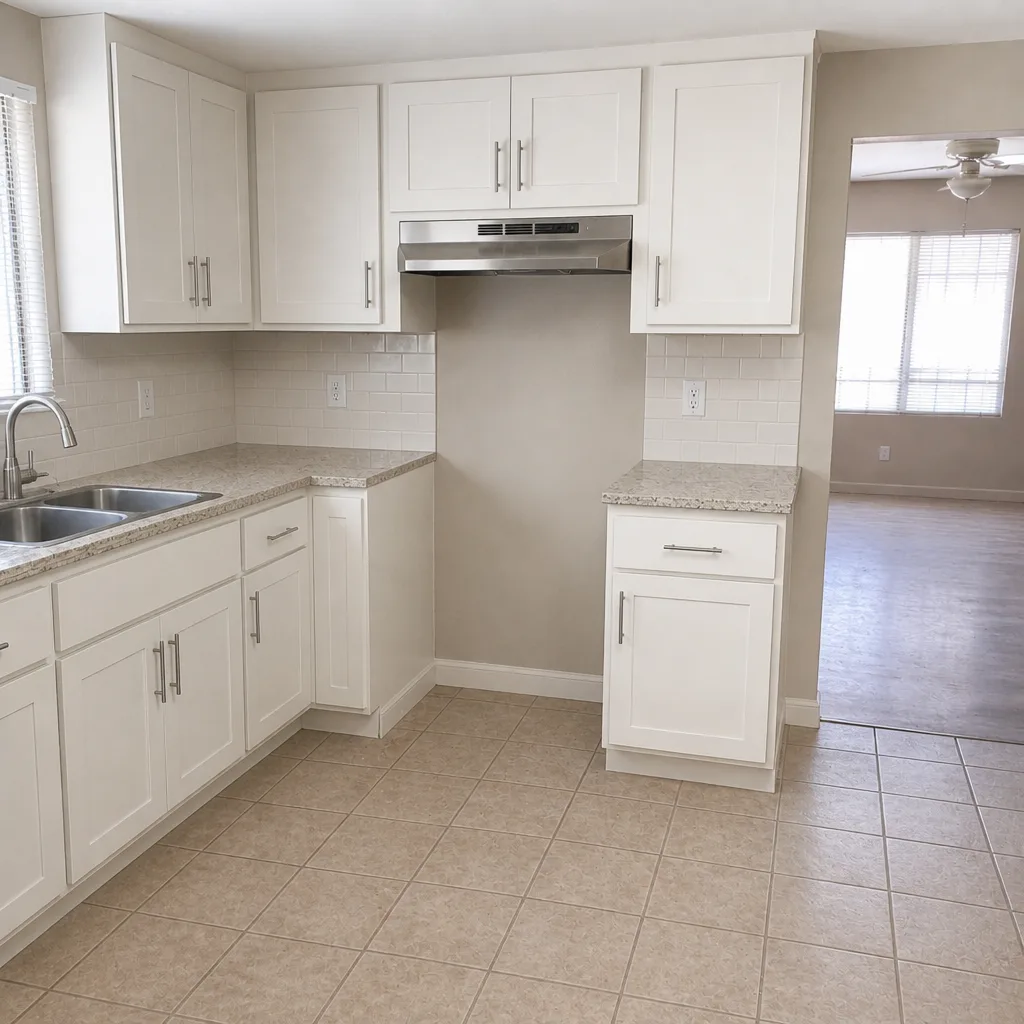
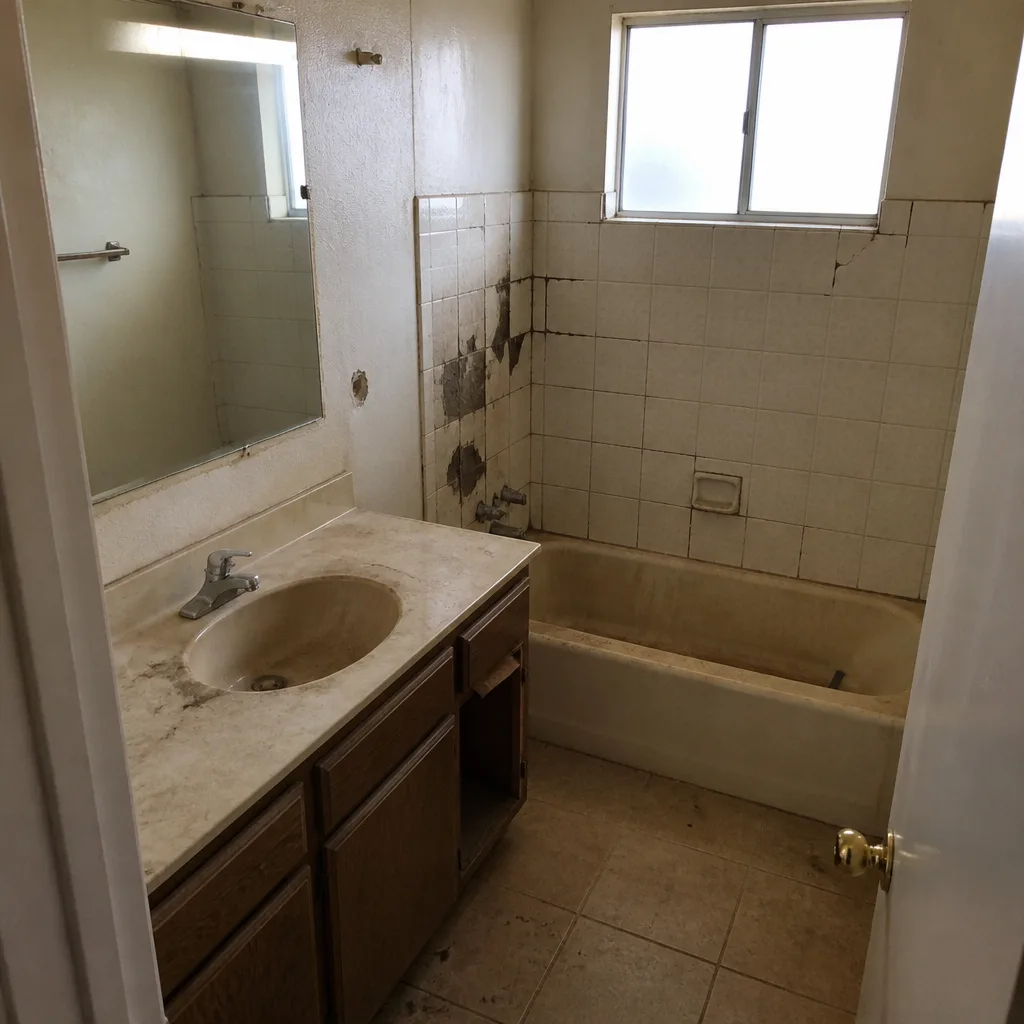
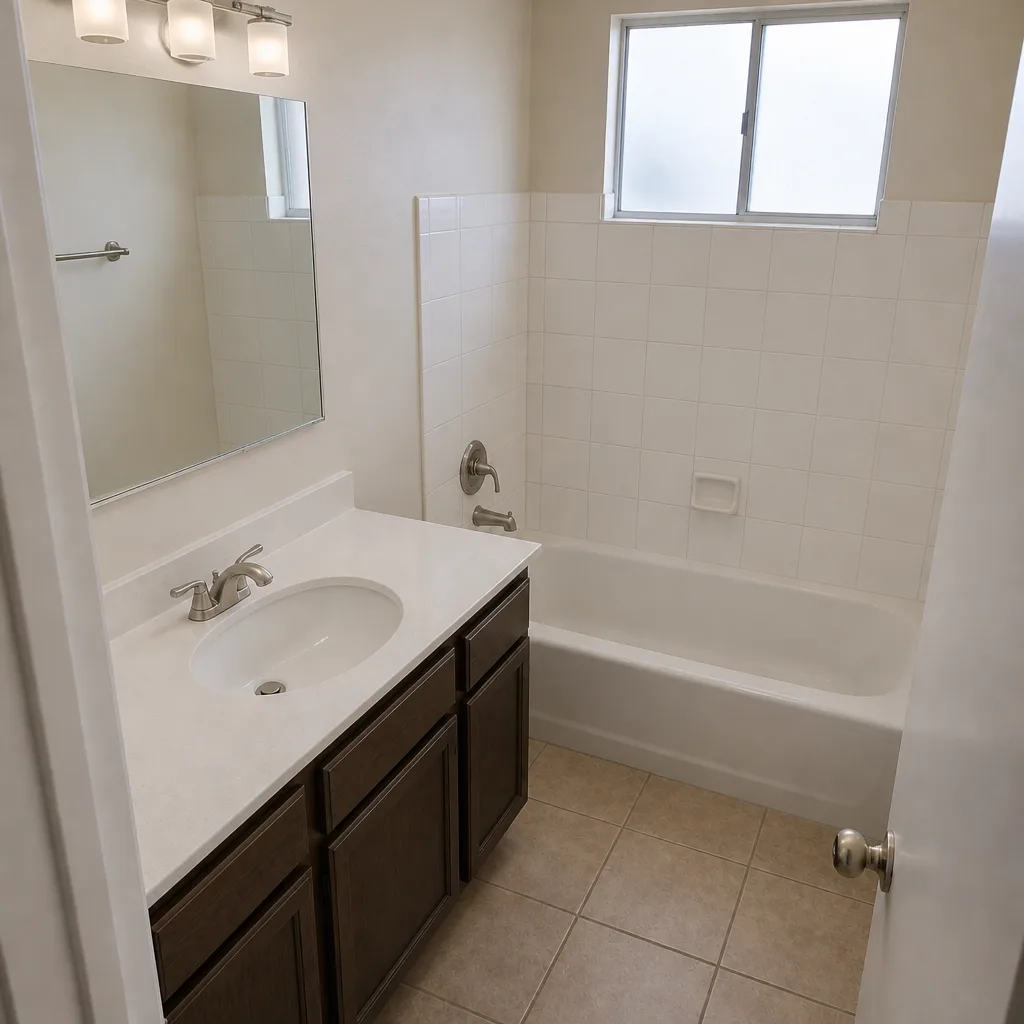
See the difference
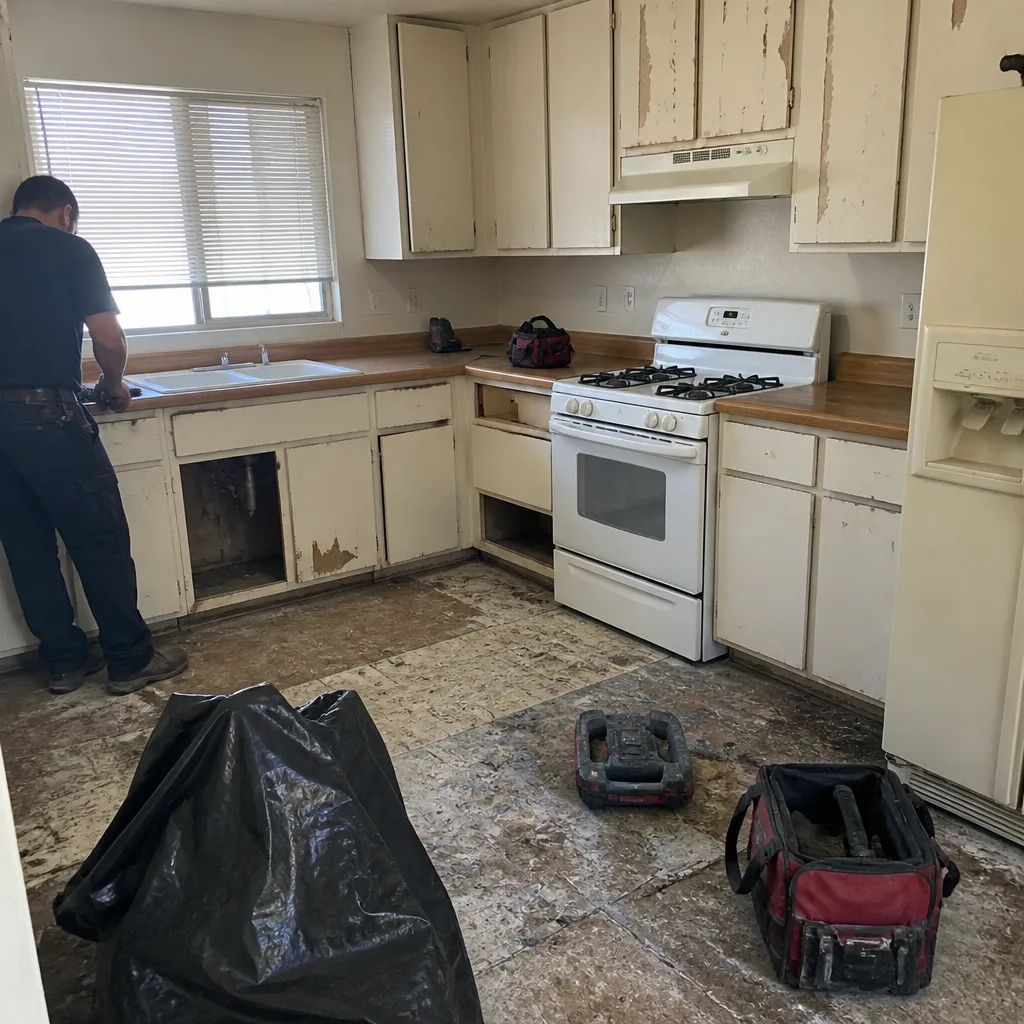 Before
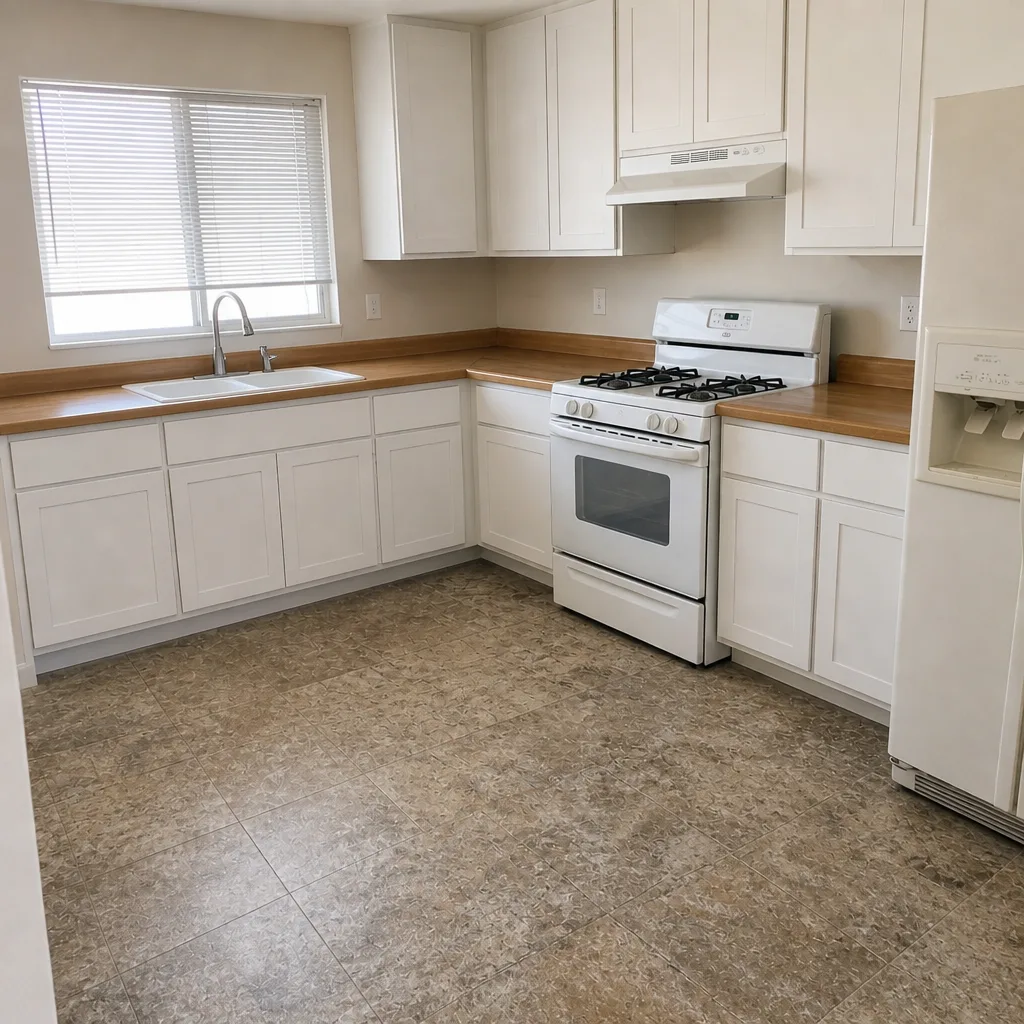 After
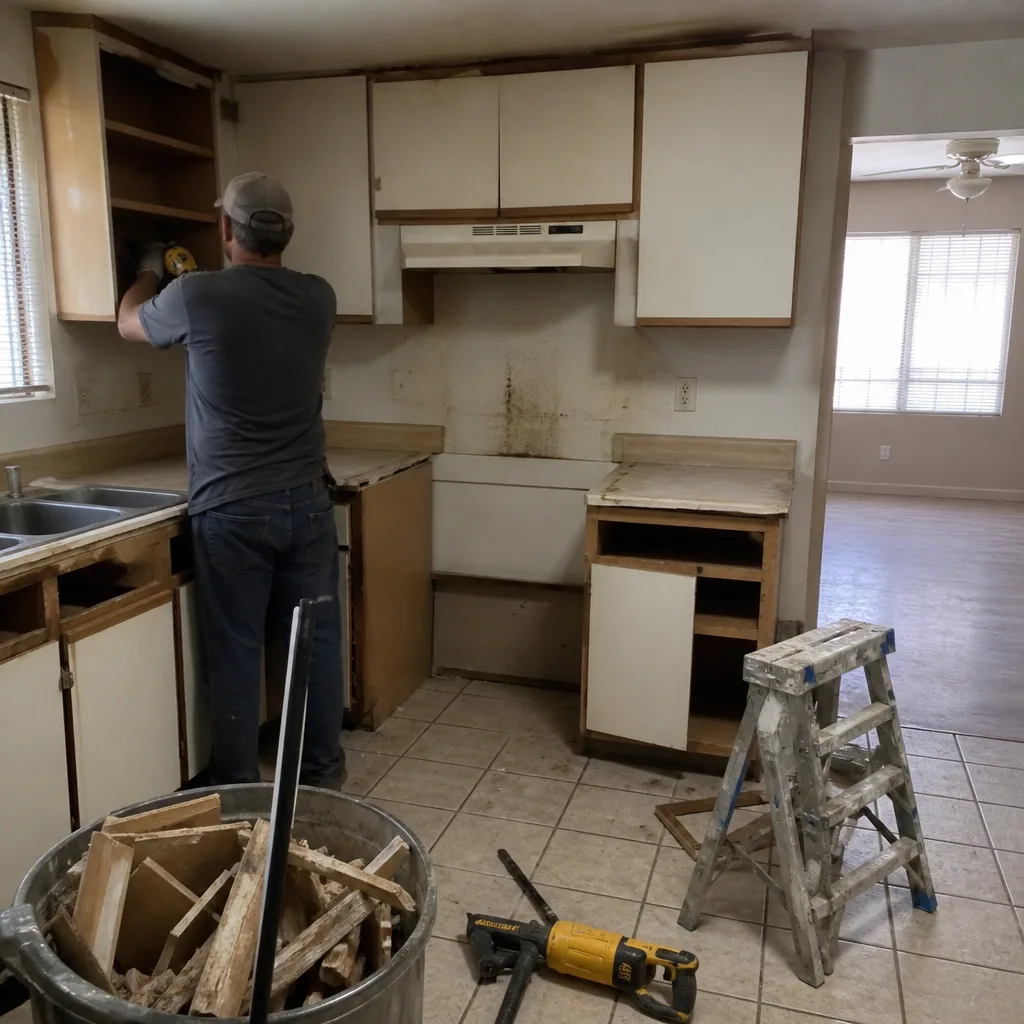 Before
 After
 Before
 After
When to Call a Professional
Call a professional the moment you find yourself on the wrong side of any of these signals: a contractor who wants a firm price on the phone, a change order that only exists in conversation, a license you can’t verify, or a permit that got waved away. Call one sooner if you’ve spotted soft floors, stained drywall, or grout that moves – those are pre-demo signals that hidden water damage is already in the room. And call one before you sign anything at all. A free second opinion on a written estimate costs nothing and answers more questions than a week of web research. Barrett & Sons Construction Las Vegas offers free estimates in Las Vegas – call (866) 814-4155 to schedule yours.
Frequently Asked Questions
A firm price quoted over the phone before anyone has inspected the wall behind the shower. That single behavior tells you the contractor either doesn’t understand what a bathroom hides or plans to change the number once you’re committed. The right version of the conversation involves an on-site look, a written base price, and a written allowance for the unknowns.
Ask for the license number in writing, then look it up on the Nevada State Contractors Board website, which takes about three minutes. Confirm the name on the license matches the name on your contract, and request the insurance certificate straight from the carrier with current coverage dates. A contractor who won’t hand over a license number is asking you to skip the step that matters most.
A written change order names the scope, the price delta, and the reason, and it’s signed by both parties before the work it describes proceeds. If you’re hearing “we’ll work it out” or “it’s not much, we’ll settle up at the end,” the change isn’t actually documented. Written change orders are the reason a final invoice should match what you signed.
Often, yes. A bid well below the others typically means skipped waterproofing, tile not rated for wet areas, unlicensed subs, no permit, or no workers’ compensation coverage. Compare bids line by line – waterproofing, tile rating, permit, labor – instead of comparing totals. If the low bid can’t itemize those, the savings are coming out of the work you can’t see.
Most bathroom remodels that touch plumbing, electrical, or structural elements do require a permit, and the inspection that follows is valuable quality control for you. A contractor who tells you permits are optional is telling you they plan to skip the paper trail and the inspector’s check. Ask directly, and get a yes in writing.
Soft or spongy flooring near the toilet, stained drywall at the base of the vanity, grout that flexes under your thumb, or tile that sounds hollow when tapped all point to hidden water damage. In Las Vegas, dry air and hard water can hide the symptoms longer than in wetter climates, which makes these physical cues especially worth paying attention to before demo opens the wall.
The Bottom Line
Bathroom remodel disasters rarely start with bad materials. They start with a contractor’s business practices, and those show up early: a firm price with no inspection, a change order that lives only in conversation, a license you can’t verify, a permit that got waved away, or a bid so low that the savings have to come out of the waterproofing. Learn to read those signals in the first fifteen minutes, when walking away is still free. If you want the other side of the conversation – written scope, written allowances, written change orders, and a name and license you can look up – call (866) 814-4155 for a free estimate. Our technicians have up to 28 years of experience, and every eligible job gets permits pulled and inspections signed.
You can also start by seeing what our Barrett & Sons Construction Las Vegas home looks like, or explore what we do on related projects, from Driveway & Pavers in Las Vegas and Fence Installation in Las Vegas to Home Additions & ADU in Las Vegas – not because we want to sell you a driveway, but because the same business practices that protect your bathroom protect every other part of your home.
When it comes to premium brands, we install what you can look up: KraftMaid and Cambria in kitchens, GAF and CertainTeed on roofs, Andersen and Marvin on windows, and Belgard and Techo-Bloc on hardscapes. Natural stone options like Boral pavers are available on hardscape work when the plan calls for them, and our terms are the same on every job.
Call (866) 814-4155 to schedule your free estimate. A live person answers every call, day or night. And if you already have a written bid from another contractor and want our read on it, take the free second opinion – the offer’s standing. Our 90-Day Done Right Promise is written on every contract: if we don’t get it right, one call brings us back. That’s the whole point of choosing the name-on-the-truck crew over the outfit that quoted one price on the phone and handed you a different bill at the door.
Written by the team at Barrett & Sons Construction Las Vegas.