
Last updated November 17, 2026
 Home additions & ADU
 Kitchen remodeling
 Bathroom remodeling
 Roofing
 Windows & doors
 Driveway & pavers
 Fence
Free written scope consultation - allowances, timeline, and change-order rules on paper before a single trade is scheduled
Construction Warning Signs: A Las Vegas Homeowner’s Reference Guide
In Clark County, the most common contractor complaint filed with the Nevada State Contractors Board isn’t abandonment or shoddy work. It’s payment disputes tied to undisclosed cost increases – and those almost always trace back to a contract that never defined how change orders get approved in writing. Most warning-sign guides hand you the same generic list: too much money upfront, no references, vague timelines. In Las Vegas, the signals that actually predict a bad job are quieter and more local. This guide names the patterns we’ve watched play out across the valley, so you can catch them during the estimate instead of after the drywall goes up.
Quick Answer
The biggest warning signs with a Las Vegas construction contractor are: a bid that underprices demolition and site prep, an inability to tell you who pulls the permits, crews you can’t tie to the company by employment or insurance, and a contract that leaves change order approval undefined. Any one of these deserves a second look. Two or more together is your signal to walk.
Styles & brands we work with
- Kitchen remodeling
- Bathroom remodeling
- Home additions & ADU
- Roofing
- Windows & doors
- Driveway & pavers
- Fence
Table of Contents
- The Low Demo Bid Trap
- Is That Crew Actually Employed by the Contractor?
- The Permit Question That Predicts the Outcome
- Three Contract Clauses That Look Protective
- Questions a Corner-Cutter Can’t Answer Cleanly
- Vegas-Specific Warning Signs Nobody Else Warns You About
- Common Mistakes to Avoid
- When to Call a Professional
The Low Demo Bid Trap
A bid that comes in dramatically low on demolition and site prep is one of the most reliable early warnings in the Las Vegas market. Here’s the logic behind it: demolition is the least glamorous line on any estimate, and it’s the easiest for a homeowner to under-scrutinize. A contractor planning to make money on the back end will price the teardown at cost or below to win the bid, then recover the margin during framing, finishes, or “unforeseen conditions” once you’re already committed.
Las Vegas makes this worse than it is in other markets. Our soil – caliche-heavy and often sitting on fill from older subdivisions in places like Summerlin, Green Valley, and the older neighborhoods around downtown – is genuinely tough to trench, grade, and demo. A contractor familiar with Las Vegas ground knows demo is expensive here. A bid that treats demolition like a rounding error either doesn’t know the local soil or is planning to bill you for the surprise later.
What to do about it:
- Ask for demolition and site prep broken out as its own line item, not buried inside a lump-sum total.
- Compare that line item across three bids. If one is 40% lower than the others, ask why in writing.
- Ask what happens if the demo uncovers something unexpected – rock, old footings, an abandoned utility line – and get the answer as a written contingency.
- Watch for a bid that’s low on demo and high on finish allowances. That’s the bait-and-switch pattern, and it’s the one Clark County homeowners file complaints over most.
Is That Crew Actually Employed by the Contractor?
On paper, every contractor “has a crew.” In practice, a lot of the labor showing up at Las Vegas jobsites is unlicensed subcontracted labor with no insurance and no formal relationship to the company you signed with. If one of those workers gets hurt on your property, the liability can land on you as the homeowner. This is one of the most important – and least discussed – warning signs to check before work starts.
Ask directly and see how the answer comes back:
- “Are your crew members employees or subcontractors?” Either answer is legitimate if it’s clean. What you’re watching for is hesitance, defensiveness, or a “we use a mix” with no follow-up.
- “Can I see proof of workers’ comp coverage?” A legitimate contractor carries it and can produce the certificate. If they can’t, that tells you something about how the job will end if someone gets hurt.
- “Who specifically will be on site, and who is my point of contact?” You want a name and a phone number, not a general “our team will be in touch.”
- “Are they background-checked?” If the answer is yes, ask to see it in writing. If the answer is no, you’re within your rights to ask why not.
Unlicensed subs are a persistent pattern in the Las Vegas market for a straightforward reason: the cost difference is real. A crew with workers’ comp and employment taxes costs more. That’s exactly why the question is worth asking.
The Permit Question That Predicts the Outcome
Ask any contractor this question during the estimate: “Who pulls the permits on this job?” The answer will tell you more about how the project will go than any online review will.
Here’s what clean and dirty answers look like:
- Clean: “We do. We pull them, schedule the inspections, and I have the permit number for you before we start.”
- Dirty: “Permits are usually optional for this type of work.” (They aren’t. They’re required for nearly everything structural in Clark County.)
- Dirty: “You can pull them yourself as the homeowner if you want.” (That makes you the responsible party, not them, and it means no one who actually knows the work is on the hook for compliance.)
- Dirty: “We’ll handle it later once things are underway.” (Permits pulled late mean work done out of order, and rework you pay for.)
The reason this question is such a strong signal: a contractor willing to skip permits is telling you they don’t think the inspector will catch them. That’s not confidence in their work. That’s confidence in their ability to hide it. And when you sell the house, or when a future inspector does catch it, that’s a problem with your name on the address – not theirs. In our experience, the permit answer is the single best predictor of whether a Las Vegas job ends clean. Every eligible job we take on has permits pulled and inspections signed for exactly this reason: the inspector works for you, not for us.
Three Contract Clauses That Look Protective
The clauses most likely to hurt you don’t look dangerous. They look reasonable, even generous. Here’s what to watch for on the Las Vegas construction contract sitting in front of you.
1. “Time and materials” for any scope change. On the surface, this is fair – you only pay for what actually happens. In practice, a T&M clause with no cap and no written approval process gives the contractor a blank check once the job is underway and you can’t switch mid-build. Scope changes should always arrive as a written change order with a fixed price and a signed approval before the work happens.
2. “Owner responsible for unforeseen conditions.” This clause sounds like a careful contractor protecting you from risk. It usually means any surprise – rock during excavation, a structural issue behind a wall, a failed utility line – becomes your financial problem with no ceiling on the cost. The fair version names what counts as “unforeseen,” sets a dollar threshold, and requires written approval before work continues on the affected scope.
3. Open-ended project timelines. “Substantial completion expected within the estimated schedule” is not a deadline. It’s a wish. A contract that doesn’t set a completion date, or that has no agreed penalties or recourse if the date slips, punishes the homeowner for delays it caused. Materials in high demand – windows, certain roofing materials, custom cabinetry – can add time, but that should be spelled out, not buried in vague language.
All three clauses have one thing in common: they shift unpredictability onto you while keeping it out of the written record. The clause that protects you most is the one that requires every price change to arrive in writing before the work touches the job.
Questions a Corner-Cutter Can’t Answer Cleanly
There’s a short list of questions that a contractor planning to cut corners simply can’t answer well. Not because they don’t know the words – most know the words – but because the answers require evidence, and the evidence doesn’t exist.
- “What is your license number, and what classification?” A legitimate Las Vegas contractor gives it to you before you ask twice. A contractor who explains why they don’t have one, or “will get it for you later,” will not get it for you later.
- “Can I see two job references from this year, and can I call them?” Ten-year-old references are not references. You want current jobs, addresses within driving distance, and phone numbers that answer.
- “Who is my point of contact for the entire job, and how do I reach them?” Not a call center. Not a project manager who rotates. A person. If the answer is “the office,” ask which office.
- “What happens if the materials we picked are discontinued mid-job – is the allowance written down?” An allowance that isn’t on paper is a surprise waiting for a date. A real contractor writes it down at bid time.
- “Will you pull the permit, and who handles inspections?” You already know why this one matters. Ask it anyway and watch the answer.
- “What does your warranty cover, and how do I claim it?” “We stand behind our work” isn’t a warranty. A written term, a named person, and a phone number is a warranty.
A clean contractor’s answers to these questions take about four minutes. A cutting-corners contractor’s answers will take ten and won’t include any of the details you asked for.
Vegas-Specific Warning Signs Nobody Else Warns You About
Las Vegas has its own patterns that don’t appear in the generic “red flags” lists, because they only appear here. Watch for all of them.
The verbal change order culture. In a lot of Las Vegas construction, the standard is “we’ll work it out when we get there” and everything happens on a handshake and a phone call. Don’t accept it. A verbally agreed scope change is unenforceable, undocumented, and one disagreement away from a payment dispute. Every scope, every allowance, and every price change should arrive as a written change order before any work happens.
Promises about the Clark County permit office. Anyone who tells you a permit “will go through so fast nobody checks” or that inspectors are known to skip certain addresses is telling you they don’t operate inside the system. In Las Vegas, the Southern Nevada building department process is deliberate for a reason. Ask to see the permit number in writing before work begins.
Bids that ignore our climate. Las Vegas weather is brutal on construction – 110-degree summer days, monsoon-season water intrusion, UV damage to any material sitting in the sun too long. A bid that doesn’t mention how it plans to handle summer scheduling, water intrusion protection, or material storage in heat is a bid written by someone who doesn’t work here. Ask: “Where are materials stored?” and “What’s the plan when it’s 115 degrees in July?” The answer will tell you what kind of contractor you’re dealing with.
The “based in California, works in Vegas” pitch. A lot of crews drift in from out of state for the busy season. Some are legitimate. But a contractor with no local address, no local reference, and no local track record is more likely to disappear mid-job than one whose name you see on a sign at the hardware store. Ask for a local address and look it up. Ask for a Nevada license number and look that up too. It takes ten minutes, and the ones who don’t want you to do it will make that clear.
No-hassle pricing that turns out to be no-details pricing. “We’ll quote it at the end” is not pricing. Every construction estimate in Las Vegas should arrive as a written, itemized bid with each major category broken out. You should be able to see the demo number, the framing number, the finish number, and the allowance for every material category. If you can’t see it, you can’t price-check it.
See the difference
 Before
 After
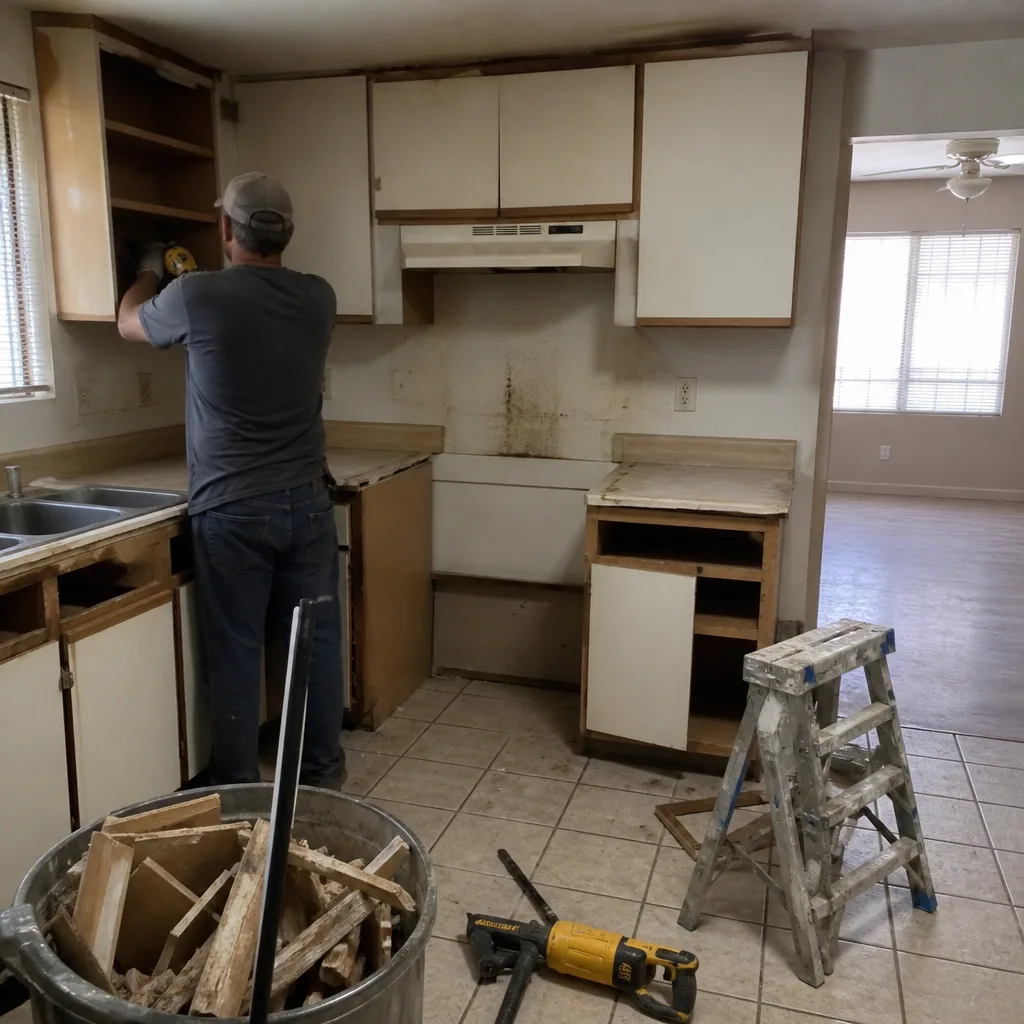 Before
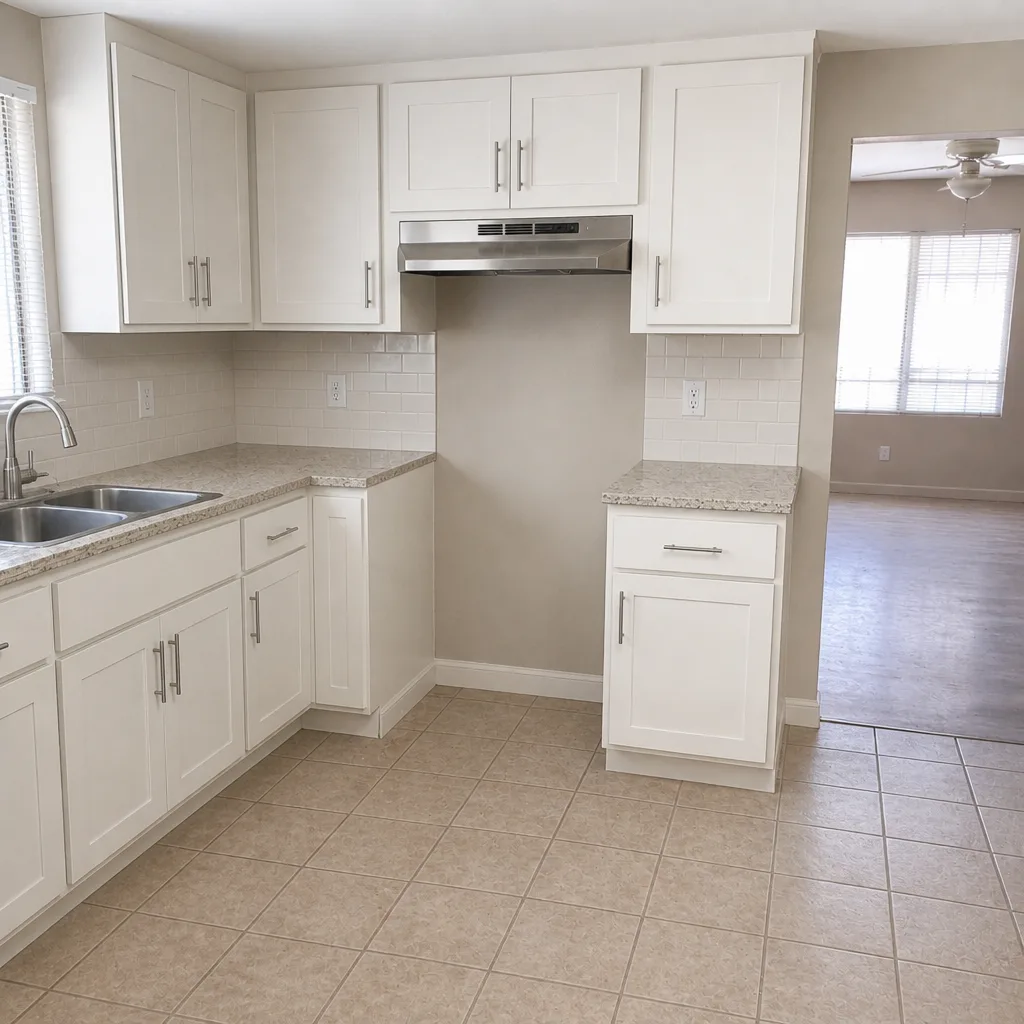 After
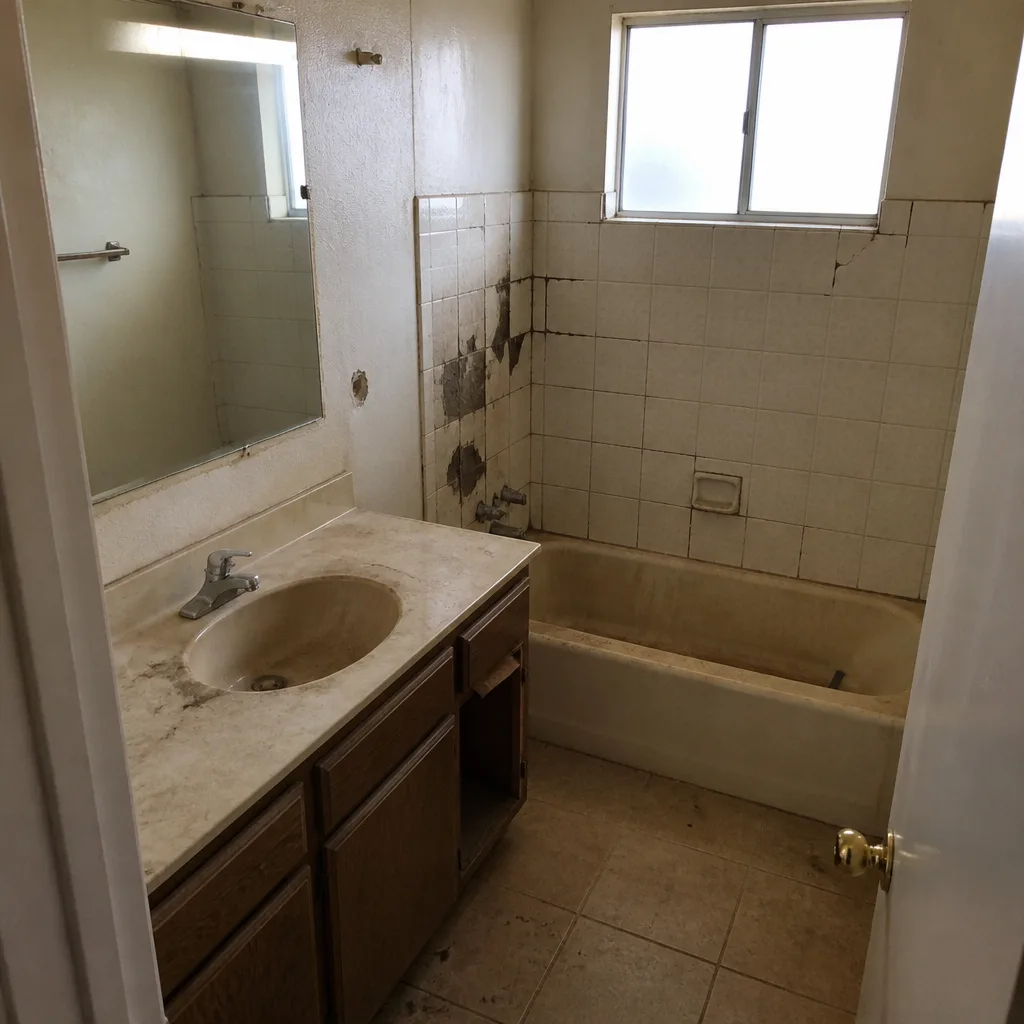 Before
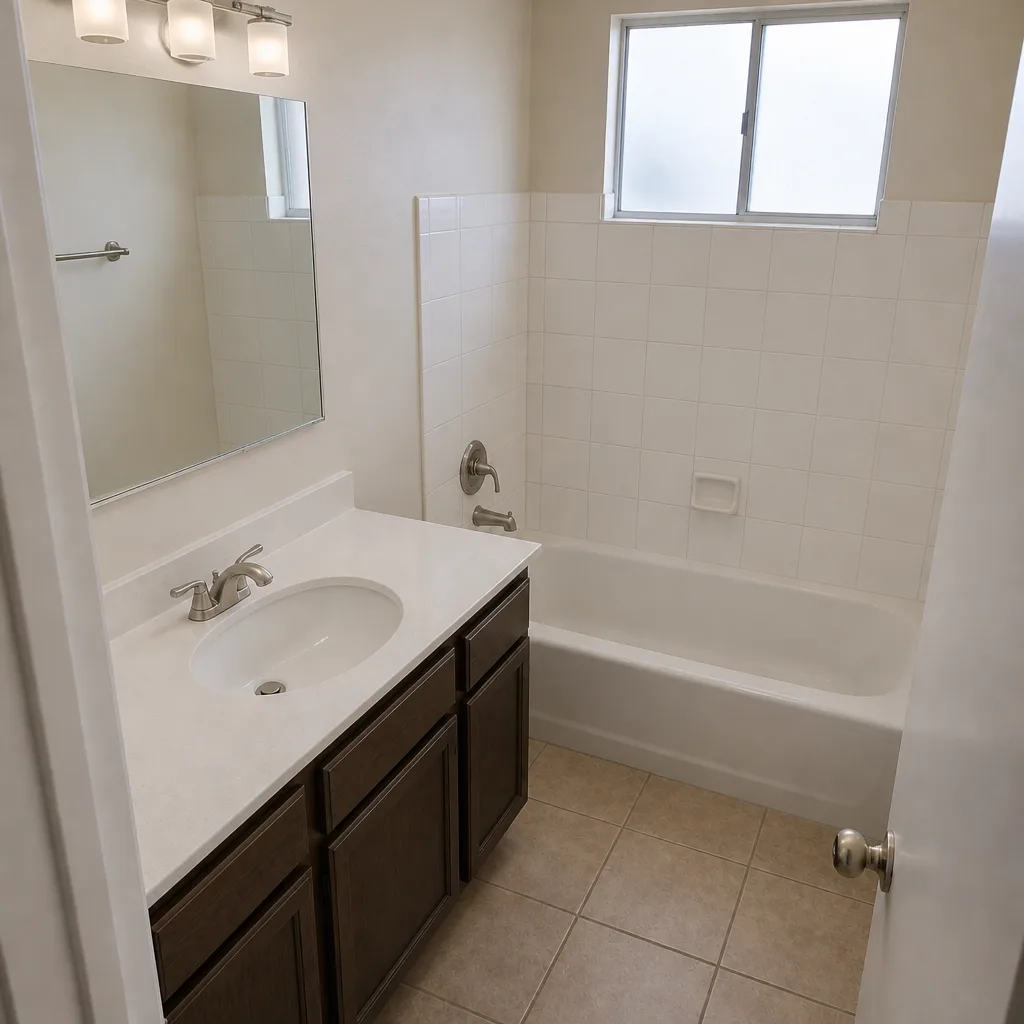 After
Common Mistakes to Avoid
- Hiring the lowest bid without price-checking the demo line. A bid that’s 30% below the others is a bid that’s planning to recover that gap somewhere you can’t see yet. Compare line items, not totals.
- Accepting a verbal estimate on a scope change. “Don’t worry about it, we’ll sort it out at the end” is how payment disputes start. Every Las Vegas homeowner who’s filed a complaint has heard that sentence.
- Skipping the permit question because you’re in a hurry. It takes thirty seconds to ask and it predicts the entire project. A job that starts without permits often ends without inspection, which is your problem – not the contractor’s – when you sell.
- Trusting reviews alone. A handful of glowing reviews can be written by anyone. Ask for current references by name and address, and call them. Any contractor who hesitates on that request is telling you something.
- Not writing down the allowance for every material category. Kitchen and bath allowances are where Las Vegas construction bids go wrong most often, because cabinet and fixture prices shift. KraftMaid, Cambria, Moen, and Delta selections need a written dollar figure before you pick anything.
- Assuming the crew on site is the contractor’s crew. If someone gets hurt on your property and they have no workers’ comp, the exposure is on you. Ask for the certificate before the first nail goes in.
- Signing a contract without a completion date. “We’ll finish when we finish” is not a schedule – it’s a warning about how your final weeks of the project will go.
When to Call a Professional
Some of these checks you can run on your own – asking for a license number, referencing a bid, reading a contract clause. When you’re ready to move from checking to building, call a contractor whose name, address, and license number you can verify yourself. The work itself – demo, structural changes, roofing, electrical, permits – shouldn’t be a homeowner project, and the stakes on a bad permit or a bad sub are too high to gamble on.
A few specific situations where calling now saves money later: you’ve been given a low-demo bid and want a second opinion; you’re ready to sign a contract with vague completion language; you need scope documented before work starts; you have a project that hasn’t been permitted and want to know your options. Barrett & Sons Construction Las Vegas offers free estimates in Las Vegas – call (866) 814-4155.
We pull permits and sign inspections on every eligible job, and every scope change arrives as a written change order before work proceeds. When a finished project needs anything corrected, our written 90-Day Done Right Promise means one call brings us back.
Frequently Asked Questions
The strongest warning signs in Las Vegas are: a bid that underprices demolition, an inability to say who pulls the permits, crews with no workers’ comp coverage or formal employment, and a contract that leaves change order approval undefined. Any one of these is worth a follow-up question. Two or more is a signal to consider another bidder.
Yes. In Clark County, permits are required for nearly all structural, mechanical, electrical, and plumbing work, and a contractor who says otherwise is either unfamiliar with local code or planning to skip it. Skipping permits means the work won’t be inspected, and the liability for that lands on the homeowner’s address, not the contractor’s. Ask for the permit number before work starts.
A reasonable deposit for materials and scheduling is normal – usually 10% to 20% for larger projects. Anything approaching 50% before work starts is a warning sign, especially if it’s requested before a written contract is signed. Every deposit should be documented in the contract with a clear milestone tied to it, and any payment schedule that front-loads cash beyond materials cost deserves a harder look.
Some legitimately do because demo in caliche-heavy Las Vegas soil is well-understood by experienced contractors and priced competitively. But a bid that’s dramatically low on demo compared to surrounding bids is often a bait-and-switch – the contractor plans to recover the margin on framing, finishes, or “unforeseen conditions” after you’ve signed. Ask for the demo line itemized and compare it directly to other bids, not just the total number.
Ask two direct questions: “Are your crew members employees or subcontractors?” and “Can I see proof of workers’ comp?” A legitimate contractor will answer both without hesitation. If the crew is unlicensed, uninsured, or can’t be traced to the company you signed with, the liability exposure on any accident falls on you as the property owner – which is a serious risk to take on a project you’re spending thousands on.
Decline it and ask for a written change order before the work proceeds. A verbal scope change is unenforceable, undocumented, and almost always the origin of the payment disputes we see in Clark County. Any change to material, timeline, or cost should be in writing, signed by both parties, and issued before a nail moves. If the contractor hesitates to put it in writing, that’s a warning sign in itself.
A solid contract sets a firm completion date, defines what counts as “substantial completion,” and spells out what recourse you have if the timeline slips. Vague language like “estimated within the projected window” doesn’t give you anything to enforce. Ask for a written substantial completion date and a written contingency clause tied to it. If the contractor won’t put either in writing, that tells you where the project schedule will land.
The Bottom Line
In Las Vegas, the warning signs worth watching aren’t the generic ones. They’re specific: low demo bids, permit dodging, unlicensed crews, verbal change orders, and contracts with protective-sounding clauses that quietly shift risk to the homeowner. The good news is that clean contractors are easy to spot once you know what to ask – they have a license number ready, references by name, a permit process they can explain, and a contract that puts every price change in writing. If a contractor can’t answer those questions cleanly during the estimate, the project is already telling you what it’s going to be.
Ask anyone on your street. Look up the license number. And if the answer to “who pulls the permits?” isn’t crisp and immediate, get another bid. For a free second opinion on a written estimate or to price a project from scratch, call Barrett & Sons Construction Las Vegas at (866) 814-4155. A live person answers the phone 24 hours a day, 7 days a week.
Written by the team at Barrett & Sons Construction Las Vegas.