
Last updated November 17, 2026
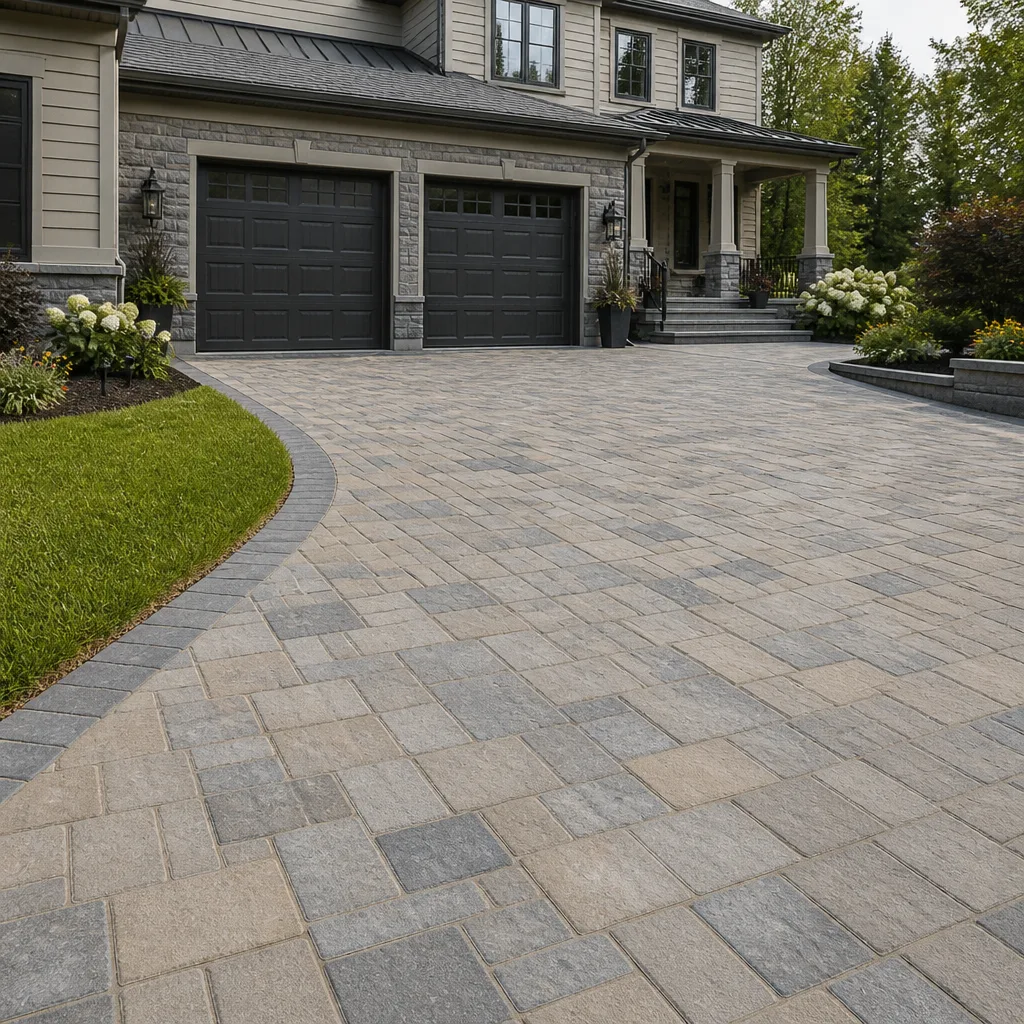 Driveway & pavers
 Kitchen remodeling
 Bathroom remodeling
 Home additions & ADU
 Roofing
 Windows & doors
 Fence
Free written scope consultation - allowances, timeline, and change-order rules on paper before a single trade is scheduled
Driveway & Pavers Warning Signs Every Homeowner Should Know
Here is a single sentence that we’ve heard from more than one homeowner over the years: “It’s just one little paver that rocks.” One paver that rocks corner to corner is the most specific, most overlooked sign of a void beneath the sand bed, and it’s the difference between an afternoon spot fix and a full base replacement. Pavers talk to you. They talk through movement, joint gaps, water stains, and ant hills. This guide teaches you to read what they’re saying, with notes drawn from Las Vegas desert soil and the swing from 110-degree summers to cool winter mornings.
Quick Answer
The most reliable driveway paver warning signs are a paver that rocks diagonally, water pooling in the same spot after every rain, ant hills pushing through joints, edge pavers separating from the restraint, and wide joint gaps appearing in fall. Any one of these is worth investigating; two or more together usually means the base is failing underneath. Spot fixes run a few hundred dollars. Base excavation and rebuild can run several thousand.
Styles & brands we work with
- Kitchen remodeling
- Bathroom remodeling
- Home additions & ADU
- Roofing
- Windows & doors
- Driveway & pavers
- Fence
Table of Contents
- The one movement you can ignore and the ones you can’t
- Why water pooling in the same spot is a drainage warning
- What ant hills through pavers reveal about voids
- Edge paver separation: cosmetic or functional?
- The fall joint gap mistake everyone blames on the weather
- How Las Vegas desert soil changes the story
- A 10-minute driveway inspection you can do yourself
- When to call a professional
The One Movement You Can Ignore and the Ones You Can’t
A new paver driveway moves in the first year. Every one does. The base compacts further under load, the sand bed settles a few millimeters, and the joints close up slightly. That’s normal, and on average it stops by the end of the second summer. Micro-settling reads as a faint uniform dip across a wide area, no paver standing proud of its neighbors, no sand washing out.
The movement you can’t ignore has a specific signature. It’s diagonal, corner to corner, on a single paver or a short run of three or four. It happens because a void has opened under one corner of the paver, leaving the other three supported. The paver acts like a seesaw. Every car tire going over it fractures the sand bed a bit more, the void grows, and the pavers next to it start to follow. If you catch it while the void is small, a crew can lift the paver, re-screed the sand bed, add a little compatible base material, and set it back. That’s a real fix on a joint repair, and it stays fixed.
What normal movement looks like
- Even dip across a wide area, no single high paver
- Faint hairline movement under foot, no audible rock
- Joint sand slightly lower after the first rainy season
- Settles within the first 12 to 18 months
What structural movement looks like
- Single paver or short run that rocks on a diagonal
- Audible click or rock under a car tire
- Stepped edge along a seam, one paver proud of its neighbor by ¼ inch or more
- Widening cracks running across multiple pavers, not just along joints
- Movement that gets worse each year instead of better
If you’re seeing structural movement and you want the whole picture, the base-level story belongs on our Driveway & Pavers in Las Vegas page.
Why Water Pooling in the Same Spot Is a Drainage Warning
A driveway that holds a puddle after every rain is not just annoying. It’s a report on what’s happening four inches down. Pavers are supposed to shed water toward a slope or a channel drain. When water pools in the same spot repeatedly, the sub-base has lost its slope or the drain is clogged or undersized. The base absorbs that water, the sand bed washes out from underneath the pavers, and suddenly you’ve got the voids that cause the diagonal rocking from the previous section.
In Las Vegas, this story plays out faster than most homeowners expect. We get roughly four inches of rain a year, but that rain shows up in short, violent bursts – the sort of afternoon cloudburst that dumps a month’s worth in forty minutes. A driveway that handles gentle rain will still pool under a burst, and the pooled water runs off the same low spot every time. After the storm, the desert sun bakes the wet base. That wet-then-baked cycle cracks ground that’s already alkaline and calcium-heavy, so a small drainage issue that would take five years to develop in a wetter climate can show up here in two.
Water pooling is also an ice-and-growth problem even in the desert. Every spring, weeds find the wet seam and root into the sand bed. Their roots lift pavers slightly, sand washes away around them, and the whole joint system loosens.
How to test for a drainage problem
- Hose the driveway in the middle and watch where the water exits. If it holds longer than 30 seconds in any one spot, water is pooling.
- Mark the low spot with chalk and come back 24 hours later. If a damp stain remains after 24 hours of dry weather, the base is holding moisture.
- Check the edges for sand washing out. Sand trails on the driveway apron are a drainage signal, not just cleanup.
- Note whether the pool is in the same spot after every event. A consistent spot means a structural slope issue, not a one-off.
What Ant Hills Through Pavers Reveal About Voids
Ant hills emerging from paver joints are a bigger deal than the ants themselves. Ants build where the sand is loose. When ants excavate a colony beneath a paver driveway, they move sand and fine base material out of the joints, and every move widens the void under the pavers. There’s a reason this is a Las Vegas problem in particular: our soil is dense, alkaline, calcium-heavy desert ground, and the sand bed under pavers is one of the few loose-surface spots in the yard that a colony can work. Fire ants and pavement ants are both common in the neighborhoods around North Las Vegas and Henderson, and both will colonize a paver joint in a single dry season.
The pattern to watch for is ant mounds along a seam, especially at the edge where the pavers meet the yard. Mounds along a seam usually mean the sand bed has already lost some material and opened a channel. A single mound in the middle of a uniform driveway that hasn’t moved otherwise is probably a plumbing lure (a leak somewhere below) or normal ant behavior. But mounds in pairs or lines, combined with a slightly sunken paver above them, is a base problem.
The fix isn’t the ant bait alone. If the sand has been excavated out from under the pavers, the joint sand needs to be replenished with a polymeric joint sand, and any void beneath needs to be re-bedded. Otherwise the ants come back and the pavers keep sinking.
Edge Paver Separation: Cosmetic or Functional?
Edge pavers separating from the rest of the driveway is one of the easiest warning signs to misdiagnose. Sometimes it’s an aesthetic gap of a couple of millimeters against the edge restraint; that’s very common in the first two seasons and it’s cosmetic. Sometimes it’s a functional failure where the edge restraint has pulled free under load, and the pavers are being held in place by nothing but weight and friction.
Here’s how to tell the two apart.
Cosmetic edge separation
- Gap runs straight and even, no individual paver sticking out
- No movement when you press down on the edge pavers
- Joint sand still intact between edge pavers
- Happens within the first 18 to 24 months, then stops
Functional edge failure
- One or two edge pavers noticeably walked out past the line
- Movement under foot or car tire when you test the edge
- The plastic or aluminum restraint is loose, bent, or pushed outward
- Base material visible between the pavers and the surrounding ground
- Occurs after heavy tire traffic or after a vehicle parks against the edge
An edge restraint that’s pulled free is a real hazard. The pavers can walk outward, the joints open, water gets in, and the whole edge starts to peel away. It’s also a case where the fix is cheap if you catch it early: reset the restraint and re-set the edge couple of pavers, and the driveway stays solid for years. Left alone, the failure spreads inward toward the middle of the drive.
The Fall Joint Gap Mistake Everyone Blames on the Weather
Here’s the warning sign most homeowners misread. Every autumn, joint gaps between pavers open up a bit wider. Homeowners assume cold weather has shrunk the pavers. That’s not what’s happening. Pavers don’t shrink in the cold. What happens is the joint sand has washed or blown out over the summer, and the seasonal transition exposes joints that were already under-filled. Wide joint gaps in the fall are a sign the joint sand is the wrong type or was never fully installed.
Two things drive it. The first is plain sand, which washes out of joints in a single hard rain and blows out in dry weather. The second is a missing stabilizer. A polymeric joint sand, installed with the correct compaction and activated properly, holds through the seasons. A paver installation that used plain washed sand, without a stabilizer, will lose its joint profile in two or three Vegas summers. And in a market where every sunny afternoon drives UV exposure and high-heat expansion, the joint opens faster than the homeowner expects.
If you see persistent wide gaps every fall, the fix isn’t to top the joints off with more plain sand. That’s a temporary cosmetic patch. The real fix is to remove the old joint sand, refill with a proper polymeric sand, compact and activate it, and let it cure. It’s a half-day job for a crew on a typical Las Vegas drive, and it changes the whole behavior of the driveway.
How Las Vegas Desert Soil Changes the Story
Everything above is true of a paver driveway anywhere. But if you’ve seen a paver driveway in Las Vegas, you’re watching the desert test the base harder than most climates will. Three local factors matter and they combine.
Alkaline, calcium-heavy soil
The ground around Las Vegas is heavily alkaline with high free calcium. That’s rough on concrete but it’s rougher on the base layer of a paver driveway. Free calcium migrates up into the sand bed, binds it into hard, uneven plates, and creates the voids and angular movement that fracture pavers. We see this more often in the older neighborhoods around the Sunrise Manor and Whitney areas, where the drives have aged alongside the shift in climate.
Extreme diurnal swing
Atypical of most paver markets, Las Vegas swings 30-plus degrees between day and night. Pavers expand in the afternoon sun and contract in the cool morning. That cycle is fine if the joints have the correct flexible sand. If the joints have a rigid fill, the pavers can’t move, and the expansion goes into the base and the edge restraint instead. That’s when you get the diagonal rocking and the edge separations we covered above.
Flash-flood hydrology
Las Vegas is built on basins and washes. A driveway built on or near a former wash will handle water completely differently than one built on the higher ground. That’s why we walk every yard and ask about the historical drainage pattern. It’s also why we’re careful about what the base looks like before any paver goes down. If you’re planning additions or a whole new drive in the same yard, the site grading conversation belongs on our Home Additions & ADU in Las Vegas page, because the same hydrology affects both.
A 10-Minute Driveway Inspection You Can Do Yourself
You don’t need a moisture meter or a sub-base camera to catch most of these problems early. A short walk with a chalk, a hose, and a careful eye does most of the work. Here’s the routine we suggest.
- Walk the full perimeter. Press down on every edge paver with the ball of your foot. Any movement at the edge means the restraint needs a look.
- Test every paver with the heel of your shoe. Rock each paver corner to corner. If it moves on a diagonal, you’ve found a void.
- Look for the high spot. A paver standing proud of its neighbor is the other end of a void. Mark it in chalk.
- Hose the whole drive and watch the water. Any spot holding more than 30 seconds gets marked and gets a second look 24 hours later.
- Run a pencil down a joint. If the pencil drops more than ⅛-inch, the joint sand is under-filled. If it drops the full depth of the pencil, the sand has washed out entirely.
- Check the seam where the pavers meet the yard. Ant mounds, sand trails, or small weeds along a seam are the warning signs of voids beneath the sand bed.
- Count gaps. Wide joints showing up consistently in the fall is the joint sand type signal we described earlier.
Write down your findings with the date. If you get one warning sign a year and it doesn’t spread, you’re probably fine. If you get two in one season, or the same paver rocks twice after rain, it’s time to have a pro look. Our Barrett & Sons Construction Las Vegas home page has the full service list if you want to see what else we handle on the same trip.
See the difference
 Before
 After
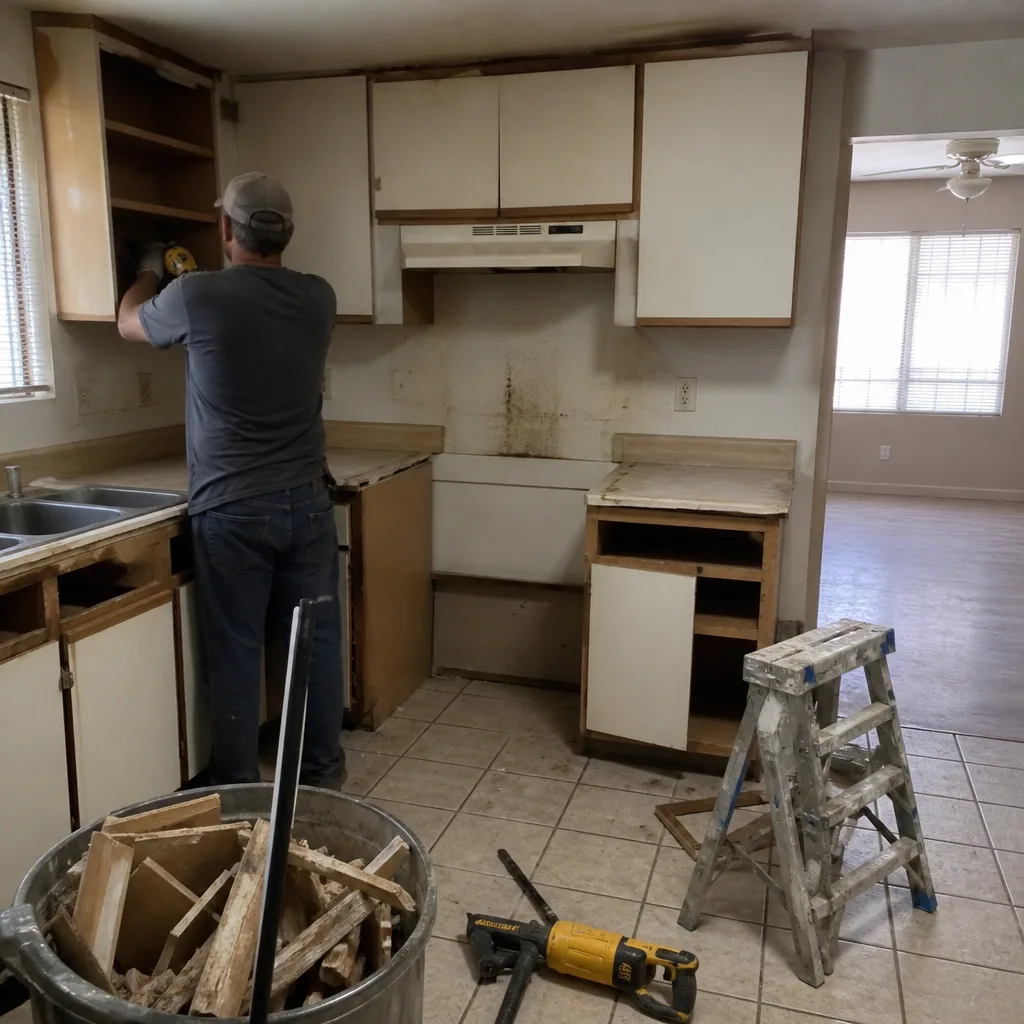 Before
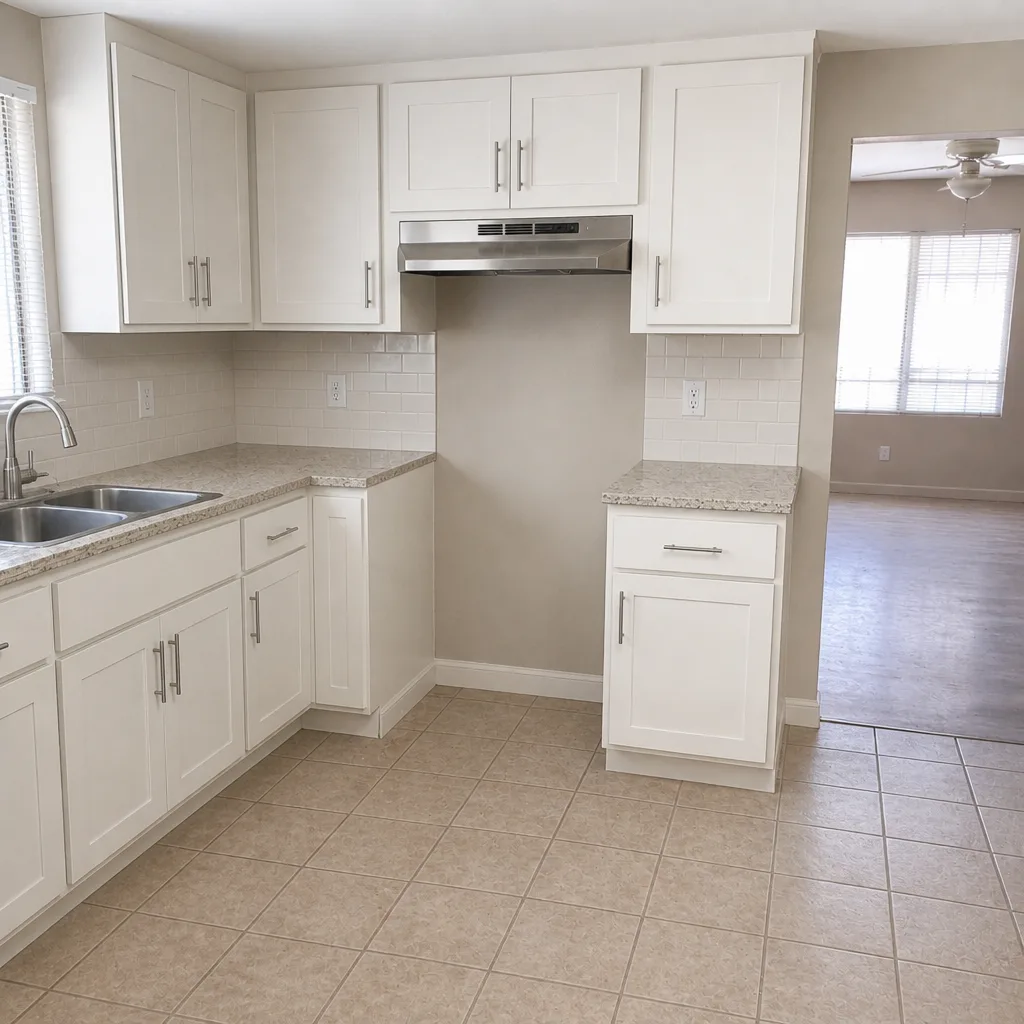 After
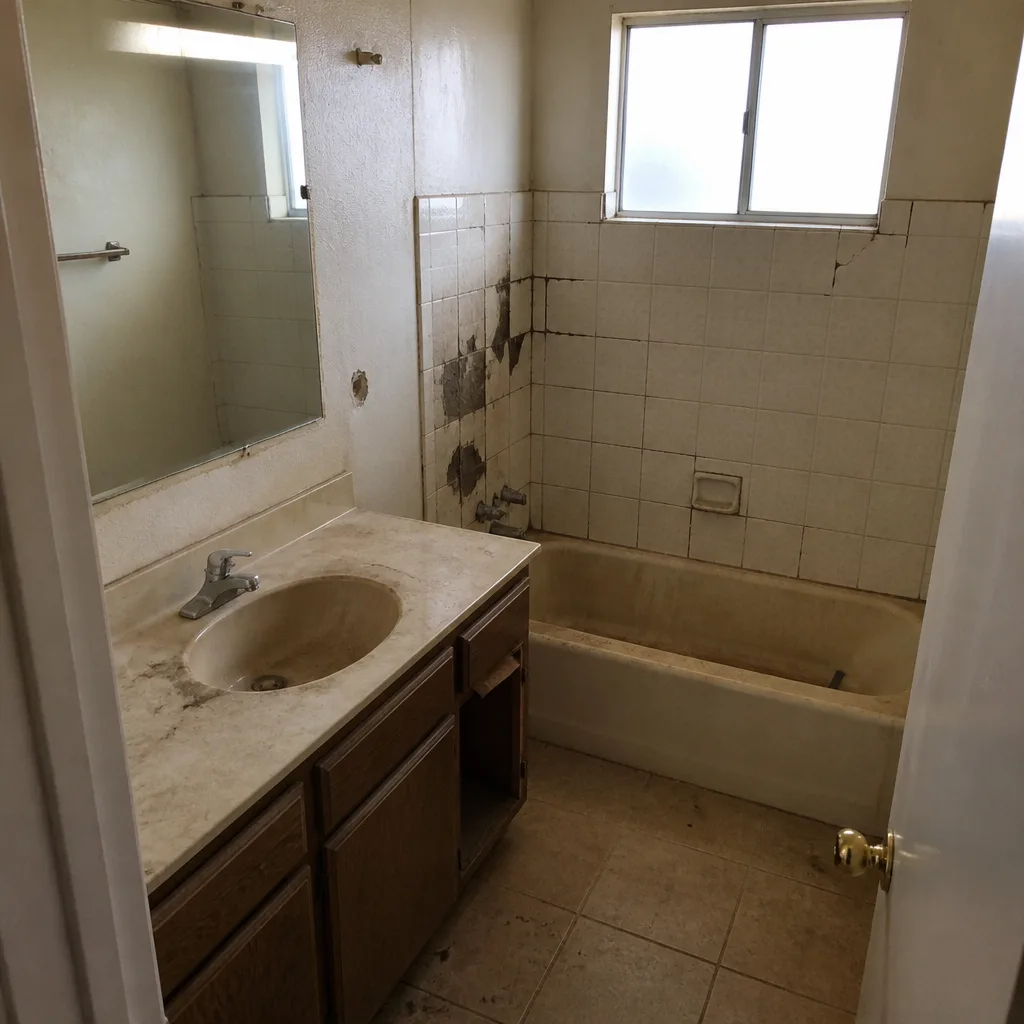 Before
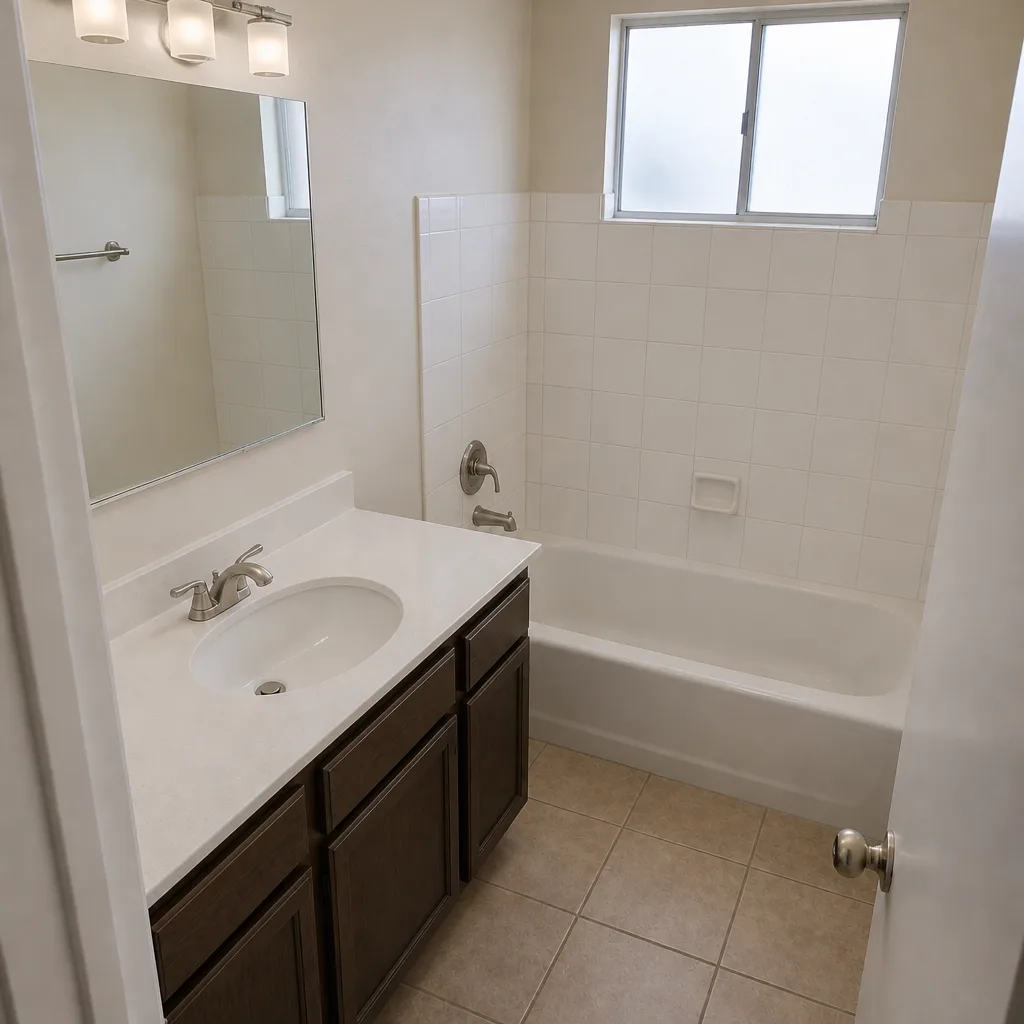 After
Common Mistakes to Avoid
- Tossing plain sand into the joints every fall. Plain sand washes out in the first hard rain. Polymeric joint sand holds. The cheap fix is the one that costs more in two years.
- Blaming edge separation on the ground moving. In Las Vegas, it’s usually the edge restraint pulling free, not the yard shifting. The fix is on the edge, not the whole driveway.
- Treating an ant hill as an ant problem only. The ants are the symptom. The void under the sand bed is the problem, and it will not go away when the ants do.
- Ignoring a single rocking paver because it’s small. That one diagonal rocker is the cheapest fix you’ll ever get on a driveway. Wait two rainy seasons and it becomes a base job.
- Choosing a paver installer by the lowest square-foot price. What separates contractors is joint sand type, edge restraint, and base compaction. Those are the three items a cheap bid cuts first.
- Adding patio or driveway pavers over a pool without checking drainage. In our desert soils, the same low spot that holds a puddle becomes a full slab of water under the pavers. Spend the day grading before you spend the money on stone.
- Skipping the second opinion on a repair quote. A paver driveway quote should list the base work and the joint sand type separately. If it doesn’t, ask for it, or get a second look.
When to Call a Professional
Call a professional when two or more warning signs show up at once, when a paver that you fixed once starts rocking again, or when a low spot holds water for more than 24 hours after the rain. Call when the edge restraint has visibly walked out of its line, or when ant mounds are lined up along a seam. Call when you’re planning to sell and you don’t know how old the base is. These are the cases where the difference between a $400 joint repair and a $12,000 base replacement comes down to catching it early. In a Las Vegas yard, we also look at the fence line, since a fence post set too close to the pavers can undermine the edge restraint – that’s covered on our Fence Installation in Las Vegas page. Barrett & Sons Construction Las Vegas offers free estimates in Las Vegas – call (866) 814-4155 to schedule yours.
Frequently Asked Questions
The five most common warning signs we see in Las Vegas are a single paver rocking diagonally, water pooling in the same spot after every rain, ant hills pushing through joints, edge pavers walking out of line, and wide joint gaps appearing every fall. Two or more together usually points to a base problem.
Yes, if it rocks diagonally corner to corner. That movement means a void has opened under one corner, and it will get worse with every tire that drives over it. A single rocking paver is the cheapest fix you’ll ever make on a paver driveway – call us at (866) 814-4155 to schedule a free estimate.
Small joint and paver reset work in a typical Las Vegas drive usually runs a few hundred dollars. A larger repair covering several pavers or a re-set edge runs into four figures. Full base excavation and rebuild runs higher. A written line-item estimate is the only way to know for your driveway; call (866) 814-4155 and we’ll get you that number in writing.
No. Plain sand washes and blows out within one season, and the joint gaps come back. Polymeric joint sand, properly installed and compacted, is the fix that holds. A proper joint fill also keeps water out of the base, which is where the real damage starts.
Pooling in the same spot after every storm points to a lost slope or a clogged drain, not the rain itself. It predicts a base problem: the water finds the void, the sand bed washes out, and the pavers start moving. If you’ve got a puddle that stays 24 hours after the rain, it’s worth a look. Call (866) 814-4155 for a free estimate.
Yes. Every eligible job we take includes permits pulled and inspections signed, and we don’t start work until they’re in hand. That’s part of the 90-Day Done Right Promise, which is written on every contract. If any price changes once we’re underway, you’ll see it in a written change order first. Call (866) 814-4155 for a free estimate.
The Bottom Line
Your driveway is not a passive surface. It reports on the sand bed, the base, the joints, and the edge restraint through five clear signals: a diagonal rocker, a recurring puddle, an ant mound in a joint, an edge restraint pulling free, and wide joints every fall. Read those signals and you can catch damage while it’s small. Ignore them and the paver warranty rarely covers what happens next. If you see any of the signs in this guide, or you just want a second look at a quote you’ve already got, we’re happy to help. Written by the team at Barrett & Sons Construction Las Vegas.
Barrett & Sons Construction Las Vegas offers free estimates across the Las Vegas valley, and every one of our jobs ends with the same 90-Day Done Right Promise. Call (866) 814-4155 for your free estimate. If it’s a second opinion on a written estimate you already have, we’ll do that for free too, and we’ll do it with a live person on the phone, not a voicemail box. Ask anyone on your street, or look up the license number yourself. We use premium materials we can back up – CertainTeed and GAF roofing, Belgard and Techo-Bloc hardscape, KraftMaid cabinetry – so whatever we set on your driveway is a name you can verify.
Written by the team at Barrett & Sons Construction Las Vegas.