
Last updated November 17, 2026
 Home additions & ADU
 Kitchen remodeling
 Bathroom remodeling
 Roofing
 Windows & doors
 Driveway & pavers
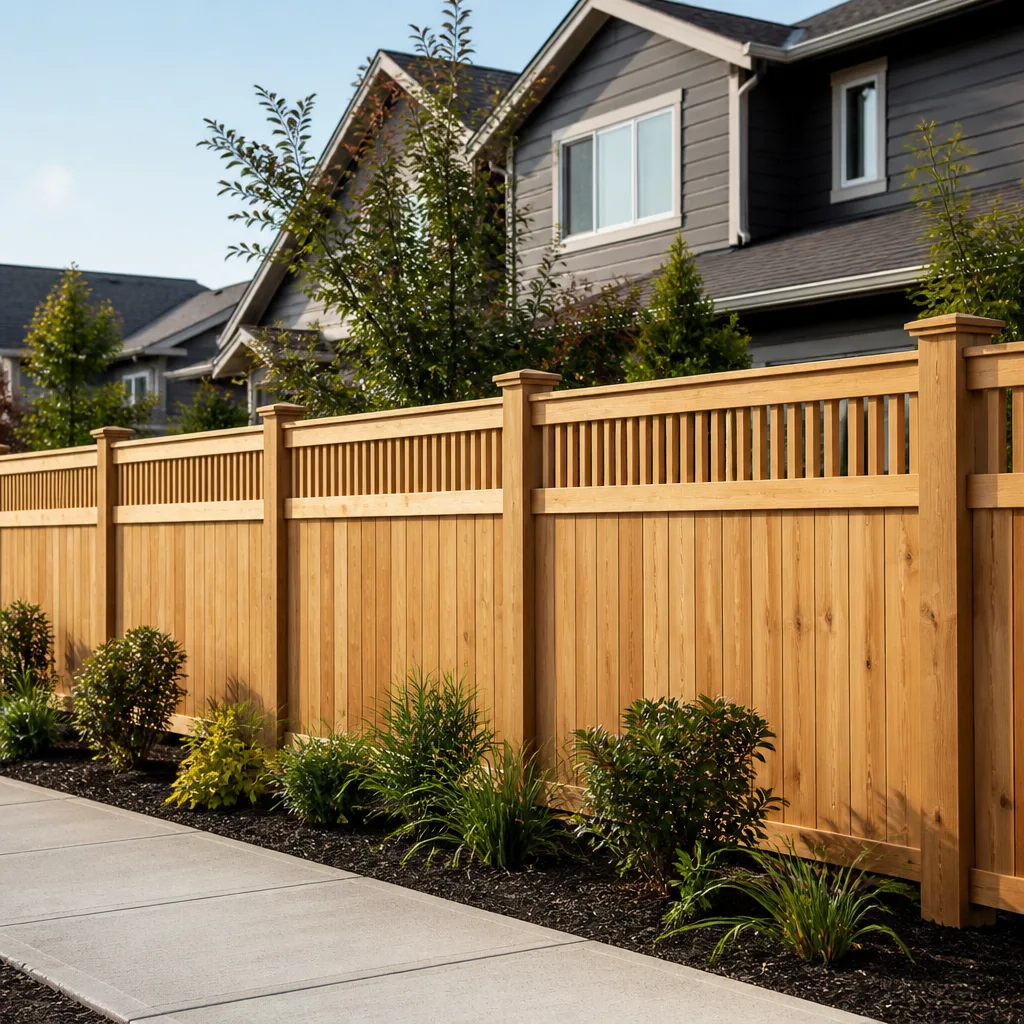 Fence
Free written scope consultation - allowances, timeline, and change-order rules on paper before a single trade is scheduled
Fence Installation Warning Signs Every Homeowner Should Know
Nevada has no mandatory licensing for fence-only contractors, which means the person quoting your backyard fence may carry less accountability than the guy who mows your lawn. That’s the uncomfortable truth most homeowners learn too late, after the posts are crooked and the deposit is gone. In our experience across the Las Vegas valley, the red flags that expose a bad fence contractor aren’t loud. They’re quiet: a missing permit number, a vague materials list, and a request for full payment upfront are the three that cost homeowners here the most money every year. This guide teaches you to read those signals before the first post goes in the ground.
Quick Answer
The biggest fence installation warning signs are a contractor who won’t put a permit number in writing, a quote that names no specific materials or brands, and any request for more than 30-40% upfront before materials are delivered to your property. Add in a contractor who skips the 811 dig-line call and one who disappears before a final walkthrough, and you have the full checklist of trouble. In Las Vegas, where caliche soil and HOA rules make fence work trickier than it looks, these signals matter more than the price on the bid.
Styles & brands we work with
- Kitchen remodeling
- Bathroom remodeling
- Home additions & ADU
- Roofing
- Windows & doors
- Driveway & pavers
- Fence
Table of Contents
- The Missing Permit Number Is Your Fastest Disqualifier
- What a Real Materials Spec Sheet Looks Like
- Payment Schedule Red Flags
- Did They Call 811 Before Digging?
- Post-Installation Problems You’ll Notice Too Late
- Why Las Vegas Fences Fail Differently
- How to Verify a Contractor Before You Sign
The Missing Permit Number Is Your Fastest Disqualifier
If a contractor can’t tell you whether your fence needs a permit, that’s not a knowledge gap. It’s a choice they’ve made to skip the paperwork and pocket the difference. In Las Vegas and unincorporated Clark County, fence permits depend on height, location, and whether the fence sits on a property line or an easement. A legitimate contractor knows the rules for your specific parcel and pulls the permit before anyone digs.
Here’s what to ask for instead of taking their word:
- The permit application confirmation – a copy of the submitted application with your address on it, not a verbal “we’ll handle it.”
- The inspection schedule – most fences require a footing or post inspection before the panels go up, and a final inspection when the job is done.
- The signed-off inspection card – you want the final document that says the work passed, not a promise that it will.
Why does this matter so much? Because an unpermitted fence can become your problem at resale. Title companies and buyers’ inspectors flag it, and you may end up paying to tear out and rebuild a fence the contractor walked away from. The permit inspector works for you, not for the builder. That’s why we like him. When you work with a crew that pulls permits and signs inspections on every eligible job, you get a paper trail that protects your investment. Our fence installation in Las Vegas process includes the permit and inspection as part of the scope, in writing, before work starts.
What a Real Materials Spec Sheet Looks Like
A napkin quote that says “6-foot wood fence, installed” tells you nothing. It doesn’t tell you the wood species, the post spacing, the concrete depth, or whether the pickets are dog-eared cedar or discount pine that will twist in the desert sun. A legitimate materials spec sheet names brands, dimensions, and quantities down to the fasteners.
Here’s the difference in plain terms:
- Vague: “Premium wood fence materials” – versus – Specific: “Western red cedar pickets, 5/8-inch thick, 6-foot height, on 4×4 pressure-treated posts set 24 inches deep in 60-pound concrete mix.”
- Vague: “Vinyl privacy fence” – versus – Specific: “Brand-named vinyl panels with manufacturer warranty, color-matched posts on 8-foot centers.”
- Vague: “Metal fence” – versus – Specific: “Powder-coated aluminum or steel ornamental, with named gauge and finish warranty.”
You should be able to look up every brand on your quote and find a real manufacturer with a real warranty behind it. That’s the same standard we hold on the roofing side with GAF and CertainSided products, and it doesn’t change when the material is a fence panel. Materials you can look up beat mystery brands off a van every time. If you’re comparing a fence bid against other exterior work on your property, the same rule applies to your driveway and pavers in Las Vegas quotes – named products, named quantities, in writing.
Payment Schedule Red Flags
Any contractor asking for more than 30-40% upfront before material delivery is a risk signal, and asking for the full balance before the last post is set is a walking red flag. The deposit should cover materials and mobilization, nothing more. The rest should be tied to milestones you can see with your own eyes.
A healthy payment schedule looks roughly like this:
- Deposit: 20-30% at contract signing, once the written scope and permit plan are in place.
- Material delivery: a second draw when the actual materials land on your property, not when the contractor “orders” them.
- Substantial completion: a third draw when the fence is standing and passes your walkthrough.
- Final payment: the remainder after the final inspection is signed and every punch-list item is done.
Cash-only, no-contract, “sign today and I’ll knock 15% off” pressure is another warning. A contractor who needs your whole check before he’s bought a single panel is running on your money because he has none of his own. That’s how homeowners end up with half a fence and a disconnected phone number. Every price change on a legitimate job arrives in writing before the work happens, because an allowance that isn’t on paper is a surprise waiting for a date.
Did They Call 811 Before Digging?
Nevada law requires anyone digging to call 811 so utilities can mark buried lines. It’s free, it takes a couple of business days, and it’s the single most reliable way to know whether your contractor is operating above board. If they skip it, they’re gambling with your sewer line, your irrigation, your gas line, and in older Las Vegas neighborhoods, whatever’s under that dirt from decades of remodels.
What it means for your liability if they don’t call:
- You can be billed for damage to a utility line on your property if the required notice wasn’t given.
- You may be liable for injuries if a line is struck and someone is hurt on your property.
- You have no proof of care if a dispute later lands in court – the ticket 811 issues is your protection. How to verify it: ask for the 811 ticket number and the date it was issued. It should be dated within the last few weeks, referenced on the contract, and you can often check with the utility marking service that the request exists. If a contractor answers “we always call, don’t worry about it” but can’t produce a ticket, that’s your answer. And when crews are digging near utilities, ask who’s marking gas, water, and electrical. A good fence crew in Las Vegas treats the 811 ticket the way a good electrician treats the breaker panel: before anything else.
- Gaps at ground level – daylight under the bottom rail means your fence won’t hold back a determined dog, and it’s a sign the line wasn’t set to grade. In Las Vegas, our graded lots and caliche make this a real problem, not a nitpick.
- Posts not set in concrete – tap a post. If it wiggles, the footing wasn’t deep enough or the concrete wasn’t mixed to spec. A loose post today is a leaning fence in two summers.
- No final walkthrough offered – if the contractor packs up the truck the second the last screw goes in, you’ve lost your chance to point out problems. A legitimate crew walks the fence line with you, and any punch list gets fixed on the spot or scheduled in writing.
- Inconsistent spacing and racking – pickets should align and panels should follow the ground contour, not stair-step. Careless racking is a sign of speed over quality.
- Gates that bind or sag within weeks – hinges and posts weren’t sized for the gate span.
- Wood that dries out and warps – the dry heat pulls moisture out of cheap pine fast, causing splitting and twisting. If your quote doesn’t name the wood species, assume you’re getting materials chosen for the contractor’s margin, not your climate.
- Vinyl that gets brittle in the sun – not all vinyl is rated for 100-plus degree summers. Ask for the UV rating and the manufacturer’s warranty for desert installations.
- Post footings that aren’t deep enough for caliche – a shallow footing in Las Vegas soil fails the first time the wind kicks up a monsoon gust.
- Monsoon season stress – July, August, and September bring wind, dust, and hard rain. A fence that’s too light for its span or poorly anchored takes the hit.
- Ask for the permit number and the address it was pulled for. If the answer is “we don’t need one,” get that in writing and see how fast they back off.
- Ask for the 811 ticket on the job before digging, and confirm it’s dated for your job and your address.
- Ask for named materials on the spec sheet, with brands and line items you can look up.
- Check the license number through the Nevada State Contractors Board. Fence-only work has limited licensing requirements, so look at the company’s history and the workmanship guarantee instead of assuming a license means everything.
- Check insurance – ask for a certificate of insurance naming you and your property, not just a general policy.
- Read the contract for the change order clause. Every scope change, every allowance, every price change should arrive in writing before the nail gun comes out.
- Ask who shows up. If it’s a national sales call center and a rotating cast of subs, you’ve got a stranger with your deposit.
- Ask about the guarantee in writing. “We stand behind our work” is a phrase. A written guarantee with a name, an address, and a phone number is a promise. Look up a contractor’s name and license number yourself before you sign anything. A local outfit should be happy to hand you both.
Post-Installation Problems You’ll Notice Too Late
Some fence problems show up the day of installation. Others take a season. The ones that matter most are the ones you can spot on a final walkthrough if you know what to look for:
The final walkthrough isn’t a formality. It’s your moment to hold the contractor to the scope in writing. Do it in daylight, walk both sides of the fence, and test every gate. That’s why we build a walkthrough and a written punch list into every fence job and back the finished work with a written guarantee. If it’s not done right, one call brings us back. Our Barrett & Sons Construction Las Vegas home page lays out that promise, along with the four standing offers we never change.
Why Las Vegas Fences Fail Differently
Las Vegas fences don’t fail the way fences fail in the Midwest or the Pacific Northwest. Our failures are about heat, sun, and soil. Our caliche layer – that rock-hard calcium carbonate under much of the valley – makes post augering a real job, and a crew that’s used to sandy soil will struggle here. Knowing that difference is part of judging a bid.
What we see on Las Vegas fences all the time:
Newer master-planned neighborhoods in Las Vegas often come with HOA rules that dictate fence height, material, and color. Older communities may have different setbacks and easement lines. A contractor who doesn’t ask about your HOA before quoting may be handing you a fence you have to tear down. A contractor who stops to check the record of survey before quoting is the one who’s done this before. Our team has worked enough Las Vegas yards to know where the caliche gets ugly and which HOAs want specific panel styles.
How to Verify a Contractor Before You Sign
Verifying a contractor takes an afternoon. Not verifying can cost a season’s worth of savings. Here’s the checklist we’d want a homeowner to run on us, and on anyone else bidding the job:
This is the same standard we hold on outdoor builds like a home addition or ADU in Las Vegas, where permits and inspection paperwork are the difference between an addition that appraises and one that gets flagged. If you’re comparing builders on a shed or small structure, ask whether they’re using a real prefab system from a name like Tuff Shed or James Hardie siding, or whether the materials are “quality” in the abstract. Real brands have real spec sheets. That’s the standard across every trade we touch.
Common Mistakes to Avoid
- Signing without a permit plan. An unpermitted fence may surface at resale and cost you a rebuild. Confirm the permit plan is written into the contract.
- Paying more than 30-40% upfront. A big deposit before material delivery is the classic setup for a contractor running on your money.
- Accepting a napkin quote. No brand names, no dimensions, no post depth? You’ve got nothing to hold anyone to.
- Assuming the contractor will call 811. Ask for the ticket, before the auger comes off the truck.
- Skipping the final walkthrough. That’s your one clean moment to catch gaps, loose posts, and gates.
- Ignoring the HOA. In Las Vegas master-planned communities, the wrong fence material or height can mean a tear-out.
- Comparing on price alone. The cheapest bid often comes from the contractor cutting the most corners. Compare spec sheets and written scopes, not just dollar signs.
See the difference
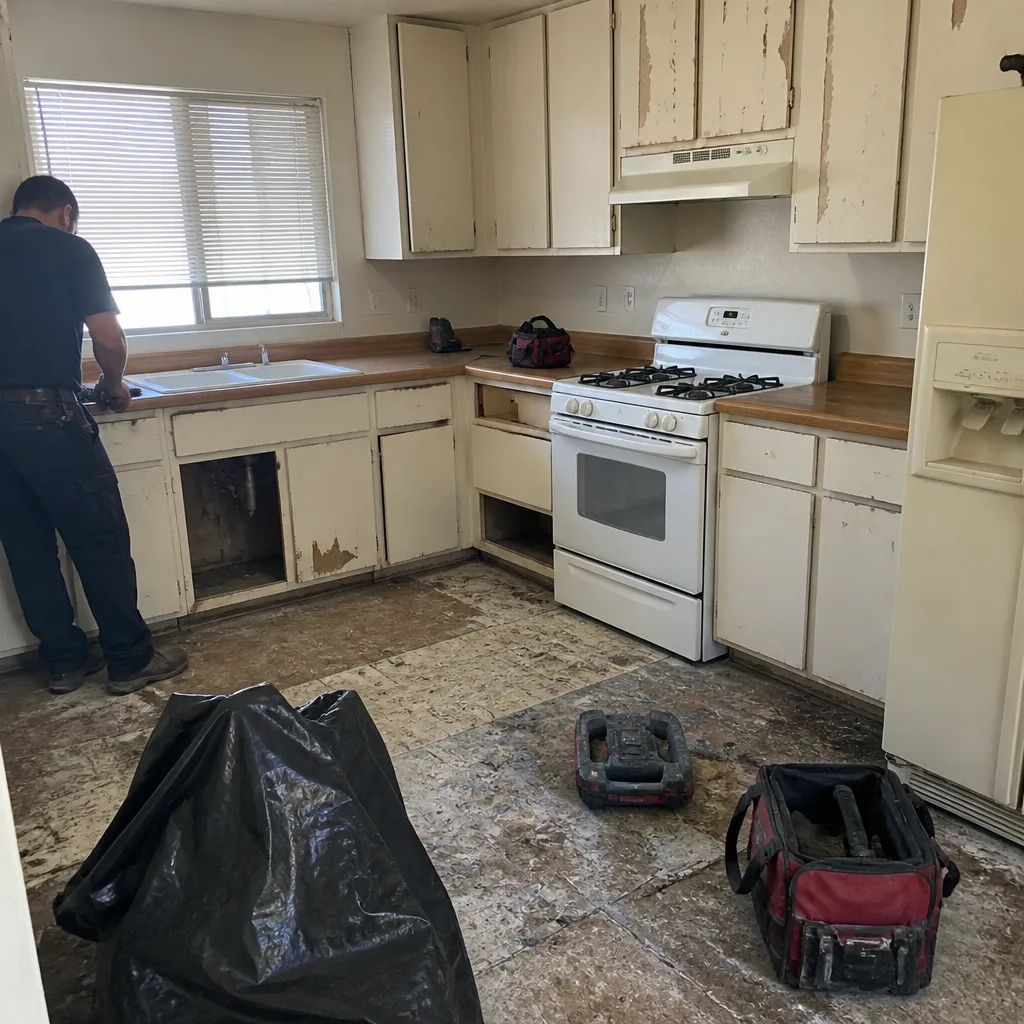 Before
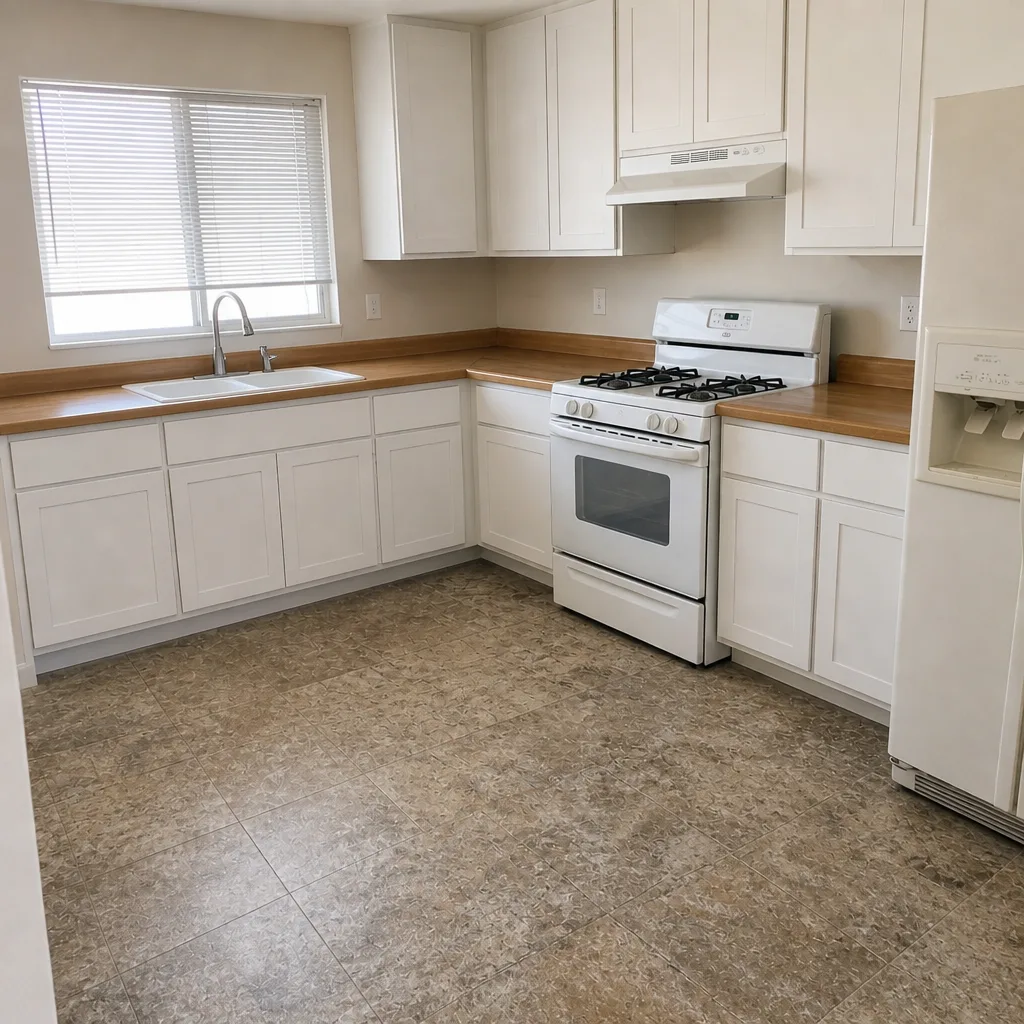 After
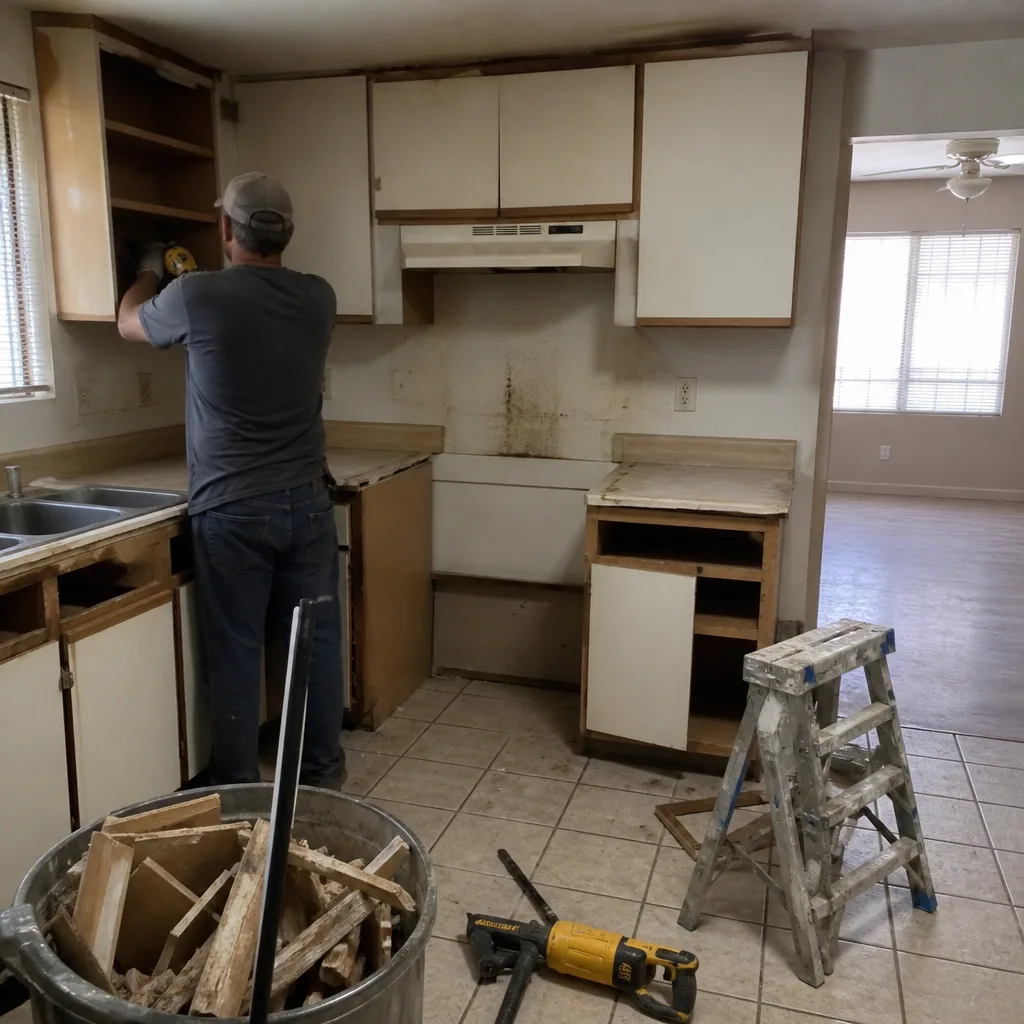 Before
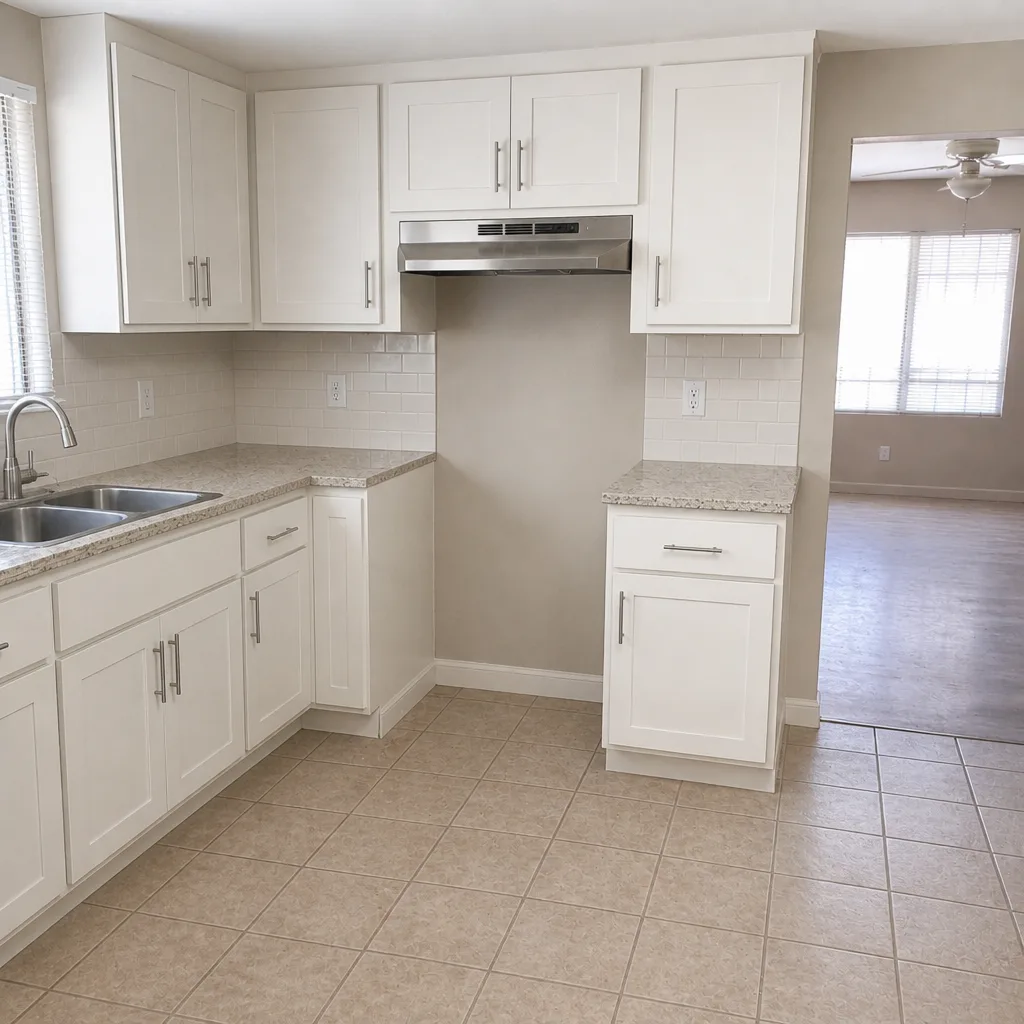 After
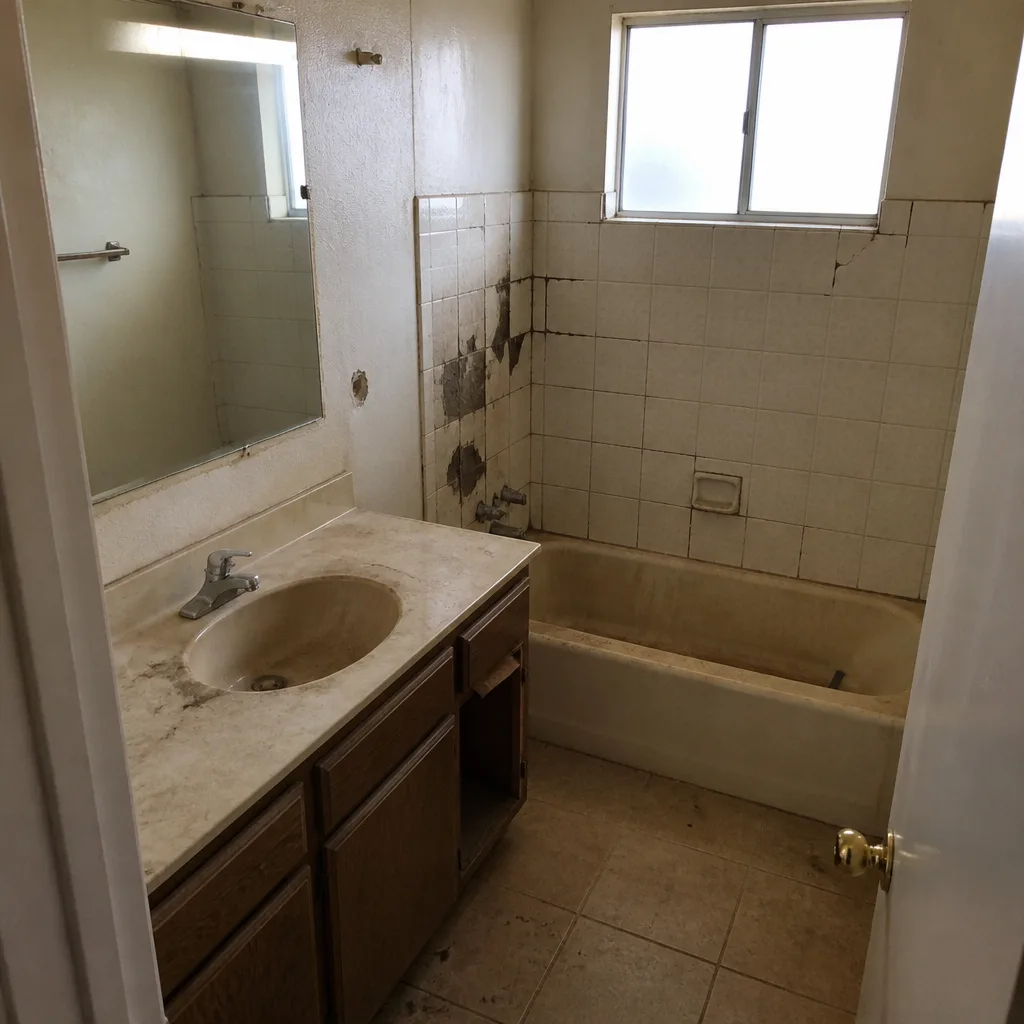 Before
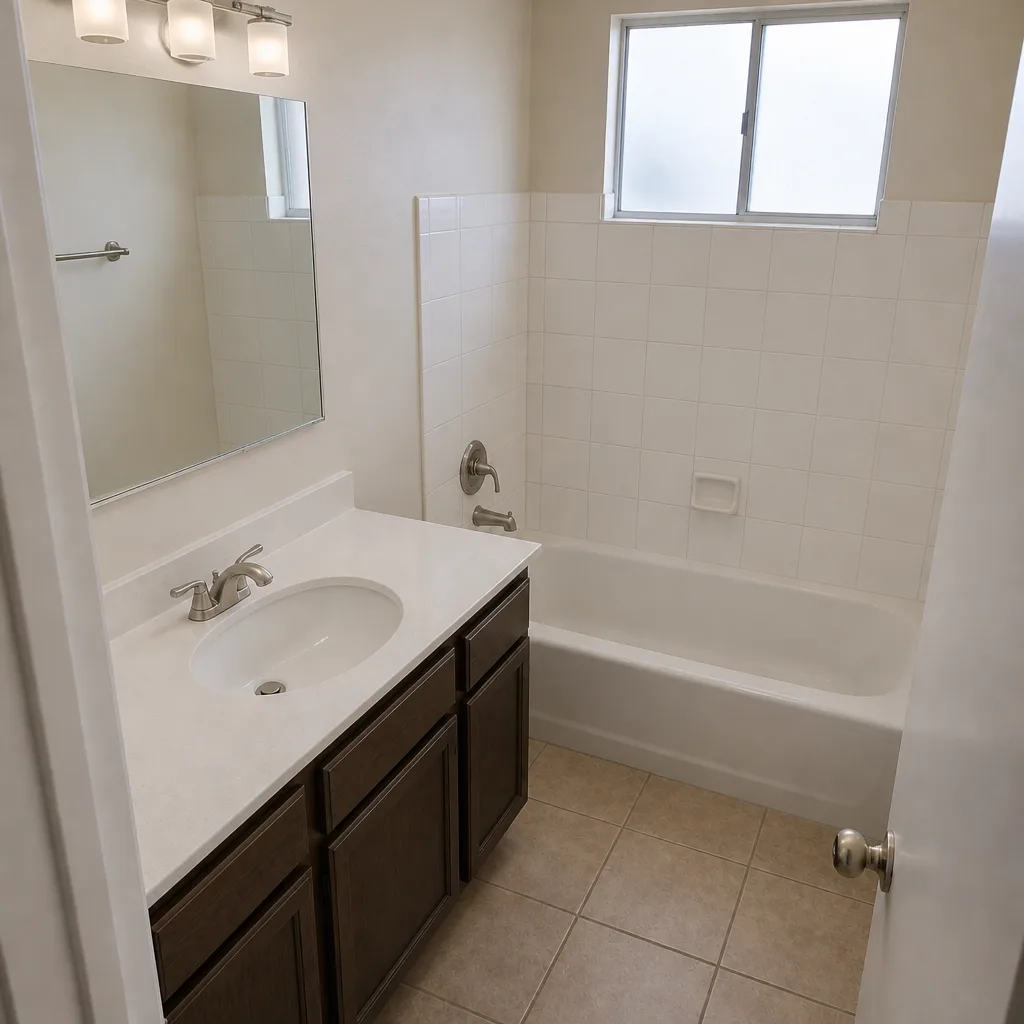 After
When to Call a Professional
Some fence jobs are DIY-friendly (a short repair, a single panel). Fence installation isn’t one of them: footings, caliche, permit requirements, and utility lines all make it a job for a trained crew. Call a professional if you’re replacing a full perimeter fence, if your HOA requires a specific build, if the fence sits near utilities, or if the existing posts are set in concrete that has to come out. If a permit is required on your property, don’t start without a contractor who pulls it and gets the inspection signed. And if you’re facing a first bid that feels too good to be true, get a second opinion before you sign.
Barrett & Sons Construction Las Vegas offers free estimates in Las Vegas. Call (866) 814-4155, and a live person will pick up. We publish our name, address, and license number so you can verify us, and we’d rather you check than assume.
Frequently Asked Questions
It depends on the fence height, location, and whether it sits on an easement, so the answer is specific to your parcel. In Las Vegas and unincorporated Clark County, fences over a certain height or on a property line often require a permit and a footing inspection. Ask your contractor to pull the permit and show you the inspection card before you sign the contract.
Yes. Any request for the full project cost before work begins is a serious red flag. A normal deposit covers materials and mobilization at 20-30%, with the rest tied to milestones you can verify. If a contractor wants your whole check on day one, walk away and get another bid. Call (866) 814-4155 for a free second opinion on the estimate you have.
Ask for the 811 ticket number and the date it was issued to them for your specific address. It’s free and required by Nevada law, so there’s no good reason not to have one. If they can’t produce a ticket, or say they “always call” without proof, that’s your warning sign.
A real fence quote names the material brands and dimensions, the post size and footing depth, the gate hardware, the permit pull, the 811 ticket, the inspection, and the payment schedule, all in writing. It should also state the change order process for any scope changes. If your quote says only “6-foot wood fence, installed,” it isn’t a quote yet.
Gaps at ground level, posts that wiggle when you push them, pickets that stair-step instead of following grade, gates that bind within weeks, and no offer of a final walkthrough. In Las Vegas, also look at post spacing and footing depth, because caliche soil and monsoon winds find any weakness in a fence line. Call (866) 814-4155 if you want a second set of eyes before you hire.
Yes. We pull permits and sign inspections on every eligible job, and we include the permit in the written scope before the first post goes in. That’s part of the 90-Day Done Right Promise: if it’s not done right, one call brings us back. Call (866) 814-4155 to schedule your free estimate; a live person answers any time.
The Bottom Line
The biggest fence installation warning signs are quiet: a missing permit number, a vague materials list, full payment upfront, no 811 ticket, and no final walkthrough. In Las Vegas, where caliche soil, sun, and HOA rules make fence work trickier than it looks, those signals matter more than the price on the bid. Read the spec sheet, ask for the ticket, run the walkthrough, and put every change in writing. The contractor who answers those questions without flinching is the one you want standing in your backyard. And if a bid feels off, call us for a free second opinion before you sign. Call (866) 814-4155 to schedule your free estimate.
Written by the team at Barrett & Sons Construction Las Vegas.