
Last updated November 17, 2026
 Fence
 Kitchen remodeling
 Bathroom remodeling
 Home additions & ADU
 Roofing
 Windows & doors
 Driveway & pavers
Free written scope consultation - allowances, timeline, and change-order rules on paper before a single trade is scheduled
Fence Installation Maintenance Schedule: What to Do and When
Las Vegas gets roughly 300 days of direct sun a year. That single fact changes everything about fence maintenance. A wood fence here doesn’t rot from wet soil the way it does in the Midwest or the Gulf Coast. It bakes. The UV load breaks down lignin in the wood, alkaline soil eats at post bases from below, and wind driven dust scours finishes off panels you paid good money for. Skip an active maintenance program and a wood fence that should give you 10 to 15 years will look tired by year five and start failing structurally by year seven. In this guide we’ll lay out the exact schedule we see working on fences across Las Vegas: what to check, when to check it, and what to fix before it turns into a replacement bill.
Quick Answer
In Las Vegas, fences need attention on a desert clock, not a national one. Wood fences should be inspected monthly, restained and resealed every 18 months instead of every 3 years, and have post bases checked for alkaline soil corrosion every spring. Block walls need cap block resealing and mortar joint inspection once a year. Gate hardware needs adjustment twice a year because of temperature swings. After any wind event over about 30 mph, walk the fence line the same week and look for loose panels and shifting posts before the next gust finishes the job.
Styles & brands we work with
- Kitchen remodeling
- Bathroom remodeling
- Home additions & ADU
- Roofing
- Windows & doors
- Driveway & pavers
- Fence
Table of Contents
- Monthly Fence Checks: The 15-Minute Walk
- Post-Wind-Event Inspection Protocol
- Wood Fence Staining Schedule for Las Vegas UV Load
- Ground-Level Post Base Corrosion Inspection
- Block Wall Maintenance: Resealing, Efflorescence, and Mortar Joints
- Seasonal Gate Adjustment: The 20-Minute Twice-a-Year Fix
- The Full 12-Month Las Vegas Fence Calendar
- Common Mistakes to Avoid
Monthly Fence Checks: The 15-Minute Walk
Once a month, walk your entire fence line with a notepad and a screwdriver. You’re not looking for problems, you’re looking for changes. A panel that was tight last month and wiggles today is telling you something. In our experience on Las Vegas fences, most of the damage that turns into a $2,000 replacement started as a $15 fix somebody walked past for six months.
Here’s the order we recommend, working one section at a time:
- Push on every post. Grab each post about chest height and push toward the property line. A little flex is normal. Movement at the base means the post is losing its anchor, and we see that constantly in the caliche soil on the west side of the valley.
- Shake every panel. Cup your hand over the top rail and give it a firm side-to-side push. Panels that rattle are panels that are one windstorm from coming loose.
- Check pickets for loose fasteners. Run the screwdriver tip along each picket and tap. A hollow sound means the fastener has backed out or the wood has cracked around it.
- Look along the bottom rail. Any gap that’s wider than it was last month points to a post settling or a rail sagging. Note it.
- Check the gate swing. Open and close it slowly. If it drags, rattles, or won’t latch without a lift, you have a hardware adjustment coming (more on that below).
The whole walk takes about 15 minutes on a typical 150-foot residential fence. Do it the first weekend of the month so it becomes habit. This monthly habit is what separates a fence that reaches 15 years from one that gets replaced at year eight.
If you’re weighing whether to repair or replace what you find, our Fence Installation in Las Vegas page walks through the decision, including the material options we install.
Post-Wind-Event Inspection Protocol
Las Vegas wind events are not subtle. Gusts over 40 mph roll through the valley a few times a year, usually March through May, and they find every weak fastener and every loose post in the neighborhood. The instinct is to look at your fence the day after, see that it’s still standing, and call it good. That’s the mistake. The dangerous wind damage is the stuff you can’t see from the driveway.
Here’s the protocol we run on our own projects after a real wind event, and the one we recommend to any homeowner within a week of a 30+ mph event:
- Walk the leeward side. Wind pushes the fence away from itself. The side that took the load is where the failures show, so walk the side the wind was blowing into, not the side you usually see.
- Grab every post at the top. Push toward the property line with real force, not a polite tap. You’re testing the anchor, not the wood. A post that moves more than a hair at the top is a post you need to look at from the base.
- Look at the post base above ground. A halo of cracked soil or a slight lean is the signature of a post that lost its footing. This is common in the older neighborhoods through Las Vegas where the original installers set posts in soil rather than concrete.
- Check the top rail for any panel that dropped. A rail that dropped even a half inch means the fasteners on that panel pulled. Once fasteners pull they don’t re-tighten with the wind, they back out further.
- Look for corner and end post movement first. Corners and ends carry the most load and go first. If those are solid, the rest of the fence is probably fine.
- Walk away and come back in 48 hours. Post movement that’s actually a post failure usually shows a little more on day two. Two days of observation before you call anybody keeps you from panicking over a tiny wiggle.
Anything you find that’s a wobbly post or a dropped rail warrants a call within a week. Cosmetic picket damage can wait a month. Structural movement can’t. That’s the difference between a fence that makes it through the next wind event and one that doesn’t.
Wood Fence Staining Schedule for Las Vegas UV Load
Here’s the rule that surprises every homeowner we’ve worked with who moved here from somewhere wetter: the standard “stain every 3 years” advice is wrong for Las Vegas. It’s not even close. The UV dose in this valley is roughly double what a wood fence gets in the Pacific Northwest, and a stain that would hold up for three years in Seattle will show sun fade and begin breaking down here in 14 to 18 months. That’s why we recommend a full restain and reseal cycle every 18 months, with a light top-up inspection at the 9-month mark.
What tells you it’s time, even before the schedule does:
- Color fades unevenly. Stain breaks down fastest on the sun-facing side, so you’ll see the pickets on the south and west elevations turning grey while the shade side still looks fine.
- Water beads are gone. Splash a cup of water on the wood. If it soaks in instead of beading, the sealer is done.
- Grain looks fuzzy or raised. UV degrades the surface fibers, and that fuzzy texture is a sign the wood is no longer protected.
- Grey tint on the surface. That’s the wood itself, not the stain. Grey pickets are already losing structural integrity at the surface.
The actual application matters as much as the timing. We recommend a penetrating oil-based stain on cedar and pine, applied when the wood is dry (which it usually is here) and finished with a UV-blocking topcoat. Skip the cheap clear sealers – they offer almost no UV protection and break down in six months in this climate. The best brands in the penetrating category run $45 to $65 a gallon, and a 150-foot fence takes about three gallons for a single coat. Two coats on the first cycle when the wood is new, one coat on each subsequent 18-month cycle. Total cost of materials for a full cycle runs $180 to $260, and it’s the cheapest line item on your entire fence maintenance budget.
Want to talk materials rather than coatings? Our Driveway & Pavers in Las Vegas team also handles hardscape materials including Techo-Bloc and Oldcastle block, and we’re happy to give you options on the whole exterior hardscape at the same time.
Ground-Level Post Base Corrosion Inspection
This one is Las Vegas specific and it’s the failure mode that out-of-state contractors miss entirely. Our valley soil runs alkaline, with pH commonly between 7.5 and 8.5 in the caliche zones, and that chemistry attacks steel post bases, anchor plates, and concrete-embedded hardware from the ground up. A wooden fence post can look perfect at the top and be two years from structural failure at the base, because the corrosion happens below the decorative ring and above the concrete.
Here’s what to check each spring, on your hands and knees if necessary:
- Rust streaks. Orange or brown streaking on the wood just above the ground is steel corrosion wicking up into the wood. Early stage, treatable.
- Flaking metal. If you can see the anchor plate or post base, flaking is a sign the galvanic coating has failed. It’s time to treat.
- White or powdery corrosion. This is the aluminum-specific version of the same problem. It looks like chalky powder and it’s a sign the hardware is reacting to the soil chemistry.
- Soft wood at the base. Push a picket or the post face at the 6-inch mark. Soft or crumbly is the sign that corrosion has already introduced enough moisture to start wood degradation. This one is a call to a professional because you’re looking at a post replacement, not a treatment.
Early intervention looks like cleaning the base, applying a rust converter on the metal, and repainting the post base with a corrosion-resistant coating, plus a light staging of the soil so water doesn’t pool against the post. Replacement looks like pulling the post, replacing the hardware with galvanized or stainless components, and resetting in fresh concrete. The conversion cost is $40 to $90 per post in materials. The replacement cost is $250 to $450 per post installed. You want to catch these in year two, not year six.
If you have a substantial repair scope to handle, our Barrett & Sons Construction Las Vegas home page has the full picture of how we handle repairs and remodels in the valley.
Block Wall Maintenance: Resealing, Efflorescence, and Mortar Joints
Block walls are everywhere in Las Vegas, and they’re typically sold as “no maintenance.” They aren’t. The three things that go wrong on a block wall here are cap block sealing, efflorescence, and mortar joint cracking, and each has its own rhythm.
Cap Block Sealing
The cap blocks on top of a block wall take the full UV load and the direct rain exposure. The penetrative sealer on those caps has a working life of about 3 to 5 years in this climate before it needs to be refreshed. Reseal the caps every 4 years, inspect annually for chalkiness and water absorption. A reseal job on a typical residential block wall runs $180 to $320 in materials for a professional-grade silane/siloxane sealer, and it’s a half-day job.
Efflorescence Treatment
Efflorescence is the white powdery salt deposit that comes out of masonry as moisture moves through it. It’s not cosmetic and it’s not permanent, but it does become a stain if you leave it. Spot-treat with a diluted white vinegar solution (one part vinegar to four parts water) on a dry day, and brush with a stiff nylon brush. If you’re seeing efflorescence on a wall that’s only a few years old, it usually means water is getting behind the wall somewhere. That’s a structural question worth a professional look.
Mortar Joint Inspection
Mortar joints crack and it’s usually fine, but the timing matters. Inspect every joint once a year in the spring. Cracks under 1/16″ that aren’t widening are hairline cracks from normal settlement and can be left alone. Cracks that are widening, that run diagonally, or that show around penetrations (gates, hose bibs, wall ends) are worth a professional look. Repoint with a proper Type S mortar, not with Quikrete mortar mix out of a bag, because Quikrete general-purpose mix is softer than what most Las Vegas block walls were built with and will fail faster than the wall.
We also see block wall mortar joints fail fast along the wall expansion joints, and that’s worth an eye specifically. Expansion joint mortar needs to remain flexible, and it’s often the first thing to crack.
Seasonal Gate Adjustment: The 20-Minute Twice-a-Year Fix
Las Vegas swing between about 35°F in January and 110°F in July, and wood and vinyl both move across that range. A wooden gate that swings perfectly in spring will drag in summer and hang loose in winter. That’s not a defect. It’s normal expansion and contraction, and the fix is a 20-minute adjustment twice a year, once in late spring and once in late fall.
Here’s the sequence:
- Check the hinge screws first. Tighten any that are loose. If the hinge itself is bent or the screws won’t hold, that’s the answer to the problem right there. Replace the hinge.
- Check the latch alignment. The latch should line up with the strike plate without any lift. If it needs a lift, the gate has sagged and the fix is in the hinges, not the latch.
- Adjust the diagonal brace or turnbuckle. If your gate has one, that’s the mechanism that handles seasonal sag. Turn the turnbuckle a half turn at a time and test the swing. Stop when it clears.
- Check the gap at the post. Both hinge side and latch side, top and bottom. The gap should be even. Uneven gaps mean the gate is torqued, and you solve that with hinge shims, not with a bigger hammer.
- Lubricate the hinges. A few drops of lubricating oil on each hinge pin will keep the swing smooth between adjustments.
- Test the latch and gate closure three times. Open and close it three times, and stop only when it closes smoothly and latches without resistance.
Total time: about 20 minutes with a screwdriver and a wrench. Total cost: zero if it’s adjustment, $20 to $40 if you’re replacing a hinge. Doing this twice a year keeps a gate alive for the life of the fence. Skip it and you’ll be replacing the whole gate structure within a couple of years.
The Full 12-Month Las Vegas Fence Calendar
Here’s the whole year in one view, which is the reference you’ll actually use:
- January: Gate adjustment (winter cycle). Look for hardware that’s working loose in the cold.
- February: Post base inspection (spring corrosion check). This is the big one on the annual calendar.
- March-May: Wind event response protocol after storms over 30 mph. Inspect within a week of each event.
- April: Wood fence stain inspection. Schedule the restain if the 18-month clock is due.
- May: Block wall mortar joint inspection. Full walk of the fence line.
- June: Gate adjustment (summer cycle). This is where the thermal expansion catches most homeowners.
- July-August: Monthly walk, watch for UV damage and any picket looseness from seasonal wood movement.
- September: Wood restain window if you haven’t done it this cycle yet, and it’s the best window of the year for it.
- October: Cap block reseal on block walls if the 4-year clock is due.
- November: Full annual inspection. Check every post, every panel, every gate, every post base.
- December: Gate adjustment (winter cycle). Any last hardware tightening before the wind season picks back up in spring.
Monthly checks are on top of all this: 15 minutes, first weekend of every month, end to end. Do that and the calendar-level work gets easier every year because you catch things before they compound.
If you’ve got a bigger exterior project on the horizon, our Home Additions & ADU in Las Vegas page covers how fence lines and site work tie into a larger build.
Common Mistakes to Avoid
- Following national “stain every 3 years” advice. In Las Vegas that schedule gives you restain jobs that are already failing, because the UV dose here breaks the sealer down in 14 to 18 months, not 36. Follow the local clock, not the internet one.
- Skipping the post base inspection because the fence “looks fine.” The frame of a fence is the posts, and the failure mode in alkaline Las Vegas soil is at the base, hidden from casual view. If you can’t remember when you last checked, check today.
- Not walking the fence after a wind event. A wobbly post after a 40-mph storm is a wobbly post. Wind finds the weakness, and the second storm finishes what the first started. Walk within a week of every significant event.
- Ignoring efflorescence on block walls. It’s the early warning that water is getting in, and if you leave it, you end up with a permanent stain and a bigger repair.
- Using the wrong mortar for repointing. Type S mortar is standard in Las Vegas block walls. Quikrete general-purpose mix out of a bag is softer and will fail faster than the original joint.
- Adjusting the gate every 6 months with the wrong fix. A sagging gate that gets shimmed and re-shimmed instead of repaired will eventually torque the hinges loose. If the sag keeps coming back, the fix is structural, not another set of shims.
- Staining wood when it’s not dry enough or when it’s too hot. In Las Vegas, wood is usually dry enough to stain, but midday summer heat will cause the stain to flash before it penetrates. Early morning is the right window.
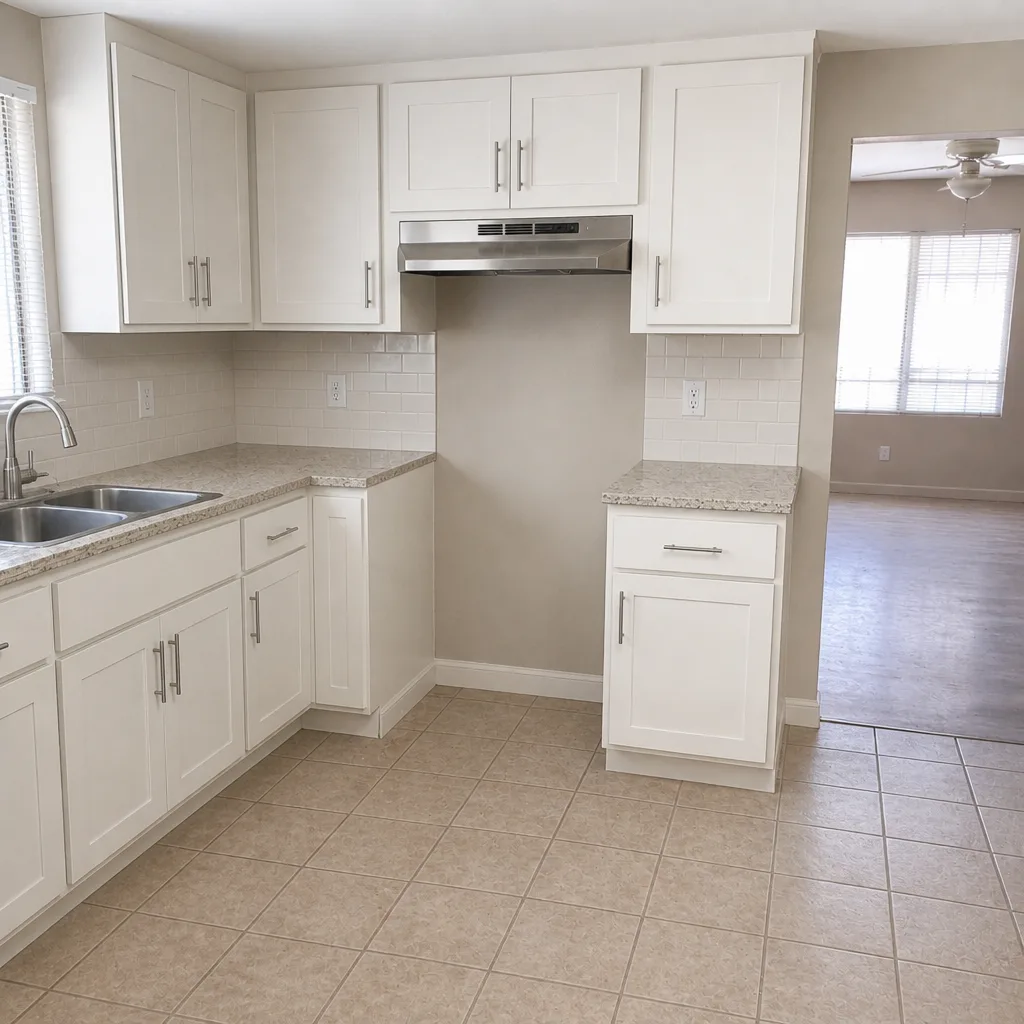
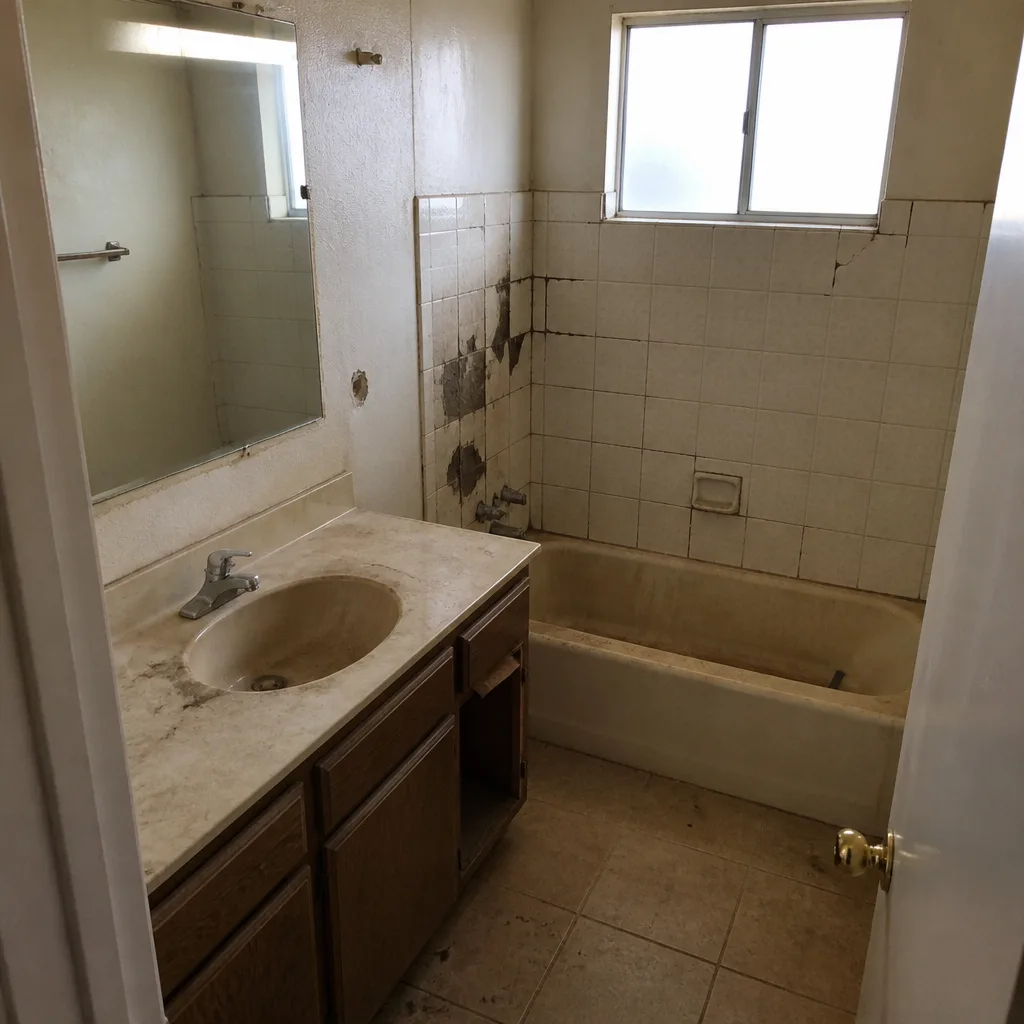
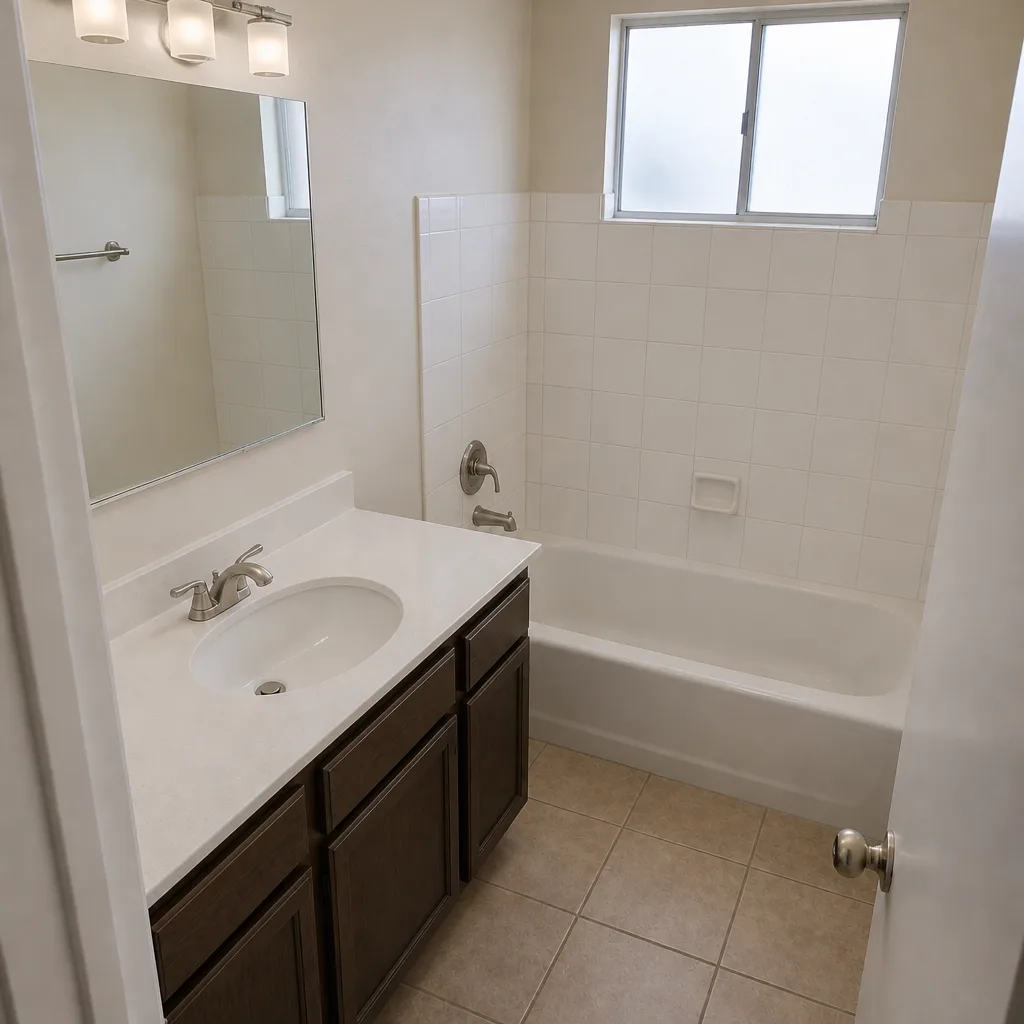
See the difference
 Before
 After
 Before
 After
 Before
 After
When to Call a Professional
Most of what’s in this guide is work a careful homeowner can handle with a screwdriver, a brush, and a Saturday. There are several points where it isn’t. A post that moves at the base, a gate frame that’s torqued, a fence line that’s dropping after a wind event, block wall cracks that are widening or diagonal, and any post base that’s showing soft wood: these are the calls where you want experienced hands on the job. Our background-checked crews carry an up-to-28-years of experience standard across every job, and we pull permits on every eligible fence job in Las Vegas – which matters more than most homeowners realize, because Clark County will not sign off on a fence that hasn’t been permitted and inspected the right way. Every scope is in writing and every price change is a written change order before it happens, backed by the 90-Day Done Right Promise. Free second opinion on any written estimate. Call (866) 814-4155 to schedule.
Frequently Asked Questions
Every 18 months, not every 3 years. Las Vegas gets roughly 300 days of direct sun a year, and that UV load breaks penetrating stains down in 14 to 18 months. Inspect at the 9-month mark with the water test: if water soaks in instead of beading, the sealer is finished. Call (866) 814-4155 for an estimate on staining and resealing a Las Vegas fence.
Push the post at the top with real force toward the property line. If it moves more than a quarter inch at the top, walk around to the base and look for a cracked soil halo, a lean, or movement in the concrete. Any of those signs means the post has lost its anchor. Call a professional before the next wind event – estimates are free.
Efflorescence is the white powdery salt deposit that comes out of masonry as moisture moves through it. It’s not permanent damage, but it’s a sign water is getting into the wall, and if it isn’t treated it becomes a stain that’s much harder to remove. Treat with a diluted vinegar solution and call a professional if it keeps coming back.
Thermal expansion and contraction. Las Vegas swings from about 35°F in winter to 110°F in summer, and wood and vinyl gates both move across that range. A 20-minute twice-a-year adjustment in late spring and late fall is the fix, and it’s a job a homeowner can do with a screwdriver.
Cap blocks every 4 years, with an annual inspection for chalkiness and water absorption. The wall body itself rarely needs resealing if the caps are maintained properly. If you’re seeing water pooling against the wall or efflorescence that keeps recurring, call (866) 814-4155 for a free second opinion on any written estimate.
Most residential fence installations in Clark County require a permit, and the permit is a good thing – the permit inspector works for you, not for us. It confirms the fence is built to code, which matters for resale and for any future construction on the property. Barrett & Sons pulls permits and signs inspections on every eligible job.
The Bottom Line
The maintenance calendar for a Las Vegas fence is built around three desert stressors: UV load, alkaline soil, and wind. Stain wood every 18 months, not every 3 years. Inspect post bases every spring for corrosion, because that’s where failures live. Walk the fence line after every wind event over 30 mph and look for post movement before it becomes structural. Reseal caps on block walls every 4 years and treat efflorescence while it’s still white powder. Adjust the gate twice a year because temperature shifts are a fact of life here. The whole program runs maybe four hours of hands-on time a year, and it’s the difference between a fence reaching 15 years and one you’re paying to replace at year eight. Every scope in writing, every permit pulled, every price change in a written change order before it happens, and everything we finish backed by the 90-Day Done Right Promise.
Call (866) 814-4155 for a free estimate on any fence maintenance, repair, or replacement project in Las Vegas. Calls are answered by a live person, 24 hours a day. Our technicians have up to 28 years of experience, background checks are standard, and we’re always happy to honor the standing offers: $40 off any repair over $200, a free second opinion on any written estimate, no trip charge inside the county, and a permanent 10% senior and veteran discount.
Written by the team at Barrett & Sons Construction Las Vegas.