
Last updated November 17, 2026
 Windows & doors
 Kitchen remodeling
 Bathroom remodeling
 Home additions & ADU
 Roofing
 Driveway & pavers
 Fence
Free written scope consultation - allowances, timeline, and change-order rules on paper before a single trade is scheduled
Windows & Doors Maintenance Schedule: What to Do and When
Weatherstripping in Las Vegas loses its seal up to twice as fast as the same product in a humid climate. Dry heat oxidizes and hardens the rubber before compression wear even starts, so the “check every two years” advice you’ll find on most home maintenance blogs can leave you with a gap you’ve had for 18 months. That gap is why monsoon water finds its way into frames in August and why your summer power bill creeps up $30 to $60 a month without a single obvious cause. This guide lays out a maintenance schedule calibrated to Las Vegas weather, not the humid-climate calendar most checklists copy from.
Quick Answer
Window and door maintenance in Las Vegas runs on two dates: April, before summer heat locks in, and October, after monsoon season closes. At each one you inspect weatherstripping, clean weep holes, test hardware, check caulk lines, and lubricate tracks with a dry-film product. Caulk gets a full inspection annually. Glass and frames get a deep cleaning twice a year. Anything you can’t reach, open, or safely test yourself is a call to a professional, not a ladder project.
Styles & brands we work with
- Kitchen remodeling
- Bathroom remodeling
- Home additions & ADU
- Roofing
- Windows & doors
- Driveway & pavers
- Fence
Table of Contents
- Why Las Vegas Windows and Doors Age Differently
- The April Pre-Summer Inspection
- The October Post-Monsoon Inspection
- Weep Holes: The Most Skipped Task in Las Vegas
- Which Lubricants Survive Desert Heat
- The Annual Caulk Protocol
- Documenting Your Maintenance History
- Common Mistakes to Avoid
- When to Call a Professional
Why Las Vegas Windows and Doors Age Differently
Most window and door maintenance advice is written for climates with humidity, freeze-thaw cycles, and mild summers. Las Vegas doesn’t have any of those. What it has is dry heat, alkaline dust, intense UV, and a monsoon season that delivers a year’s worth of water in a handful of storms.
Those four forces hit windows and doors in completely different ways than humidity does. Rubber weatherstripping hardens and cracks from oxidation, not from swelling. Vinyl frames expand and contract more aggressively as interior and exterior temperatures separate. Caulk shrinks as the plasticizers cook out of it, and once it shrinks, it quits flexing. Then the first monsoon pushes water into the gap.
In our experience across Las Vegas homes, the failures we see most often follow a predictable pattern: a seal fails quietly in late spring, the homeowner doesn’t notice because it’s 110 degrees outside and nobody is opening windows, and the first real rain in July or August finds the gap. By the time the water is inside, the damage has usually moved past the seal and into the frame.
That’s why a spring/fall schedule borrowed from a Midwest blog doesn’t serve a Las Vegas home. The two dates that matter here are when the heat arrives and when the rain leaves.
The April Pre-Summer Inspection
April is when Las Vegas shifts from pleasant to punishing, usually within a two or three week window. The goal of the April inspection is to catch every seal, gasket, and moving part before the heat seals them in place and before the summer cooling bill starts reflecting their failure.
Work through this in order on every exterior door and every operable window:
- Run the dollar bill test. Close each window and exterior door on a dollar bill. If the bill slides out with no drag, the weatherstripping has lost compression. Repeat at the top, middle, and bottom of each hinge side.
- Inspect weatherstripping for hardening. Pinch the rubber between your fingers. If it feels slick, stiff, or cracks instead of flexing, it’s already failed. Don’t wait for it to look torn.
- Check every sweep and threshold. Door sweeps fray at the bottom first. A worn sweep is one of the largest sources of cool-air loss in a Las Vegas home.
- Test all locks and cranks. Operate every window lock and door deadbolt. Heat warps small parts and sticks latches; catching it in April means fixing it before it matters.
- Clean weep holes. This is the task that most Las Vegas homeowners skip entirely. More on that below, but do it in April and again in October.
- Check glass for seal failure. Double-pane windows that show fogging, a milky haze at the edges, or condensation between panes have failed their sealed unit. A failing unit in April will only cost more to run by July.
- Walk the exterior with a flashlight. Look at the caulk line where the frame meets the wall, the sill, and any hard transitions. Cracks that look small in April can open into leaks by August.
If you’re already planning a window replacement rather than a repair, Andersen and Marvin are the two brands we install most, and premium units bought through a written scope are worth the upgrade in a climate that ages windows faster than most. Our team handles Barrett & Sons Construction Las Vegas home window and door work with the same written scope and permits we pull on every other project.
The October Post-Monsoon Inspection
Monsoon season in Las Vegas runs roughly from late June through September. By the time it closes, wind-driven rain, dust, and grit have had three months to work their way into every track, weep channel, and hinge on the house. The October inspection is about finding what the storms left behind and preparing for the dry, cold nights of winter.
- Clear every sliding door track. Desert dust compacts in track channels and, once wet, becomes a fine abrasive paste that wears the rollers. Vacuum the track first, then wipe it down with a damp cloth.
- Flush weep holes again. Fine grit migrates into weep holes during monsoon storms. If water is sitting in the sill channel after a storm, the hole is clogged, and a clogged hole is a slow-drying trap for moisture.
- Check for water staining. Look at the interior side of every window and sliding door for brown or gray stains at the corners, sill, or drywall below. That’s the signature of monsoon intrusion that didn’t come inside far enough to notice.
- Re-test weatherstripping. Six months of heat have passed. Repeat the dollar bill test, because rubber that was fine in April may have hardened through the summer.
- Inspect caulk at the exterior again. Monsoon storms spread grit into hairline cracks, and sun on either side of the storm can widen them. What looked fine in April can be a visible gap by October.
- Test door alignment. Wood doors can swell or shrink slightly with the shift from humid monsoon air to dry winter air. If a door is dragging or sticking, the hinges or strike plate have moved.
- Check window seals on the interior side of the glass. Any new fogging between panes since April is a sealed-unit failure and needs to be scheduled before winter.
If a monsoon storm did visible damage to a fence or exterior, it’s often worth having that inspected in the same visit. Our crew handles Fence Installation in Las Vegas and can look at wind damage to gates that share a corner with the house.
Weep Holes: The Most Skipped Task in Las Vegas
Weep holes are the small openings at the bottom of a window or sliding door frame that let water escape before it can sit. They’re about the size of a pencil eraser, and in Las Vegas they clog faster than anywhere we’ve worked. The fine alkaline dust that coats cars and patio furniture in this valley finds its way into weep channels within a matter of weeks.
When a weep hole is clogged and a monsoon storm brings rain, the water has nowhere to go. It backs up into the sill channel, sits against the frame, and slowly works into the wall cavity. Frame rot and interior drywall damage from monsoon intrusion almost always trace back to a weep hole that was clogged for months before the storm.
Here’s how to inspect and clean them without doing any damage:
- Locate the weep holes on the exterior face of the sill, usually two per window or three on a sliding door. Some frames have small covers; they pop off with a fingernail.
- Shine a flashlight into the hole. If you see light at the other end, it’s clear. If you don’t, it’s clogged.
- Use a can of compressed air or a soft pipe cleaner to clear debris. Never use a stiff wire, an awl, or a screwdriver; you’ll scratch the drainage channel and create a new spot for water to pool.
- Flush with a cup of water from the top of the sill channel and watch that it drains out cleanly at the weep hole. If it doesn’t, the channel is blocked further in and the frame needs a professional look.
- Repeat on every sliding door and every operable window, not just the ones facing the weather. Water pools on all four sides during high winds.
Weep holes are a ten-minute job per house and they prevent thousands of dollars in frame and drywall damage. There’s no single task on the entire maintenance schedule that returns more on the time invested.
Which Lubricants Survive Desert Heat
The wrong lubricant is worse than no lubricant in Las Vegas. Silicone spray is the default recommendation in most generic maintenance guides, and in this climate it’s the wrong call for anything that slides on a track.
Silicone sprays go on wet and dry into a tacky film. In the desert, that film captures dust within a few weeks and turns into gum. Window rollers and sliding door tracks stop moving cleanly, the homeowner assumes the hardware has worn out, and the actual problem is that the track is full of silicone-soaked dust.
What actually holds up in extreme heat:
- Dry-film PTFE lubricants. These go on wet and dry to a clean, non-tacky film that repels dust instead of grabbing it. They’re the right product for window rollers, sliding door rollers, and track channels.
- White lithium grease. Good for hinges, door lock mechanisms, and garage door pivot points. It stays put in heat and doesn’t dry out as quickly as lighter oils.
- Graphite powder. Best for lock cylinders and keyways. It won’t attract the dust that oil-based products will, and lock mechanisms in Las Vegas homes fail faster with oil-based lubricants than anywhere else.
What to avoid:
- Silicone spray on anything that touches dust. Save it for rubber seals if you use it at all, and even then, use it sparingly.
- WD-40 or thin oils on window hardware. They evaporate in summer heat and leave a residual film that attracts grit.
- Grease on window crank mechanisms inside the track. It collects dust and eventually jams the mechanism rather than freeing it.
We’ve seen window rollers fail in less than three years in Las Vegas homes that were regularly lubricated with the wrong product. The same rollers, with the right dry-film product, routinely hit ten years or more.
The Annual Caulk Protocol
Caulk is the layer between the window frame and the wall, and in Las Vegas it’s under constant attack from UV, temperature swings of 40-plus degrees between day and night, and the dust that gets embedded in the surface during the summer. Understanding what kind of failure you’re looking at matters as much as noticing that there’s a crack.
Where to look on the exterior
Walk the exterior of every window and exterior door once a year, ideally in April before the heat sets in. Look at four locations on every opening:
- The head joint where the frame meets the wall above the window.
- The side (jamb) joints on both sides.
- The sill joint where the frame meets the sill or trim.
- The transition at any corner where two runs of trim meet.
Telling UV failure from movement failure
UV failure shows as fine, shallow cracking in a pattern that looks like a dried mudflat. The caulk is still bonded to both surfaces; it has simply lost its flexibility and is starting to pull apart in short, evenly spaced cracks. This is the most common pattern in Las Vegas and it’s what hits south- and west-facing joints first.
Movement failure shows as a clean separation along one edge of the joint. The caulk has pulled away from the frame or the wall in a long, continuous gap. This usually means the joint was too rigid for the amount of movement the frame is doing, or the caulk wasn’t matched to the substrate when it was installed.
Both need to be replaced, but they need different products. For UV-driven failure on most painted trim and stucco, a high-performance urethane caulk or a premium siliconized acrylic rated for exterior use will hold. For joints that see real movement (most corners and any joint between materials with different thermal expansion), a 100% silicone or polyurethane sealant bonded to clean, dry surfaces is the right call.
Products that bond reliably in desert temperature swings
Standard painter’s caulk is a bad bet in Las Vegas. It doesn’t stretch enough and it hardens within a couple of summers. What we look for:
- Polyurethane sealants. The best all-around exterior caulk for our climate. High elasticity, strong adhesion to stucco, wood, aluminum, and vinyl, and it holds up under UV better than acrylics.
- 100% silicone. Excellent for glass-to-frame and metal-to-metal joints. Not paintable, which matters for some trim.
- High-performance siliconized acrylic. The right choice when the joint will be painted, and it handles UV better than standard acrylic.
For interior trim and any joints you’ll paint, stick with a high-quality siliconized acrylic labeled for exterior use. Skip the bargain tubes; you’ll be replacing them within two summers.
Documenting Your Maintenance History
A maintenance log is the single most underestimated piece of home upkeep in Las Vegas. It protects your manufacturer warranty, it makes a future sale easier, and it changes the way you notice small problems before they become expensive ones.
Here’s how to keep one that’s actually useful:
- Photograph every opening. For every window and exterior door in the house, take one photo of the interior and one of the exterior, plus a close-up of the caulk line at the sill and head. Date and label them. These become your baseline.
- Log the date, the task, and the product. A simple notebook or spreadsheet works. Every April and October, write down what you checked, what you replaced, and the exact product you used (brand and product line). This matters if a warranty question ever comes up.
- Save your receipts. Marvin and Andersen warranties, in particular, depend on documented proper installation and maintenance. A record of what was installed, when, and by whom makes any warranty claim straightforward.
- Keep a photo of any failed seal or crack before you repair it. If the failure turns out to be a defect in the window or a workmanship issue from a previous contractor, the photo is your evidence.
- Note the dates of any professional work. If you had a door replaced, a window resealed, or a repair done, log it. When you eventually sell, that log communicates that the home was cared for, and buyers in Las Vegas are looking for that kind of signal.
Every professional job from us includes this documentation in writing. Scope in writing, allowances in writing, change orders in writing applies to maintenance history too: if the work isn’t on paper, it didn’t happen as far as your warranty is concerned.
Common Mistakes to Avoid
- Following a spring/fall maintenance calendar. A Las Vegas home needs its seal and caulk work done in April and October, not March and November. Waiting until “spring” means the summer heat has already hardened the rubber.
- Skipping weep holes because they’re small and hard to see. Weep holes clogmed are behind almost every monsoon frame-rot repair we get called out for. Clean them twice a year.
- Using silicone spray on sliding door tracks. It gums up with desert dust within weeks. Use dry-film PTFE instead.
- Caulking over old caulk. New caulk rarely bonds to old, especially once it’s UV-hardened. Remove the old material to bare substrate before installing new sealant.
- Ignoring fog between double panes. A fogged double-pane means the sealed unit has failed. In Las Vegas, that adds noticeably to summer cooling costs and gets worse every month you wait.
- Assuming the “two-year” weatherstripping rule applies here. With the heat we get, some rubber products start failing in under a year. Test in April and October, not once per two years.
- Not writing anything down. No log means no way to support a warranty claim and no way to know what product you used last time. Documentation is cheap; guessing is not.
When to Call a Professional
Most of the schedule above is homeowner work. A few situations are not, and knowing where the line is will save you both money and injury. If a double-pane sealed unit has fogged, if water is staining interior drywall or trim below a window, if a sliding door roller has failed and the panel won’t lift out cleanly, if a window or door frame is out of square enough that it won’t lock, or if any of this work is on a second-story window or an opening above a stairwell, it’s time to call. The same is true if your exterior caulk lines have failed on more than one opening, or if a monsoon storm has left you unsure whether the seals held. Ladders, glass, and heat are a bad combination for a homeowner on a Saturday, and nobody should be climbing a second-story frame to check a seal.
Barrett & Sons Construction Las Vegas offers free estimates in Las Vegas. We pull permits on eligible jobs, we put scope and allowance changes in writing before any work begins, and every completed job carries our written 90-Day Done Right Promise. Our crew members have up to 28 years of experience on windows and doors. Call (866) 814-4155 to schedule your free estimate.
See the difference
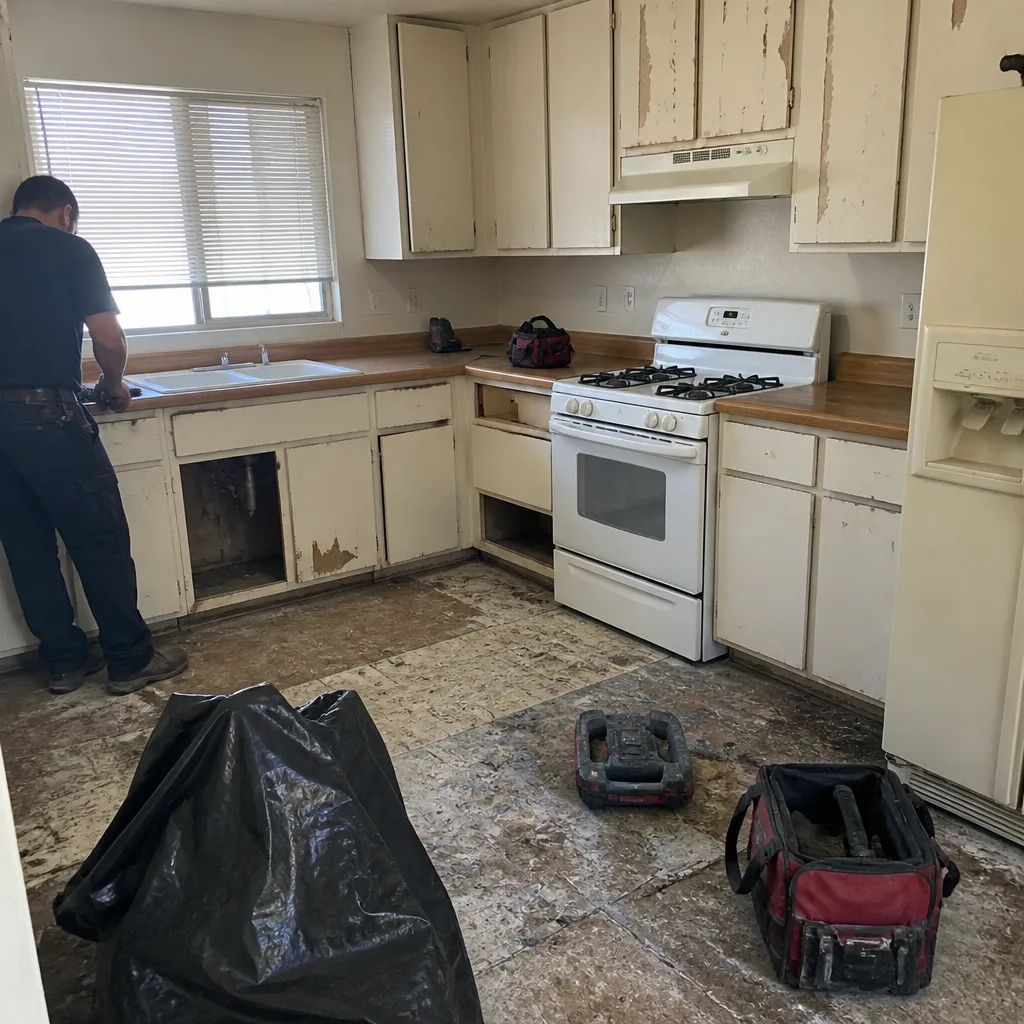 Before
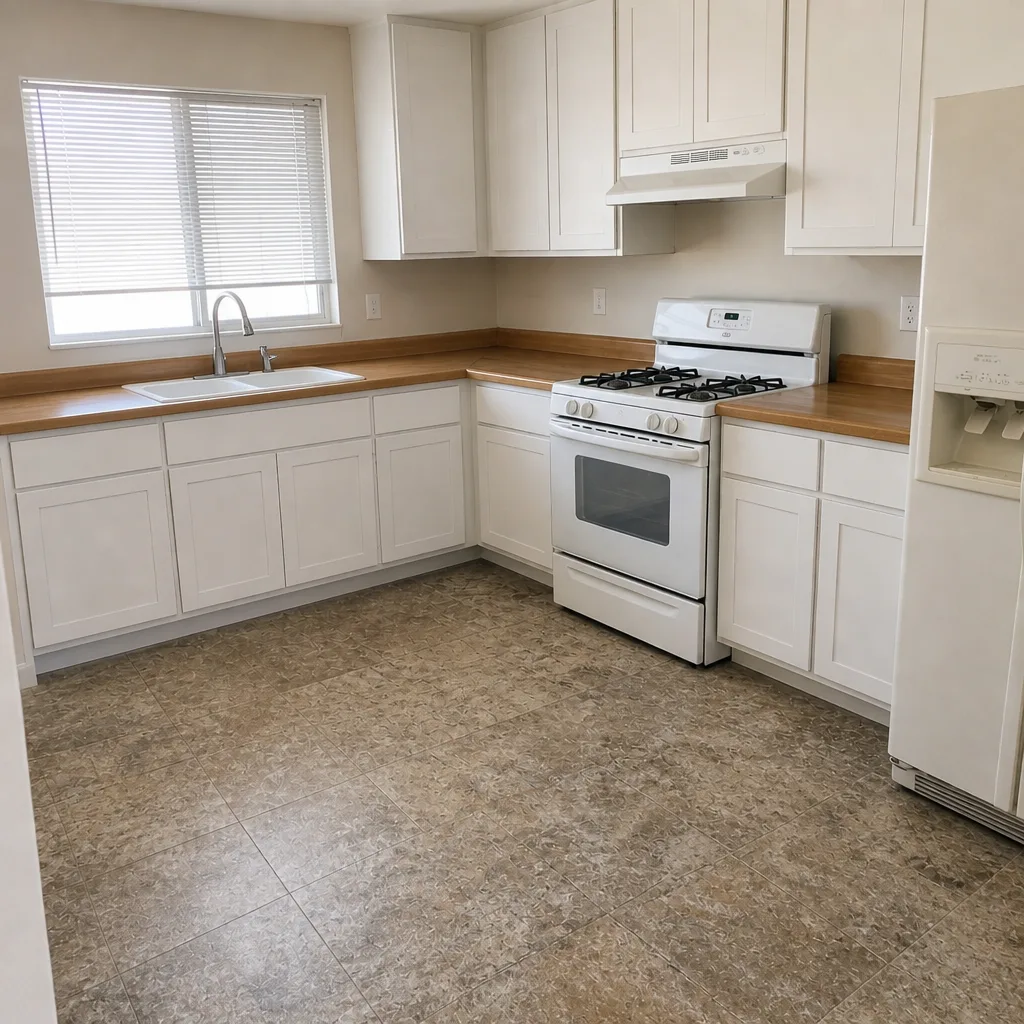 After
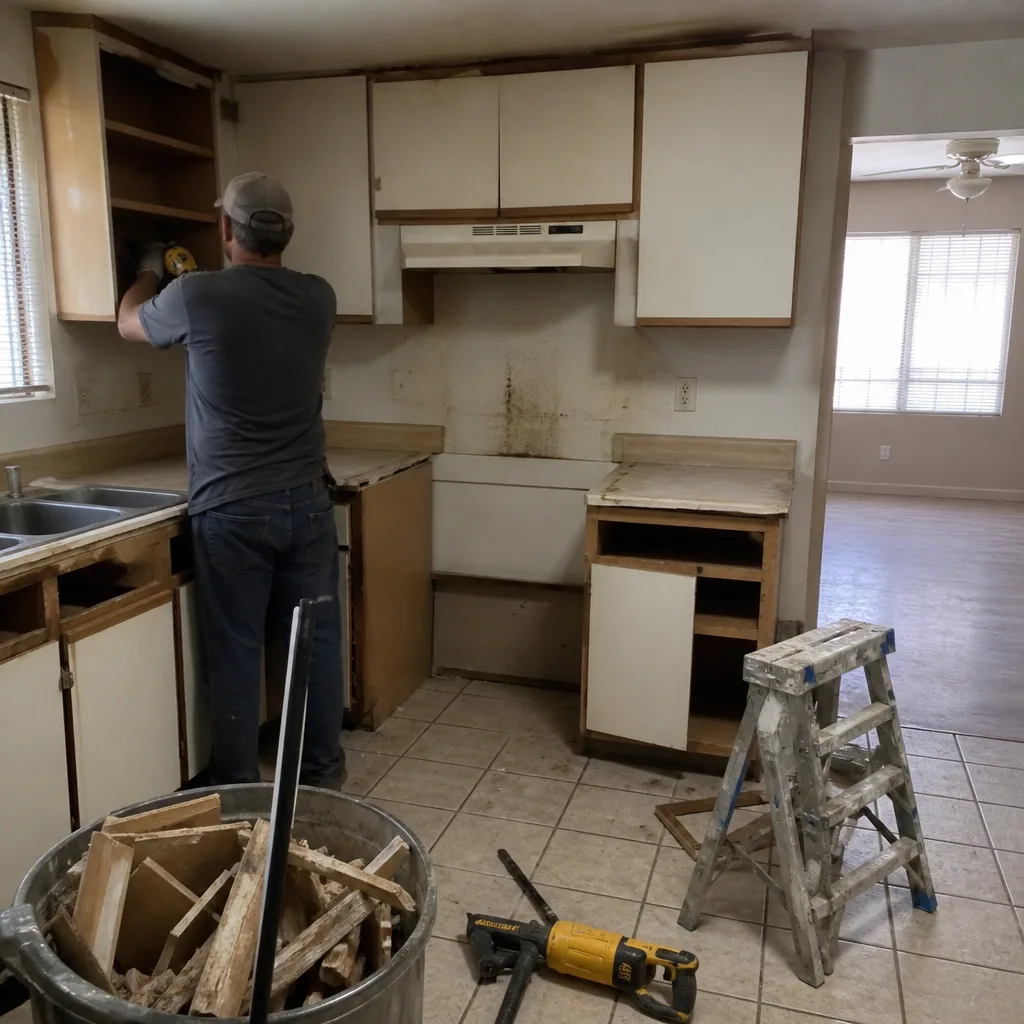 Before
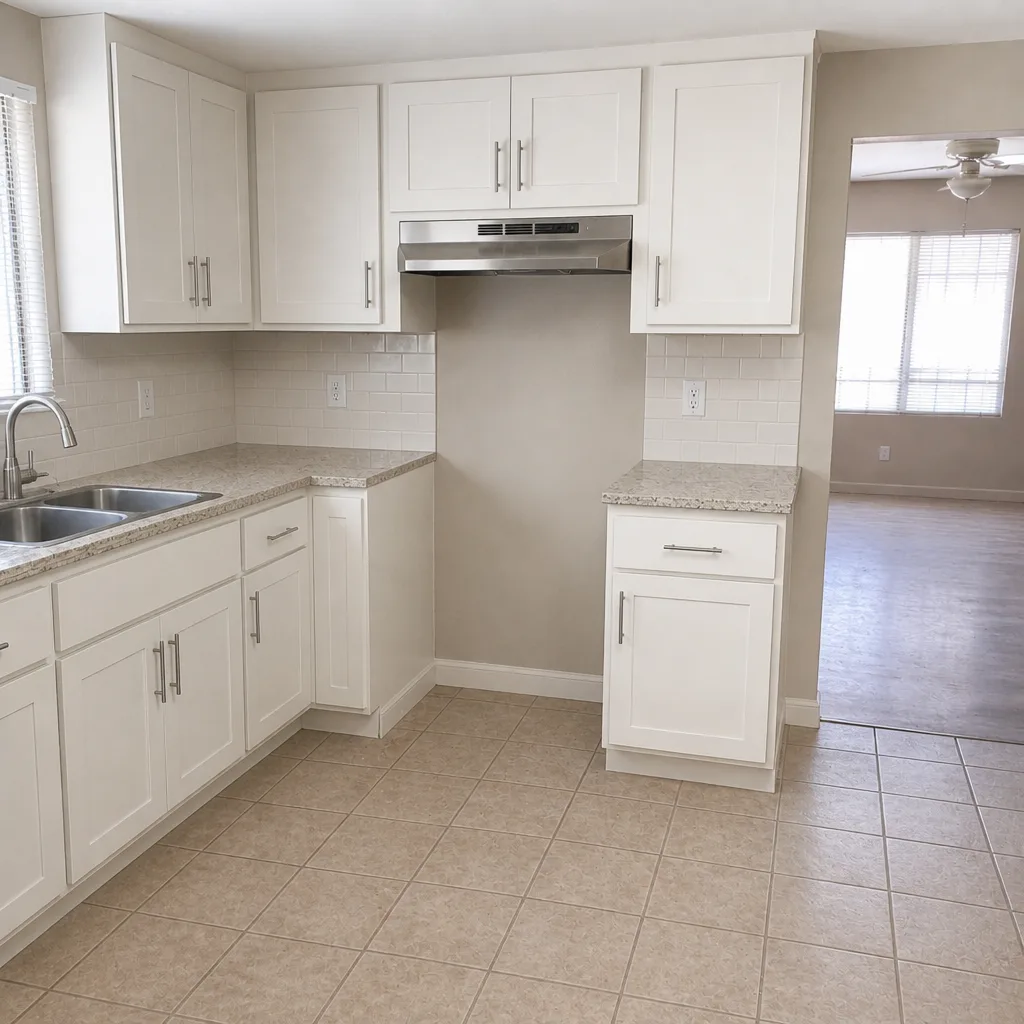 After
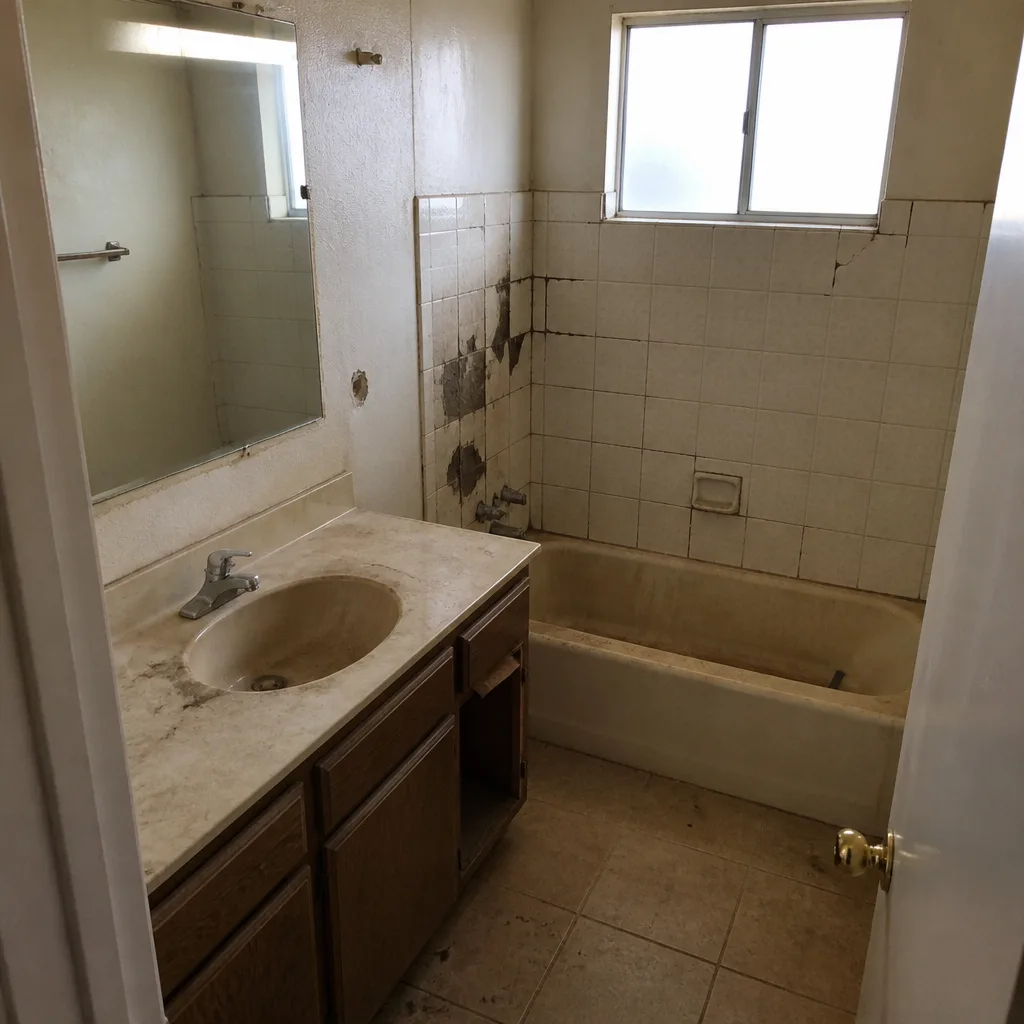 Before
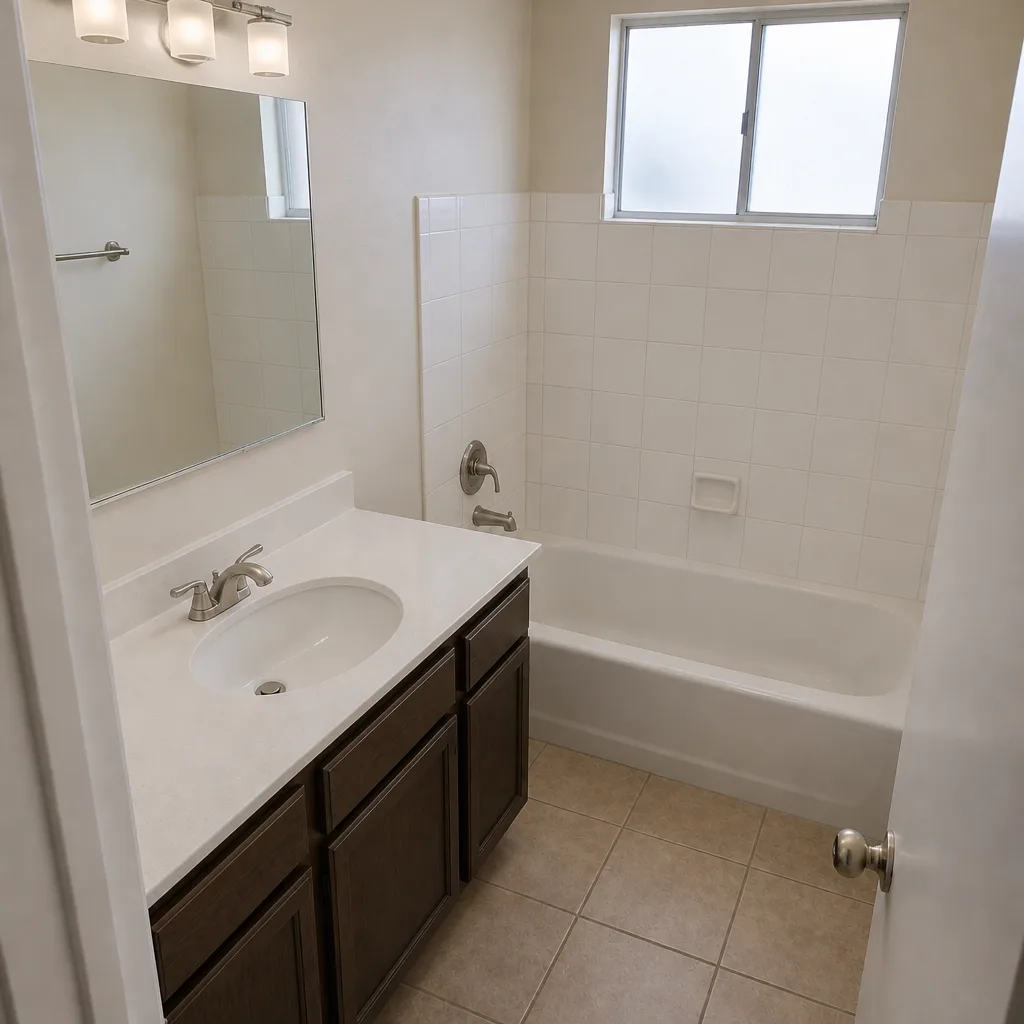 After
Frequently Asked Questions
Twice a year, in April before summer heat and in October after monsoon season. That’s more frequent than the “once every two years” advice common elsewhere because dry Las Vegas heat and alkaline dust age weatherstripping, weep holes, and caulk faster than humid climates do. A homeowner who checks twice a year catches failures before they turn into water damage.
Weep holes are the small drainage openings at the bottom of window and sliding door frames that let water escape instead of pooling inside the sill channel. They matter more in Las Vegas than almost anywhere because fine desert dust clogs them within weeks of the first summer, and when a monsoon storm arrives, a clogged hole turns into standing water against the frame. Clean them in April and October.
No, silicone spray is the wrong product for sliding window and door tracks in this climate. It leaves a tacky film that captures desert dust and gums up the track within weeks. Use a dry-film PTFE lubricant for anything that rolls, and white lithium grease for hinges and lock mechanisms.
Look for shallow, fine cracking in a dried-mud pattern (UV failure) or a clean pull-away along one edge of the joint (movement failure). Both mean the caulk needs to be replaced, and each calls for a different product. South- and west-facing joints in Las Vegas almost always fail first. Call (866) 814-4155 for a free estimate if more than one opening has failed.
Often not. Manufacturers like Andersen and Marvin look for evidence that the window was properly installed and maintained, which is why a simple written log with photos and receipts matters. If you don’t have one, start today: photograph every opening, note the products you use, and keep the receipts.
Yes, meaningfully. Worn weatherstripping, a failed door sweep, and a fogged sealed unit all let cool air escape or heat in, and it’s not unusual for a homeowner to see a $30 to $60 monthly swing on a mid-size Las Vegas home fixed by resealing. That’s not a sales pitch; it’s what the maintenance schedule above is designed to catch.
The Bottom Line
A Las Vegas window and door maintenance schedule runs on two dates: April and October. In April, before the heat locks in, test weatherstripping with a dollar bill, clean every weep hole, test every lock and crank, and check the caulk on the south and west faces. In October, after monsoon season, clear every track, flush every weep hole again, look for water staining inside, and re-inspect the caulk. Replace failing sealant with polyurethane or 100% silicone, lubricate with dry-film PTFE rather than silicone spray, and write down what you did and what product you used. That log will outlast the window it’s describing.
The maintenance schedule above handles most of what a Las Vegas home throws at its windows and doors. Larger projects are worth doing once and doing right. If window replacement or a full door upgrade is in your plans, our crew handles that work with permitted scope and written change orders. Explore Home Additions & ADU in Las Vegas if the maintenance question is really a bigger project in disguise, and Driveway & Pavers in Las Vegas if exterior drainage near the house is part of what’s driving water intrusion.
Have a window or door problem you’re not sure about, or a maintenance list you’d rather hand off to a crew that will show up on time, pull the permit when it’s needed, and put every change in writing? Call (866) 814-4155 for a free estimate. We answer the phone with a live person, not a voicemail box. And if a written estimate from someone else has you second-guessing, we’ll give you a free second opinion on it before you sign anything. Ask about our $40 Off Any Repair Over $200, our No Trip Charge Inside the County, and our permanent 10% Senior & Veteran discount.
Written by the team at Barrett & Sons Construction Las Vegas.